Baku White City
Core idea
Oilfield-to-urban district
Why it matters
Brownfield conversion on the Caspian
Description
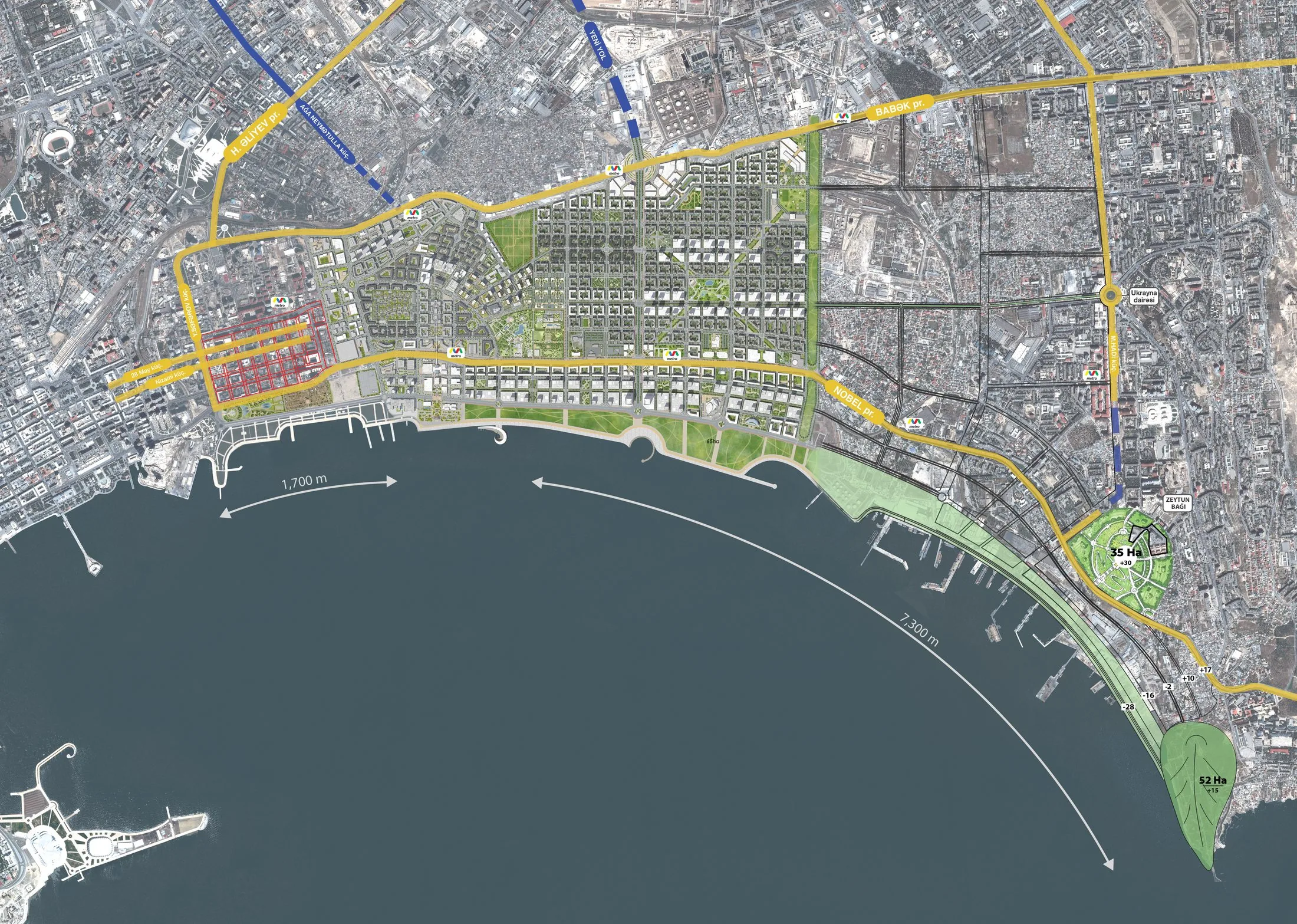
Baku White City is a large regeneration project begun in 2011 on the site of the Azerbaijani capital's 'Black City', the historic oil-refining district east of the centre on the Caspian shore. Promoted by the Azerbaijani government with international masterplanners, the scheme remediates contaminated oilfield land and replaces it with a mixed-use district of residential quarters, offices, boulevards and a new waterfront. The name deliberately inverts the district's polluted past, signalling a clean, European-styled urban extension of central Baku.
Significance
The project is a prominent case of post-industrial brownfield conversion in a petro-state, using urban regeneration to rebrand a capital whose wealth derived from the very industry being erased. It sits within Baku's wider image-led building boom and raises questions common to such schemes: top-down implementation, limited public participation and the social profile of the new district. For planning history it demonstrates how waterfront regeneration models circulated to the Caucasus and Caspian region in the 2000s and 2010s.
What shaped it
- The Deepwater Horizon oil spill (2010)
- Landscape urbanism (Waldheim) (1997-2006)
Sources
- https://en.wikipedia.org/wiki/Baku_White_City
- https://www.constructionweekonline.com/projects-tenders/article-27892-site-visit-white-city-baku