Bandung Metropolitan ‘Biopolis’ Initiatives
Core idea
Innovation clusters + KA Bandara rail
Why it matters
Regional knowledge-economy framing
Description
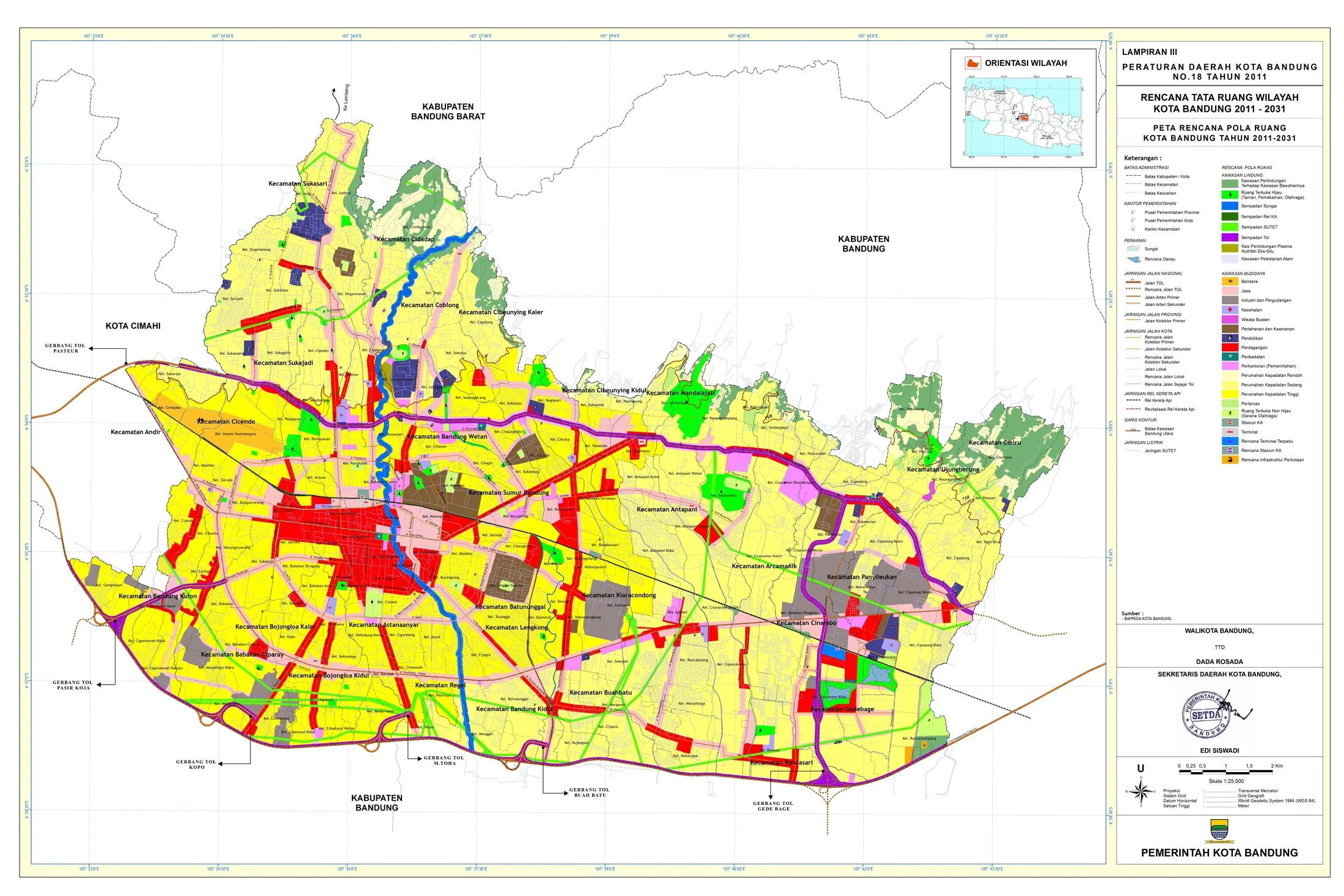
The Bandung Metropolitan 'Biopolis' initiatives of the 2010s are a set of regional development moves by West Java province and associated agencies framing the Bandung basin as a knowledge-economy region. They combine promotion of innovation and technology clusters, drawing on the city's universities, with improved rail connectivity, including airport rail links, tying Bandung into the wider Jakarta-Bandung corridor.
Significance
The initiatives illustrate how Indonesian regional governments adopted innovation-district and knowledge-corridor rhetoric to reposition secondary metropolitan areas within national growth strategies. Bandung, with its strong universities and creative-city reputation under mayor Ridwan Kamil, became a prominent testbed for such framing. Debate has focused on the gap between branding exercises and the region's persistent congestion, informality and infrastructure deficits.
What shaped it
- Transit-oriented development (TOD) (1993)
- Sustainable development (Brundtland) (1987)
- Bus Rapid Transit (BRT) (1974)
Sources
- https://en.wikipedia.org/wiki/Bandung_Techno_Park
- https://investasi.jabarprov.go.id/public/investment-oportunity/wjis2021-bandung-metropolitan-urb