Basel Klybeck–Kleinhüningen
Core idea
Portland to urban mixed-use
Why it matters
Large Rhine waterfront transformation
Description
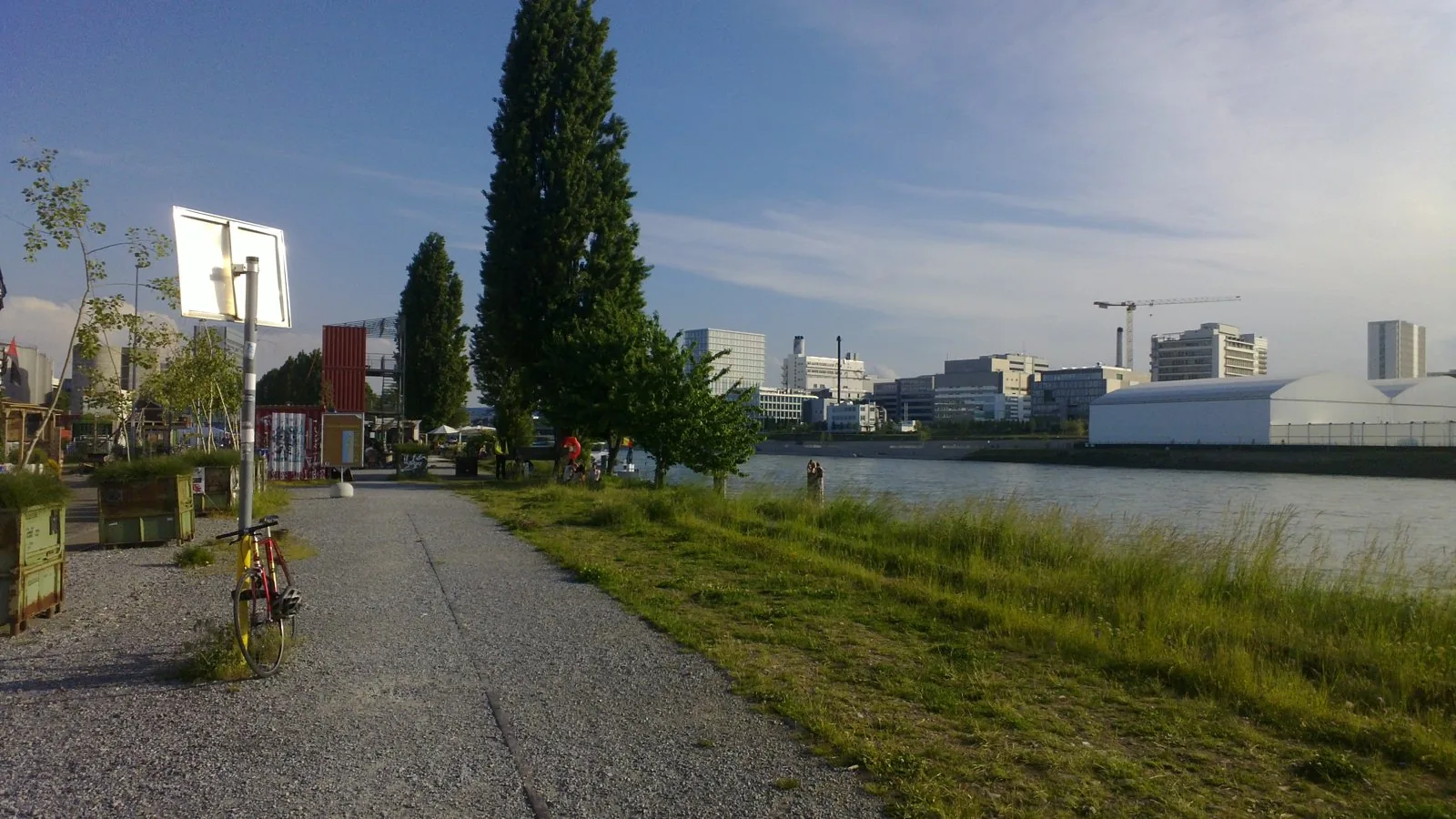
The Klybeck–Kleinhüningen transformation is a long-term cantonal planning effort in northern Basel to convert Rhine port lands and former chemical-industry sites, historically occupied by firms such as Novartis and BASF, into mixed-use urban quarters. Led by the Canton of Basel-Stadt from the mid-2010s in cooperation with the landowners, the planning framework envisages new housing, workspaces and public riverfront access on some of the city's largest remaining development reserves.
Significance
The project is significant as one of Switzerland's major waterfront conversions, comparable in ambition to Zurich-West or Geneva's PAV, and as a test of transforming active pharmaceutical-industrial land within a dense border city. It has featured in debates over participatory planning, interim uses and the pace at which industrial landowners release sites for urban development. Its handling of port functions alongside new neighbourhoods speaks to a wider European question of how working waterfronts urbanise.
What shaped it
- Sustainable development (Brundtland) (1987)
- Transit-oriented development (TOD) (1993)
- The master plan (early 20th c.)
- The Leipzig Charter on Sustainable European Cities (2007 (renewed 2020))
Sources
- https://www.bs.ch/bvd/staedtebau-architektur/raumplanung/stadtteile/stadtteilrichtplan-klybeck-k
- https://www.igkleinbasel.ch/klybeckkleinhueningen/