Beijing Sub-Center (Tongzhou) Masterplan
Core idea
New municipal core with ecological corridors
Why it matters
Deconcentrates Beijing’s historic core
Description
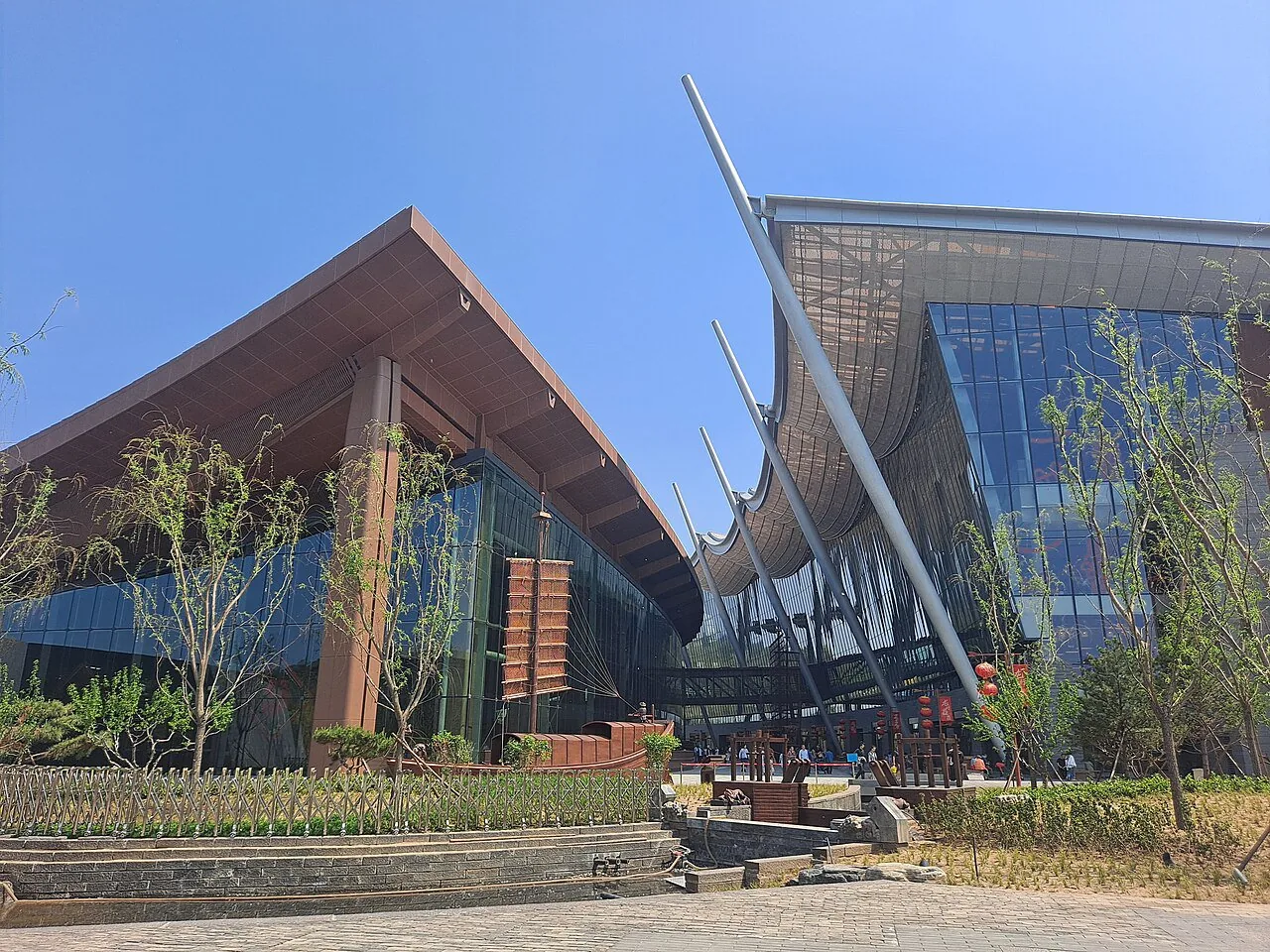
The Beijing Sub-Center Masterplan for Tongzhou, advanced by the Beijing Municipal Government from 2016, created a new administrative core on the city's eastern edge to which municipal government functions were relocated from 2019. The plan combines a compact new centre on the Grand Canal with extensive ecological corridors, green belts and strict density and design controls, and is coordinated with the wider Jing-Jin-Ji regional strategy and the Xiong'an New Area. It operates at the scale of a district planned for well over a million inhabitants.
Significance
Tongzhou is a central instrument of China's effort to relieve Beijing's 'big city diseases' by deconcentrating non-capital functions from the historic core, a state-led decentralisation of unusual scale. Its pairing of administrative relocation with landscape-led planning has made it a key reference in debates on polycentric restructuring and ecological urbanism in Chinese megacities.
What shaped it
- Transit-oriented development (TOD) (1993)
- The imperial capital and the central axis (fullest form Ming Beijing, from 1420)
- Urban resilience (2013)
- New Urban Agenda (2016)
Plans it influenced
- Xiongan New Area (2017–)
Sources
- http://www.china.org.cn/china/2016-02/23/content_37851197.htm
- http://www.xinhuanet.com/english/2019-01/03/c_137717576.htm