Benin City
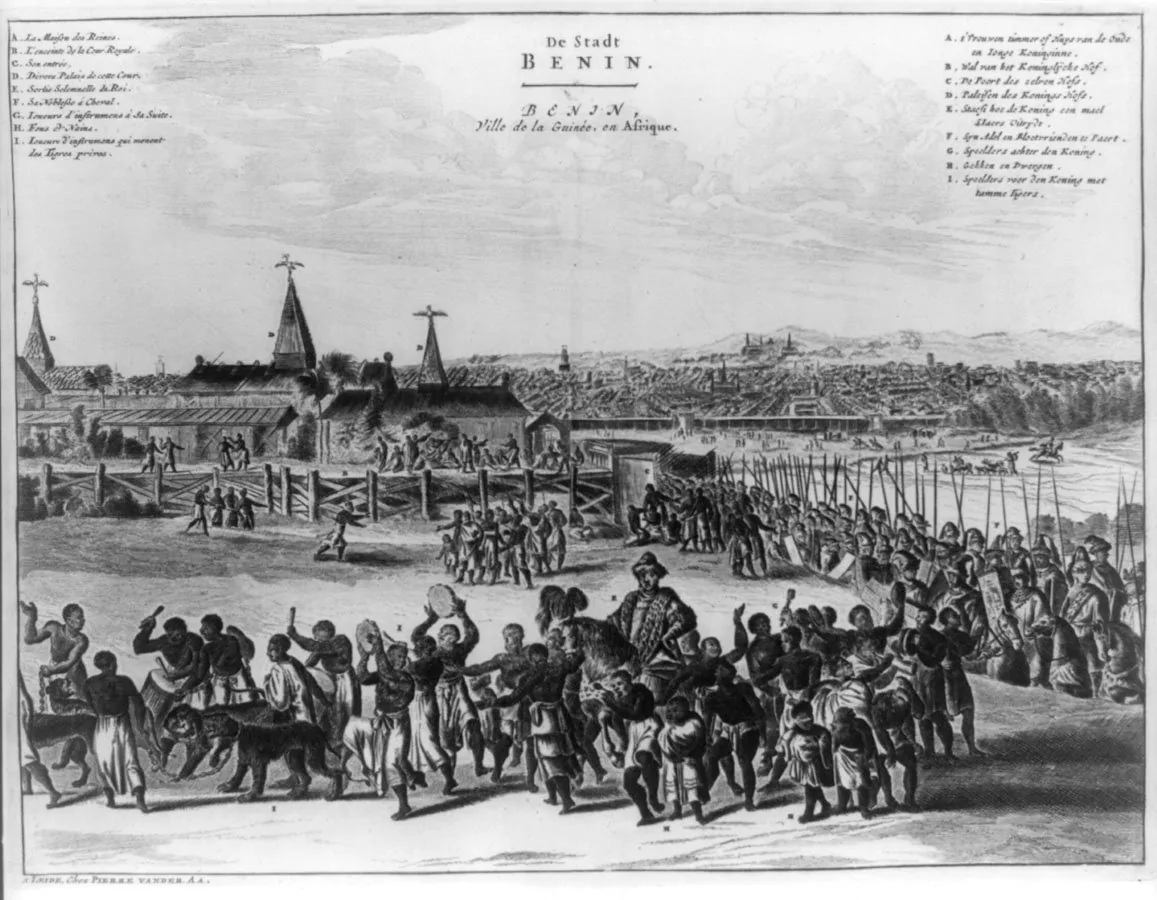
Core idea
Massive earthwork walls and moats (longest in the world pre-mechanization); radial streets from Oba's palace; hierarchical ward system
Why it matters
European visitors compared it to Amsterdam; demonstrates African urban complexity before colonialism erased it
Description
Capital of the Kingdom of Benin from around the 13th century, Benin City was protected by an enormous network of earthen walls and moats — by some measures the largest earthwork structure made before the machine age — radiating from the Oba's palace. Streets were broad and ordered, the city was divided into specialized guild quarters, and European visitors in the 16th–17th centuries compared its scale and order favorably to their own capitals.
Significance
Benin City counters the myth that pre-colonial Africa lacked complex urbanism. Its planned wards, monumental earthworks, and renowned bronze art reveal a centralized, sophisticated urban state — one violently sacked and looted by a British expedition in 1897, an act that scattered its treasures and its memory.
What became of it
Benin City was sacked, looted and burned by the British Punitive Expedition in 1897, ending the kingdom's independence and carrying off thousands of artefacts (the 'Benin Bronzes'); the vast earthworks were thereafter largely neglected and have substantially eroded or been built over by the modern city.
Critique
The earthworks have suffered severe neglect with little formal preservation, encroachment and demolition steadily destroying one of the largest archaeological structures on earth, compounded by the still-disputed colonial looting of the Benin Bronzes.
What shaped it
- Ife and the Yoruba sacred-city cosmology (c. 11th–15th c. CE)
- Nok culture and early West African ironworking (c. 1500 BCE – 500 CE)
Sources
- https://www.metmuseum.org/perspectives/benin-city-earthworks
- https://en.wikipedia.org/wiki/Kingdom_of_Benin
- https://en.wikipedia.org/wiki/Benin_Moat