Bern (Zähringer Town)
Core idea
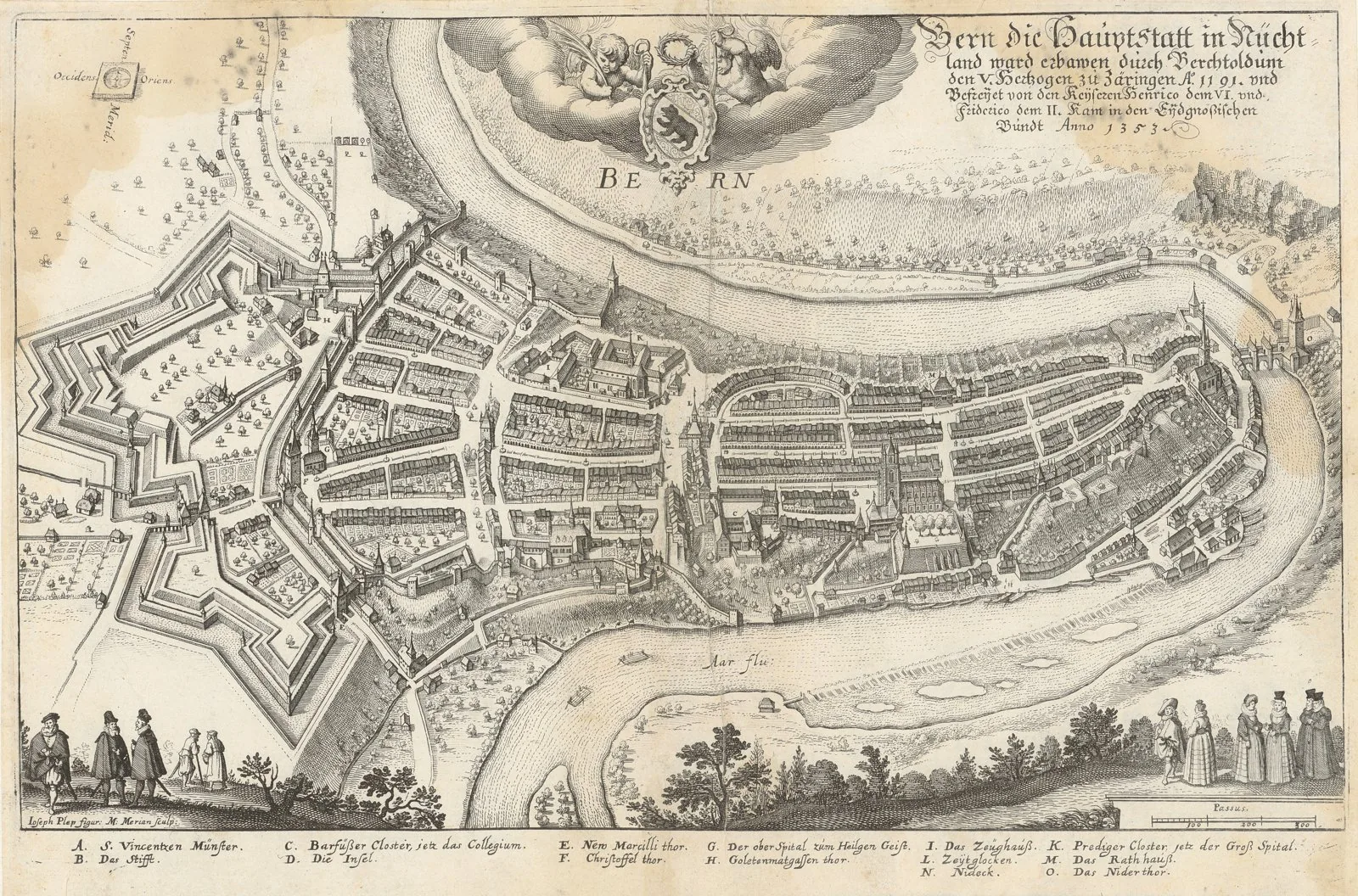
Planned ducal town on a river peninsula — long parallel market streets with continuous arcades (Lauben), regular plots, and staged westward extensions as it grew
Why it matters
Exemplary Zähringer foundation; one of medieval Europe's most legible planned towns, its arcaded market-street model still intact as a UNESCO old town
Description
Bern was founded in 1191 by Berthold V, Duke of Zähringen, as a planned town on a narrow peninsula enclosed by a loop of the River Aare. The plan consists of long parallel market streets lined with continuous ground-floor arcades, the Lauben, fronting regular burgage plots, and the town was extended westward in deliberate stages as it grew. The scheme combined defence, market function and systematic plot allocation characteristic of the Zähringer foundations.
Significance
Bern is the exemplary Zähringer town and one of medieval Europe's most legible pieces of deliberate town planning, its arcaded market-street model surviving intact as a UNESCO-listed old town. It figures prominently in the historiography of the medieval planted town, demonstrating that rational, staged urban design long predates the Renaissance.
What shaped it
- Feudalism and manorialism (c. 9th–15th centuries)
- The first universities (11th–13th c.)