Boise Comprehensive Plan ‘Blueprint Boise’
Core idea
Compact growth, foothills protection
Why it matters
High-growth mountain city strategy
Description
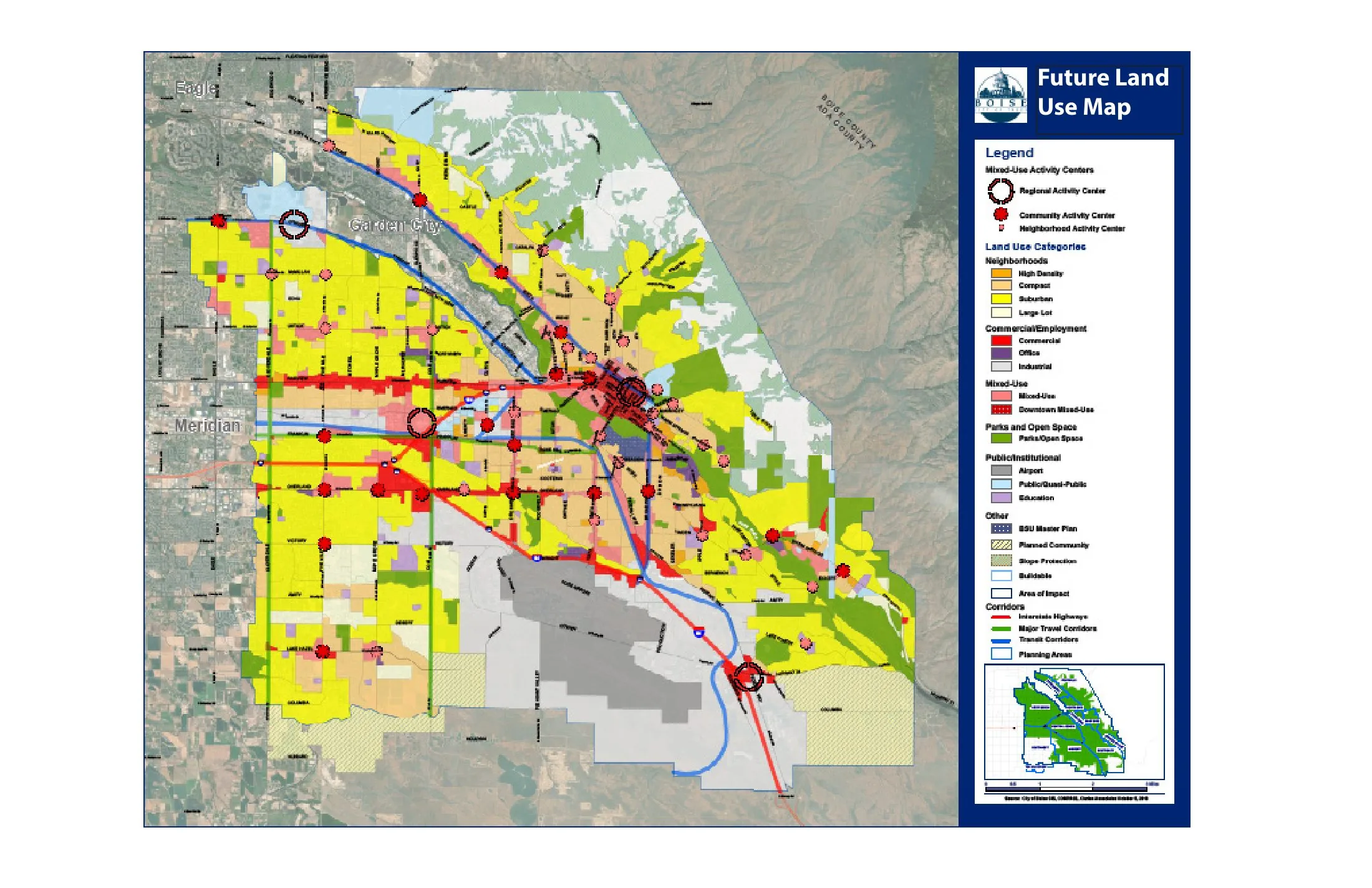
Blueprint Boise, adopted in 2011, is the comprehensive plan for Boise, Idaho, prepared by the city's planning department with extensive public consultation. It directs growth towards compact, mixed-use activity centres and existing corridors while protecting the Boise Foothills and other sensitive open lands from development. The plan organises the city into planning areas with tailored policies, linking land use with transport, housing and environmental stewardship for a fast-growing mountain-west city.
Significance
The plan illustrates how mid-sized American cities in high-growth western states adapted smart-growth principles to local conditions, notably the tension between development pressure and cherished foothills landscapes. It provided the policy basis for later debates on infill, housing affordability and transit investment as Boise became one of the fastest-growing cities in the United States. Within planning history it belongs to the generation of comprehensive plans that reframed growth management around sustainability and place-based area planning.
What shaped it
- The compact city (1973-1990s)
- The green belt (1898 concept / 1938 law)
Sources
- https://www.cityofboise.org/departments/planning-and-development-services/planning/designing-our
- https://smartgrowthamerica.org/councilmember-elaine-clegg-on-boise-idahos-blueprint-for-success/