Bolzano Mobility Plan & Ring
Core idea
Cycling + PT priority
Why it matters
Alpine city mode shift
Description
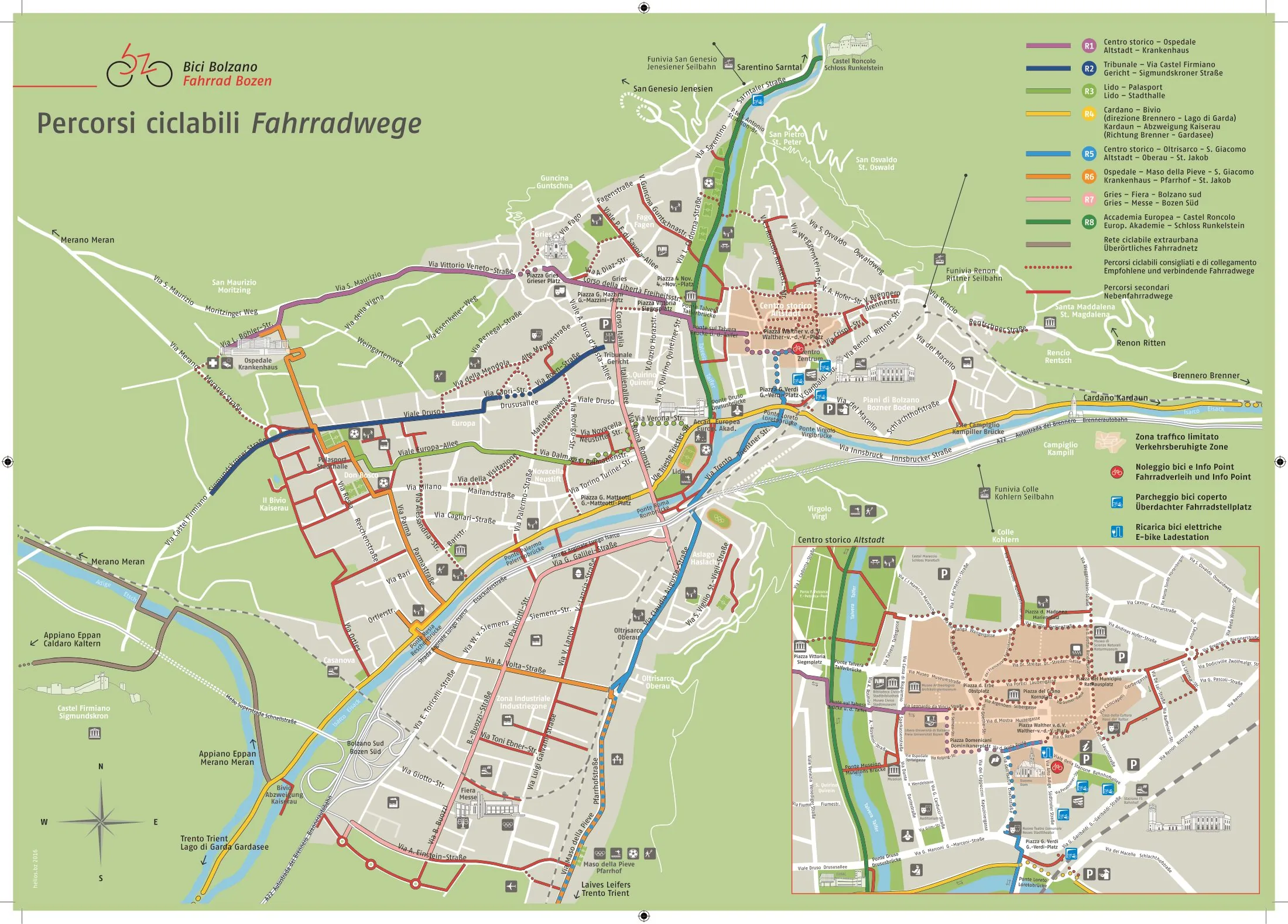
The Bolzano mobility plan and associated ring concept, advanced around 2013 by the Comune di Bolzano, is the sustainable mobility strategy for the capital of South Tyrol in northern Italy. It prioritised cycling and public transport over private car traffic, extending the city's dense cycle network, reorganising bus services, calming and reallocating road space, and managing car circulation around the centre. The plan built on Bolzano's earlier traffic and climate policies within a compact Alpine valley city of modest size.
Significance
Bolzano is significant as one of Italy's leading examples of mode shift, achieving cycling shares among the highest in the country and demonstrating northern-European-style mobility planning in an Italian and Alpine context. It is often cited alongside its CasaClima energy standards as part of a broader local sustainability model. The case is used in debates on how mid-sized cities, rather than metropolises, can lead the transition away from car dependence.
What shaped it
- The pedestrian zone (1953)
- The bicycle (safety bicycle 1885)
- The compact city (1973-1990s)
Sources
- https://www.comune.bolzano.it/mobilita_context02.jsp?ID_LINK=4424&area=122
- https://www.landsrl.com/en/ringpromenade-project-to-revitalise-bolzano/