Bristol Temple Quarter Enterprise Zone
Core idea
Station area mixed-use regeneration
Why it matters
Regional economic hub upgrade
Description
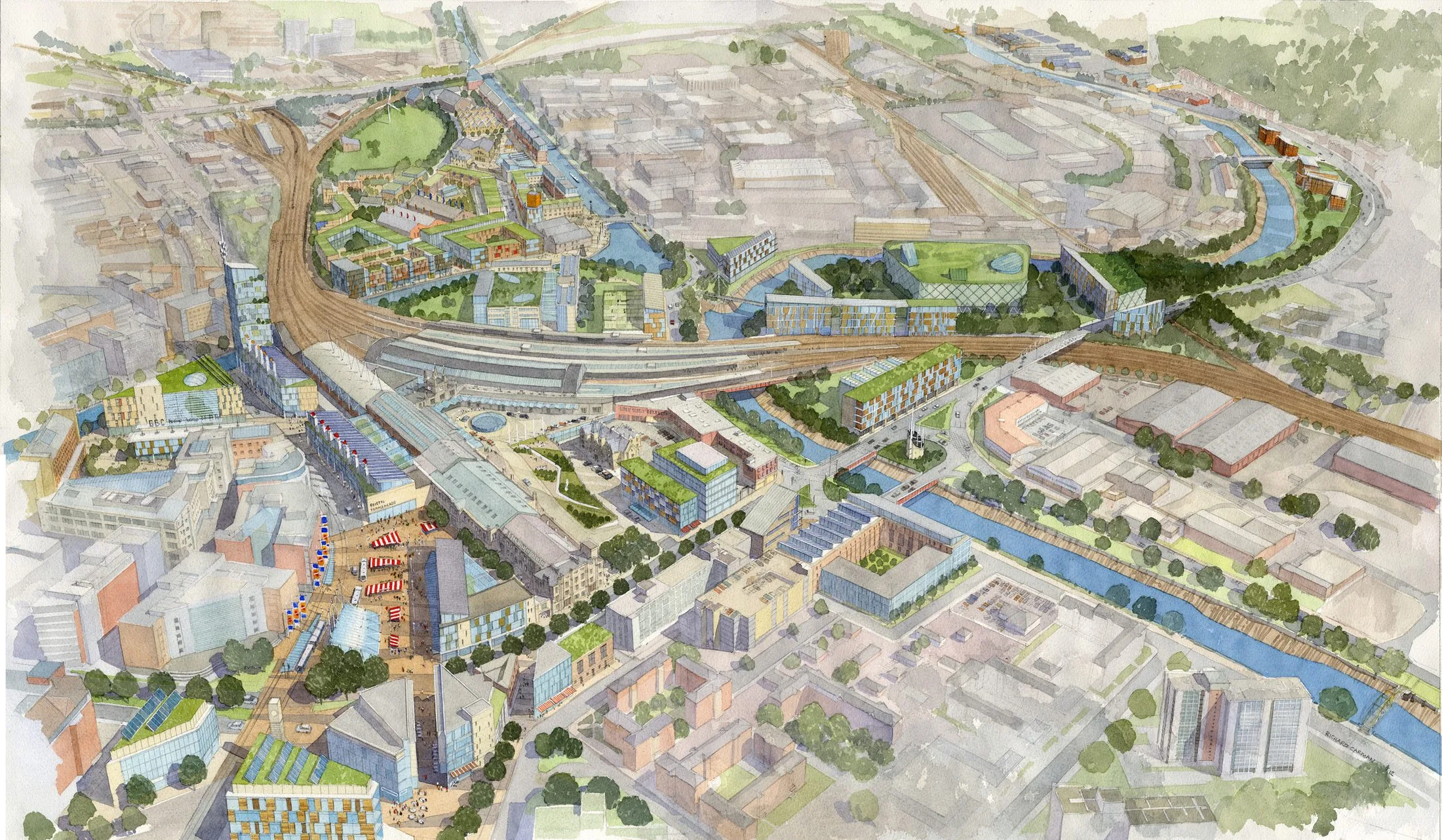
An enterprise zone and regeneration programme designated in 2012 around Bristol Temple Meads station, led by Bristol City Council with national government and regional partners. The plan uses fiscal incentives and public land assembly to convert underused railway, industrial and former sorting-office sites into a mixed-use quarter of offices, housing and education uses, anchored by station improvements and later plans for a new university campus. It is one of the larger city-centre enterprise zones created in England in that period.
Significance
Temple Quarter shows the English enterprise-zone instrument redirected from greenfield industry to station-area urban regeneration, aligning it with transit-oriented planning ideas. It is a reference point in debates on devolved growth policy in the UK's core cities and on the slow, land-assembly-heavy nature of railway-land redevelopment.
What shaped it
- The compact city (1973-1990s)
- Transit-oriented development (TOD) (1993)
- Global financial crisis (2007–2009)
Sources
- https://en.wikipedia.org/wiki/Bristol_Temple_Quarter_Enterprise_Zone
- https://www.bristol.gov.uk/business/planning-and-building-regulations-for-business/planning-for-