Budapest Andrássy Avenue & Grand Boulevard
Core idea
Council-led radial avenue and ring boulevard that remade Pest into a modern capital.
Why it matters
First comprehensive state-led metropolitan regeneration in Central Europe.
Description
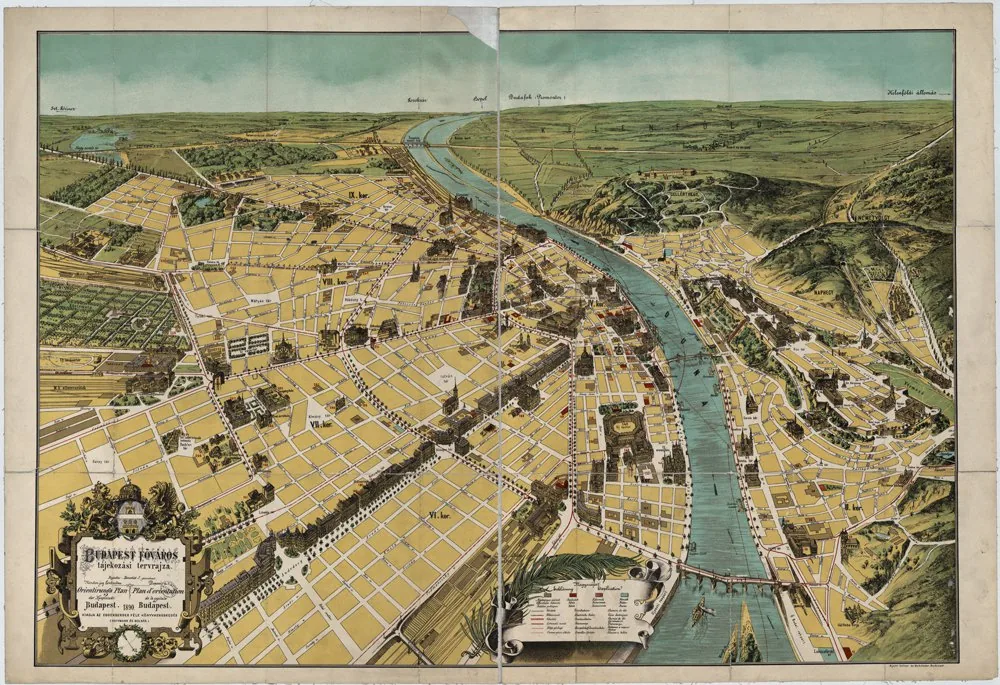
Following the 1870 founding of the Council of Public Works, Pest was reorganised around two great new arteries. The straight, roughly 2.3-kilometre Sugárút (renamed Andrássy Avenue in 1885), cut from 1872 and opened in 1876, ran from the inner city to the City Park and was lined with neo-Renaissance and eclectic palaces and villas. The semicircular Nagykörút, or Grand Boulevard, traced a former Danube backwater to gird the growing city. The same programme regulated the Danube embankments and quays. Paris-inspired in scale and intent, the scheme imposed a unified boulevard armature on a previously congested medieval-cored town.
Significance
The Budapest works established the template for council-directed metropolitan modernisation in the Habsburg lands, knitting Pest's growth onto a coherent radial-and-ring framework that still defines the city. Beneath Andrássy Avenue ran the first electric underground railway on the European continent (1896). Inscribed on the UNESCO World Heritage List in 2002, the avenue endures as one of Europe's most complete nineteenth-century boulevard ensembles and a model of integrated infrastructure planning.
What became of it
Both were built largely as planned: Andrassy ut (1872-76) as a radial grand avenue to Varosliget, and the Nagykorut as the ring boulevard completed for Hungary's 1896 Millennium; Andrassy ut is now a UNESCO World Heritage element.
Critique
The ensemble prioritised monumental, Paris-inspired representational grandeur for the rising capital over broader social-housing concerns.
What shaped it
- The boulevard (17th–19th c.)
- The metro / underground railway (1863)
- Nationalism (late 18th–19th c.)
Sources
- https://en.wikipedia.org/wiki/Andr%C3%A1ssy_%C3%BAt
- https://whc.unesco.org/en/list/400/
- https://en.wikipedia.org/wiki/Ferenc_Reitter