Budapest Balázs Mór Plan
Core idea
Sustainable transport strategy
Why it matters
Coherent mobility plan for a historic city
Description
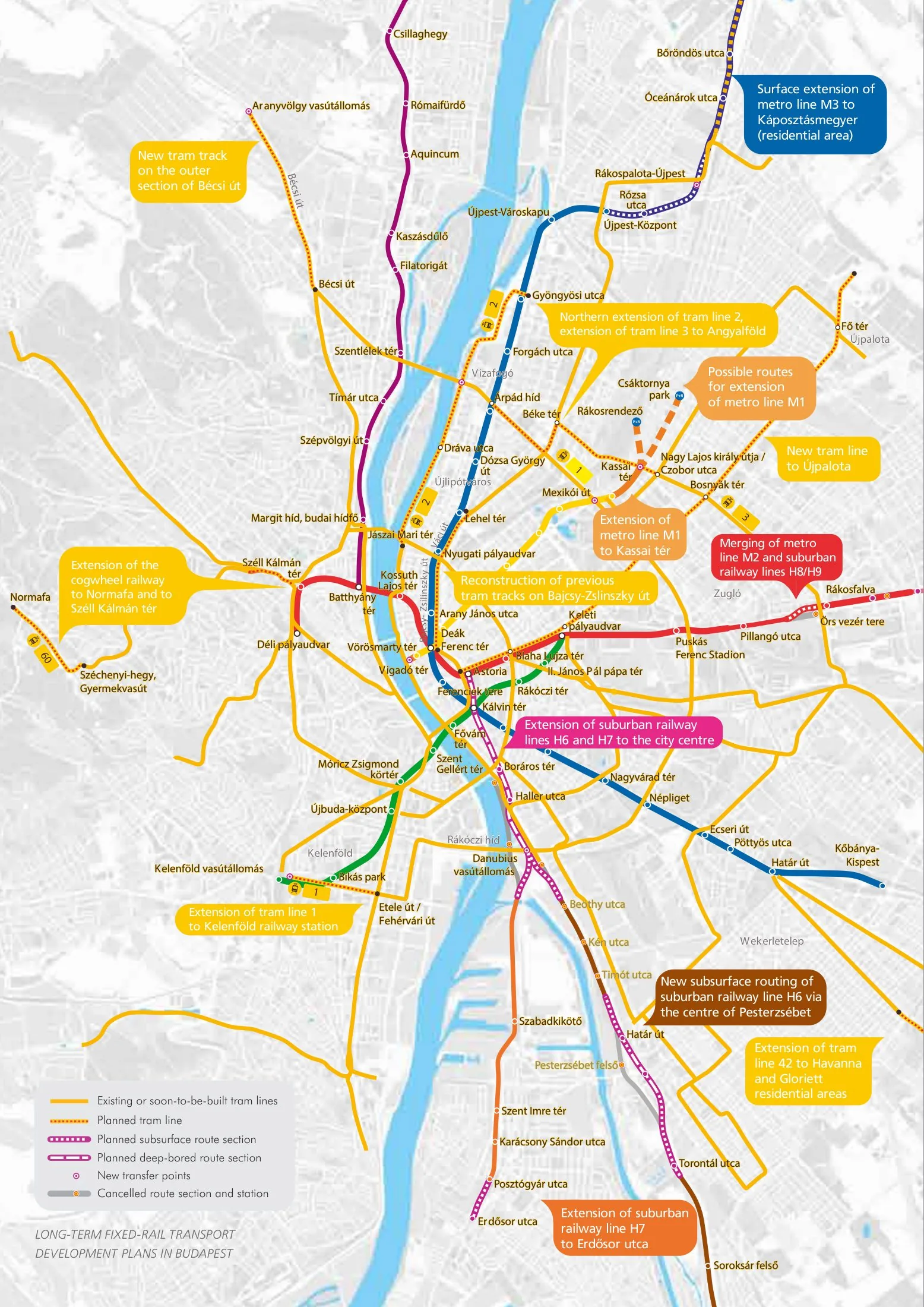
The Balázs Mór Plan, adopted in 2014 by BKK, the Centre for Budapest Transport, was Budapest's first integrated sustainable urban mobility plan, named after the nineteenth-century pioneer of the city's tramways. It set a strategy to 2030 for public transport development, cycling and walking improvements, traffic management and institutional reform, prioritising the renewal of the tram and suburban rail networks over road capacity expansion. It covers the whole capital and its functional region.
Significance
The plan marked Hungary's adoption of the EU sustainable urban mobility planning model, translating Western European SUMP methodology into a large post-socialist metropolis with an extensive but ageing transit inheritance. It is significant for reframing Budapest's transport politics around integration and demand management, and became a benchmark for mobility planning in Central and Eastern Europe.
What shaped it
- The metro / underground railway (1863)
- Transit-oriented development (TOD) (1993)
- Urban resilience (2013)
Sources
- https://bkk.hu/downloads/6323/
- https://urban-mobility-observatory.transport.ec.europa.eu/resources/case-studies/budapests-sump-