Cairo Ismailiyya (Khedivial Cairo)
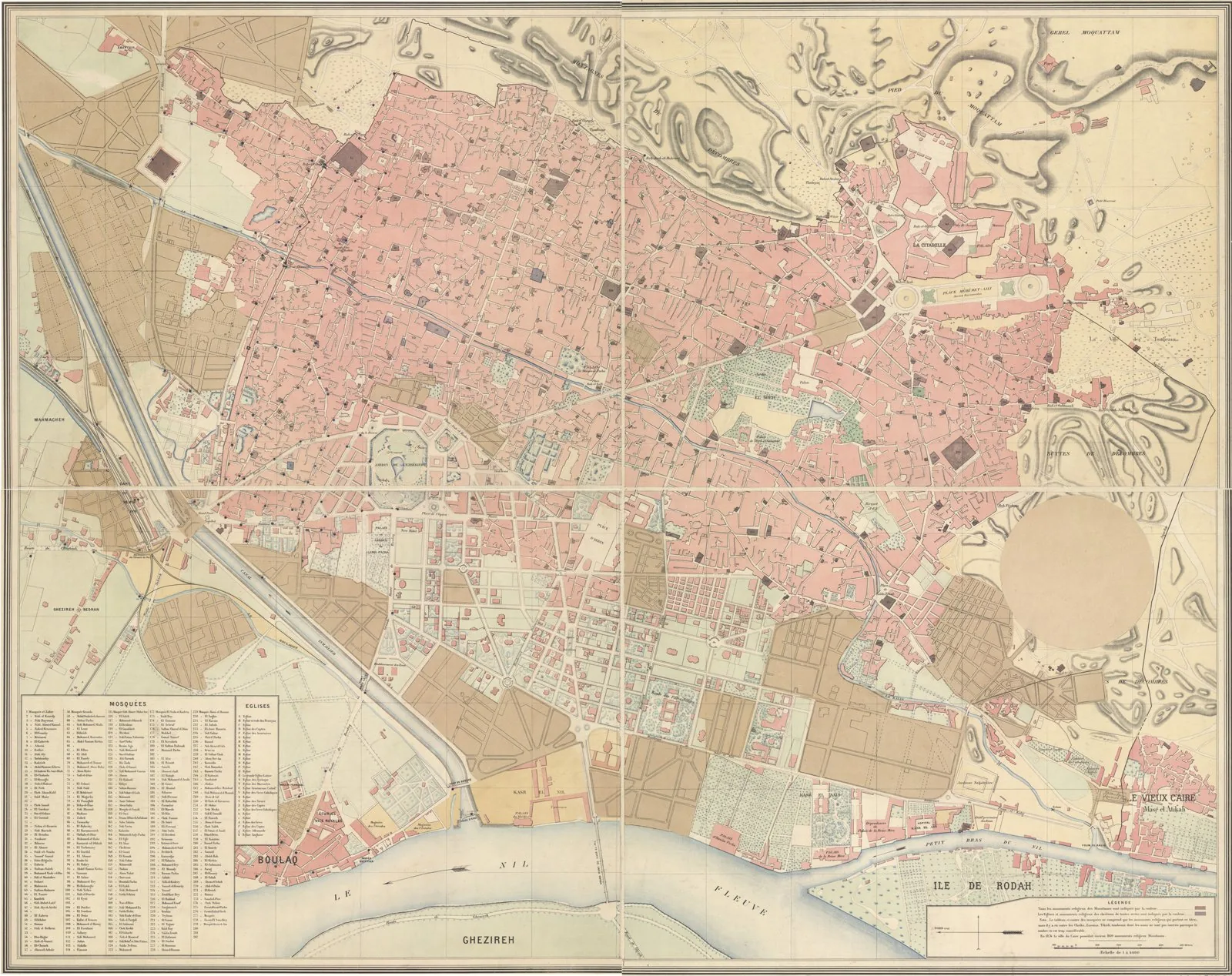
Core idea
Haussmann-style downtown with wide boulevards
Why it matters
Modernization of Cairo’s urban core
Description
From the 1860s the Khedive Ismail rebuilt central Cairo (the Ismailiyya district) on a European model, cutting broad boulevards, laying out squares and gardens, and importing Parisian-style facades to present a modernized capital ahead of the Suez Canal's opening.
Significance
Khedivial Cairo shows hygienist, Haussmann-style modernization exported to and adapted in the colonial-era Global South, creating the enduring 'two CaHiros' contrast between the planned modern centre and the historic medieval city.
What became of it
Begun 1863-67 under Khedive Ismail and laid out with French (Haussmannian) principles by Ali Mubarak and French designers; developed gradually through the 1870s and became the core of European-style Khedivial Downtown Cairo.
Critique
Conceived as a 'Paris on the Nile' for elites, it grafted a European boulevard quarter onto Cairo with little relation to the existing medieval city.
What shaped it
- The boulevard (17th–19th c.)
- Nationalism (late 18th–19th c.)
Plans it influenced
- Cairo 2050 (proposal) (2010)
Sources
- https://egymonuments.gov.eg/collections/khedivial-cairo/
- https://sites.duke.edu/cairemoderne/2019/09/29/the-khedive-in-the-city-%D8%A7%D9%84%D8%AE%D8%AF%