Calgary East Village Master Plan
Core idea
Riverfront brownfield to mixed-use
Why it matters
Catalyst for downtown Calgary’s renewal
Description
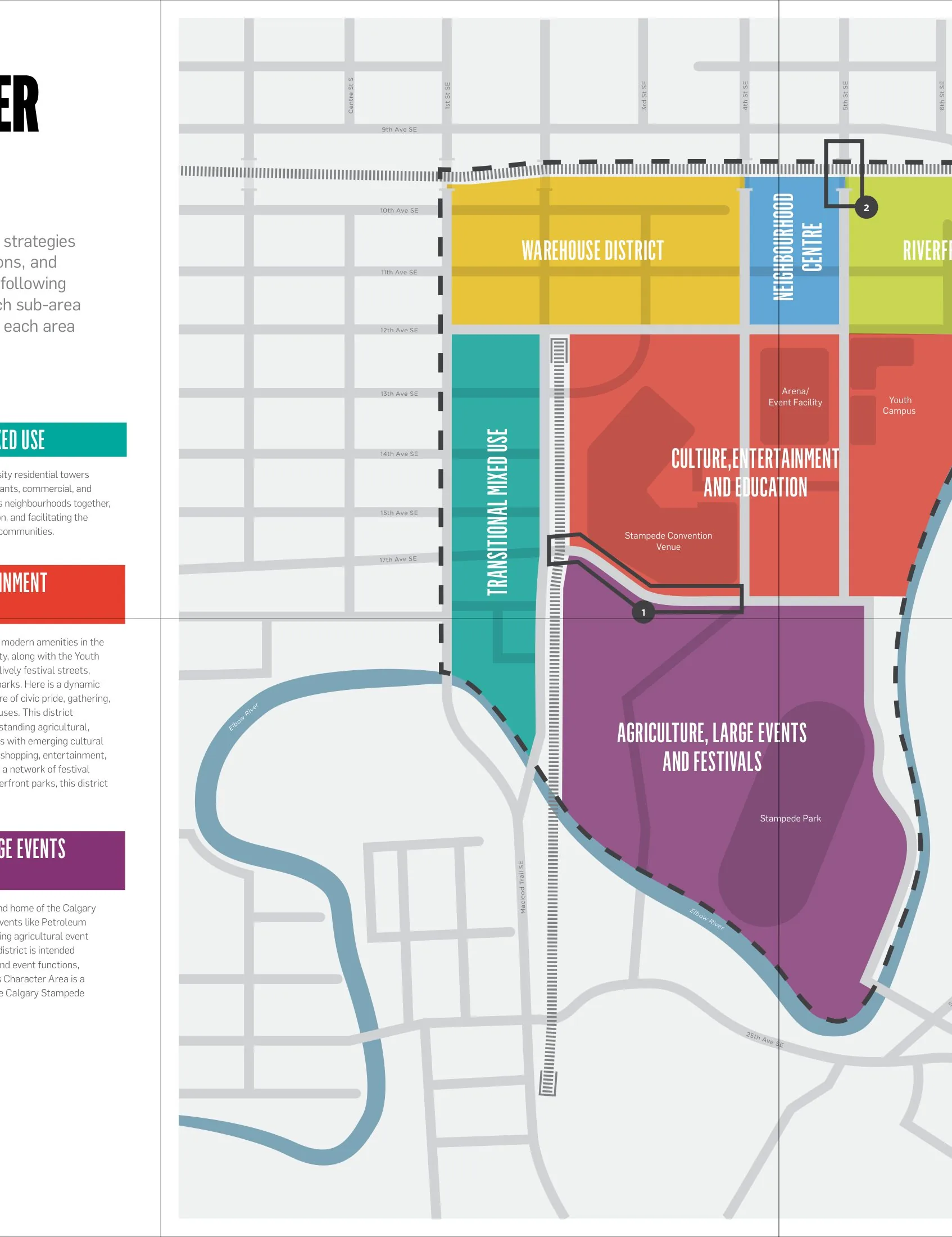
The Calgary East Village Master Plan of 2009, prepared for the Calgary Municipal Land Corporation with Broadway Malyan, set out the regeneration of a derelict riverfront district immediately east of downtown Calgary. The plan established a fine-grained mixed-use framework on former industrial and skid-row land along the Bow River, anchored by a riverfront promenade and new cultural institutions, with land value uplift captured through a community revitalisation levy to fund infrastructure.
Significance
East Village is regarded as one of Canada's clearer demonstrations of publicly led brownfield regeneration, using an arm's-length development corporation and tax-increment-style financing rarely applied at this scale in the country. It catalysed the wider renewal of downtown Calgary's eastern flank and is cited in debates on culture-led regeneration and on how resource-economy cities diversify their urban cores.
What shaped it
- Landscape urbanism (Waldheim) (1997-2006)
- The compact city (1973-1990s)
- Global financial crisis (2007–2009)
- World becomes majority urban (2007)
Sources
- https://www.calgarymlc.ca/projects/east-village-master-plan
- https://www.broadwaymalyan.com/projects/east-village/