Casablanca Eco-City Zenata
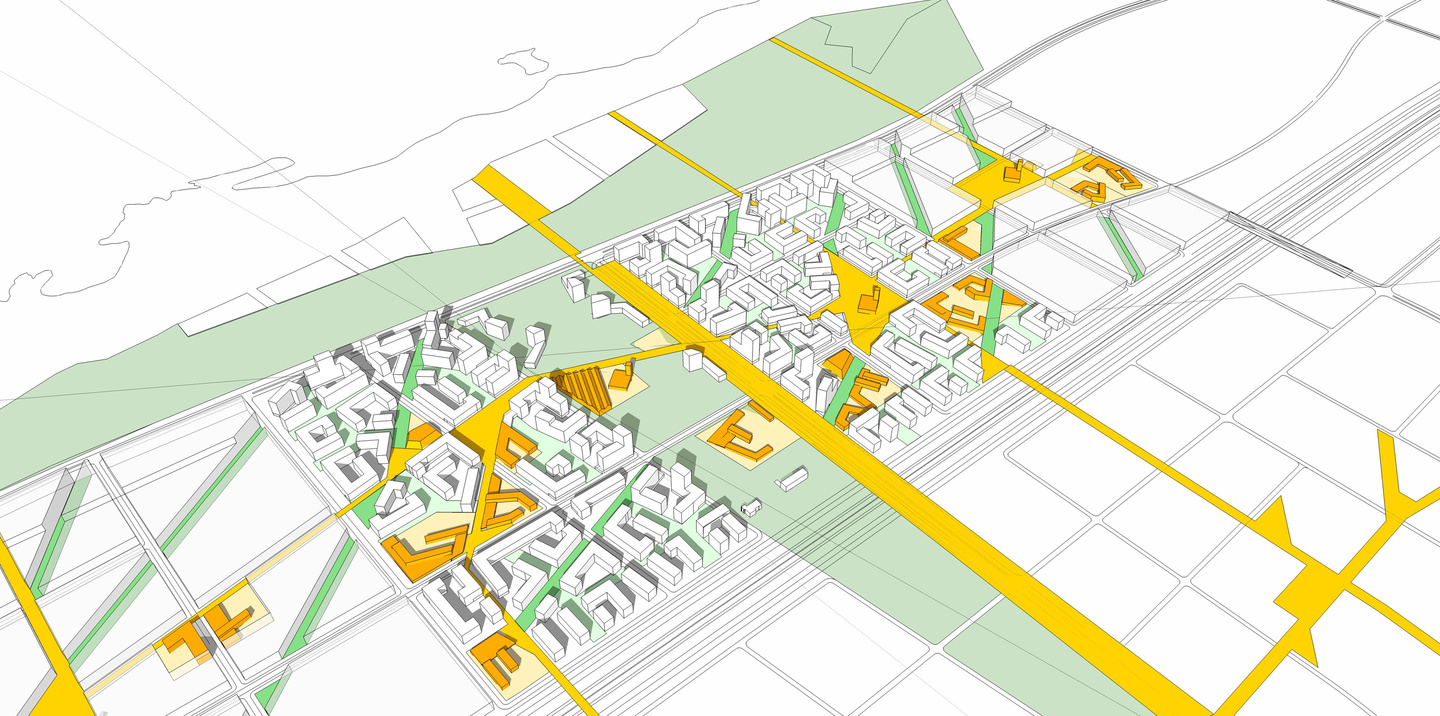
Core idea
Transit-linked eco-district between Casa–Rabat
Why it matters
Large-scale brownfield to mixed-use
Description
Zenata Eco-City is a new-town-scale eco-district planned from 2012 by CDG Development, a subsidiary of Morocco's Caisse de Depot et de Gestion, on a largely industrial and informal coastal site between Casablanca and Rabat, within Casablanca's north-eastern periphery. The plan converts brownfield and under-used land into a mixed-use district structured around commuter-rail and motorway links on the Casa-Rabat corridor, with a green framework of parks and wind corridors, phased housing, retail and logistics quarters, and the relocation and rehousing of existing shanty settlements. It is one of Africa's largest planned eco-city projects and carries an eco-city label certified against international sustainability standards.
Significance
Zenata is significant as a leading African example of state-led eco-city development applied to brownfield regeneration rather than greenfield expansion, and as part of Morocco's wider villes nouvelles programme. It illustrates both the ambitions and the tensions of Global South sustainable urbanism: transit-linked, environmentally certified planning delivered by a state investment arm, alongside debates about resettlement of informal residents and the affordability of the resulting district. It is frequently cited in discussions of how eco-city models translate outside Europe and East Asia.
What shaped it
- Transit-oriented development (TOD) (1993)
- Sustainable development (Brundtland) (1987)
- Urban resilience (2013)
Sources
- https://darpe.me/implement-entries/zenata-development-company-saz/
- https://www.ca-rra.fr/en/project/ville-nouvelle-de-zenata