Cusco (Inca Capital)
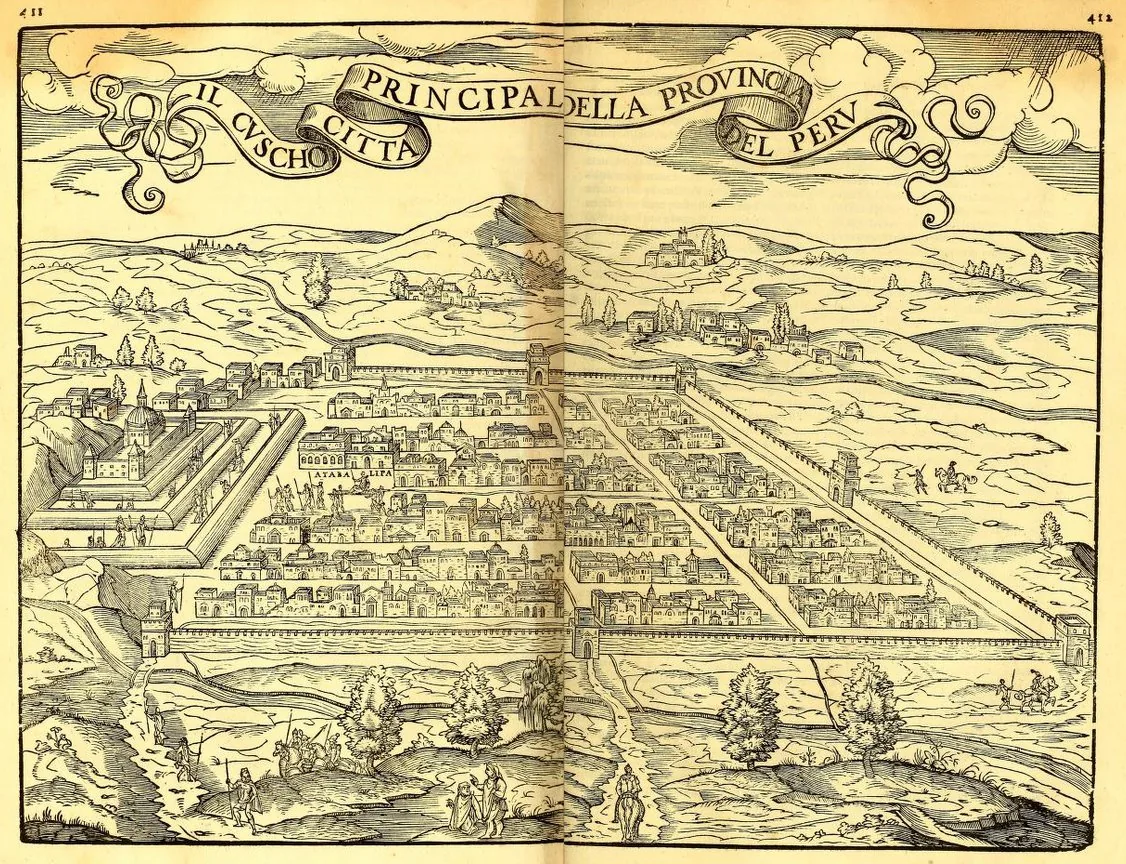
Core idea
City laid out in the shape of a puma; ceque system of radiating sacred lines; megalithic stone construction; terraced water management
Why it matters
Capital of the largest pre-Columbian empire in the Americas; urban form as cosmological diagram; Spanish colonial grid overlaid but Inca walls survive
Description
Reshaped under Pachacuti in the 15th century, Cusco was the sacred and administrative navel of the Inca empire, reputedly laid out in the form of a puma with the fortress-temple of Sacsayhuamán as its head. From its central plaza radiated the ceque system — sighting lines connecting hundreds of shrines across the landscape — while precision-cut megalithic masonry and terraced water channels expressed both engineering mastery and cosmic order.
Significance
Cusco shows urban form as a cosmological and political diagram extending far beyond the built core into the surrounding sacred geography. Though the Spanish overlaid a colonial grid and churches, the indestructible Inca walls survive beneath, making Cusco a living palimpsest of indigenous and colonial city-making.
What became of it
Sacked and re-founded as a Spanish colonial city in 1533–34; Inca palaces and the puma plan were overbuilt with churches and colonial structures on the surviving megalithic foundations, which remain visible. Now a UNESCO World Heritage historic centre.
Critique
Some scholars dispute the literal 'puma-shaped' plan, treating the feline form as a later metaphorical or post-conquest interpretation rather than a demonstrable original design intent.
What shaped it
- Andean agricultural terracing (andenes) (c. 600 BCE onward; Inca peak 15th c. CE)