Dublin Docklands Strategic Development Zone (SDZ)
Core idea
Plan-led redevelopment of North/South Lotts
Why it matters
Model of plan-led consent to accelerate delivery
Description
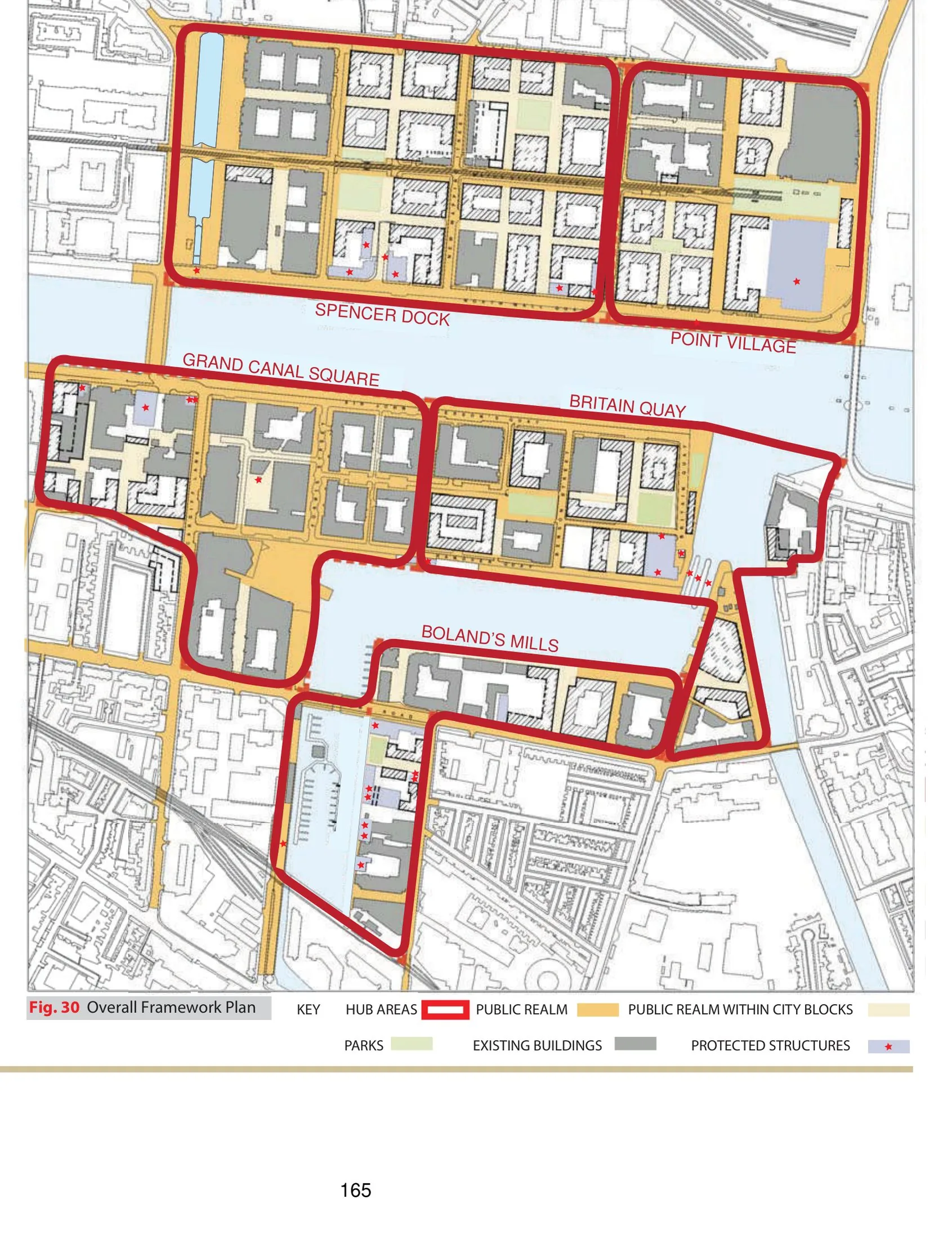
The Dublin Docklands Strategic Development Zone, designated in 2012 with its planning scheme approved in 2014, covers the North Lotts and Grand Canal Dock areas of Dublin's former docklands in Ireland. Prepared by Dublin City Council after the winding down of the Dublin Docklands Development Authority, the SDZ scheme set out a plan-led framework of urban blocks, heights, uses and public realm for the remaining development land on both sides of the Liffey. Once a scheme is adopted, compliant applications cannot be appealed, giving developers and the council certainty and speed of consent.
Significance
The Docklands SDZ became the principal Irish model of plan-led consenting, showing how a statutory scheme could accelerate delivery of a major waterfront quarter after the 2008 crash and the failure of the previous quango-led approach. It underpinned the rapid build-out of the docklands as Dublin's financial and technology district. It is debated both as a success in delivery certainty and as a case study in affordability and the dominance of office and build-to-rent development.
What shaped it
- The compact city (1973-1990s)
- The master plan (early 20th c.)
- Global financial crisis (2007–2009)
Sources
- https://en.wikipedia.org/wiki/Docklands_Strategic_Development_Zone
- https://www.dublincity.ie/planning-and-land-use/learn-about-councils-plans-city/strategic-develo