Fez (Fes el-Bali)
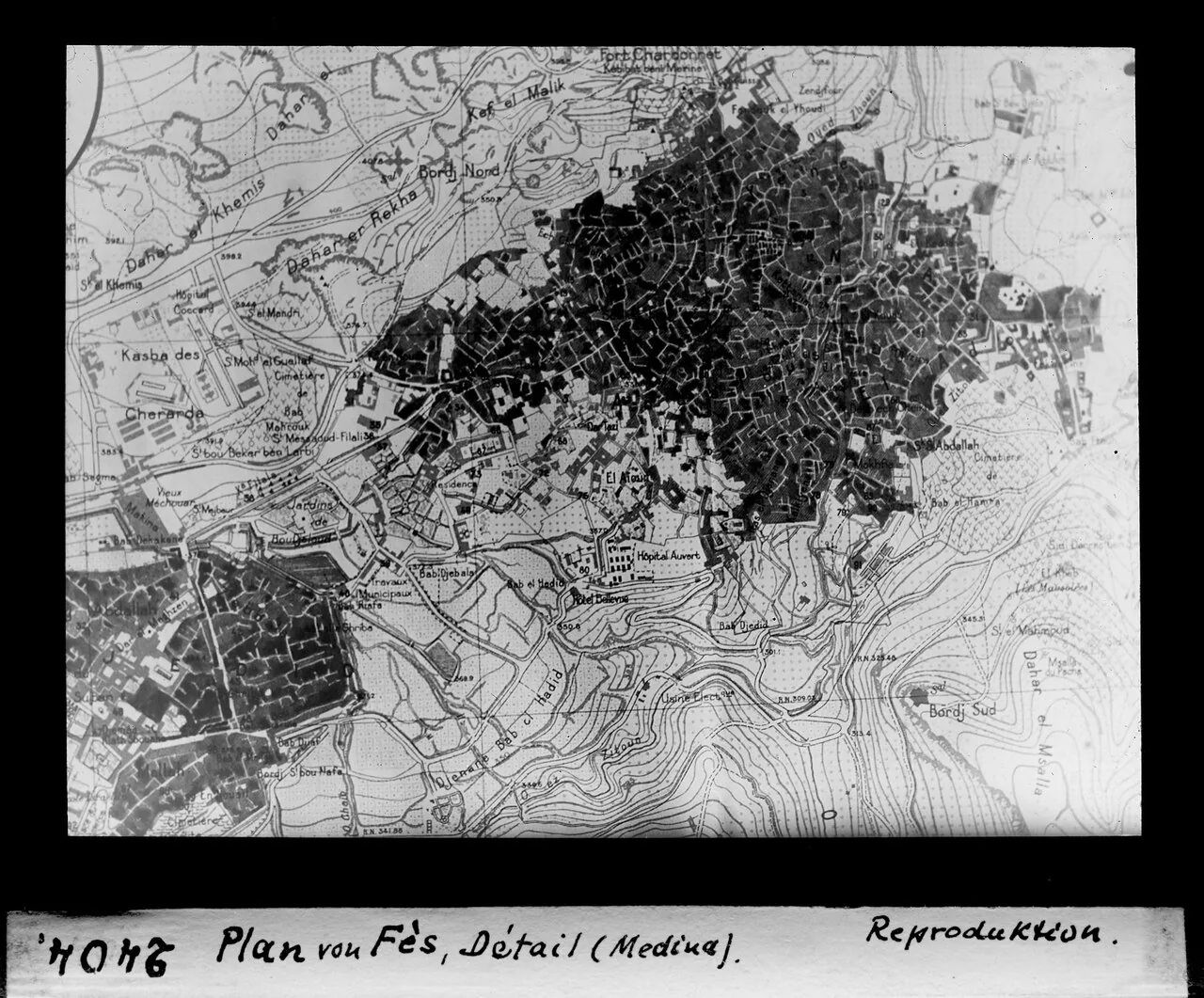
Core idea
Imperial-mercantile medina built around the Qarawiyyin mosque-university, with a dense organic street network, souqs, fondouks, and a sophisticated water-distribution system
Why it matters
One of the most intact medieval Islamic cities; the model of the organic North African medina driven by trade, learning, and craft guilds
Description
Fez el-Bali, the old city of Fez in Morocco, was founded in 789 CE by the Idrisid dynasty on the banks of the Fez river. It grew as an imperial and mercantile medina structured around the Qarawiyyin mosque and university, with a dense, organic network of narrow streets and alleys serving souqs, fondouks, tanneries and residential quarters, all supplied by a sophisticated gravity-fed water-distribution system drawn from the river.
Significance
Fez el-Bali is among the most intact medieval Islamic cities and the archetype of the organic North African medina, whose form was generated by trade, religious learning and craft guilds rather than by geometric design. The Qarawiyyin is often cited as the world's oldest continuously operating degree-granting institution, and the city, a UNESCO World Heritage site, is a key reference in debates about the logic and value of unplanned urban fabric.
What shaped it
- The Caliphates (632–1258)