Ginza Bricktown (Renga-gai), Tokyo
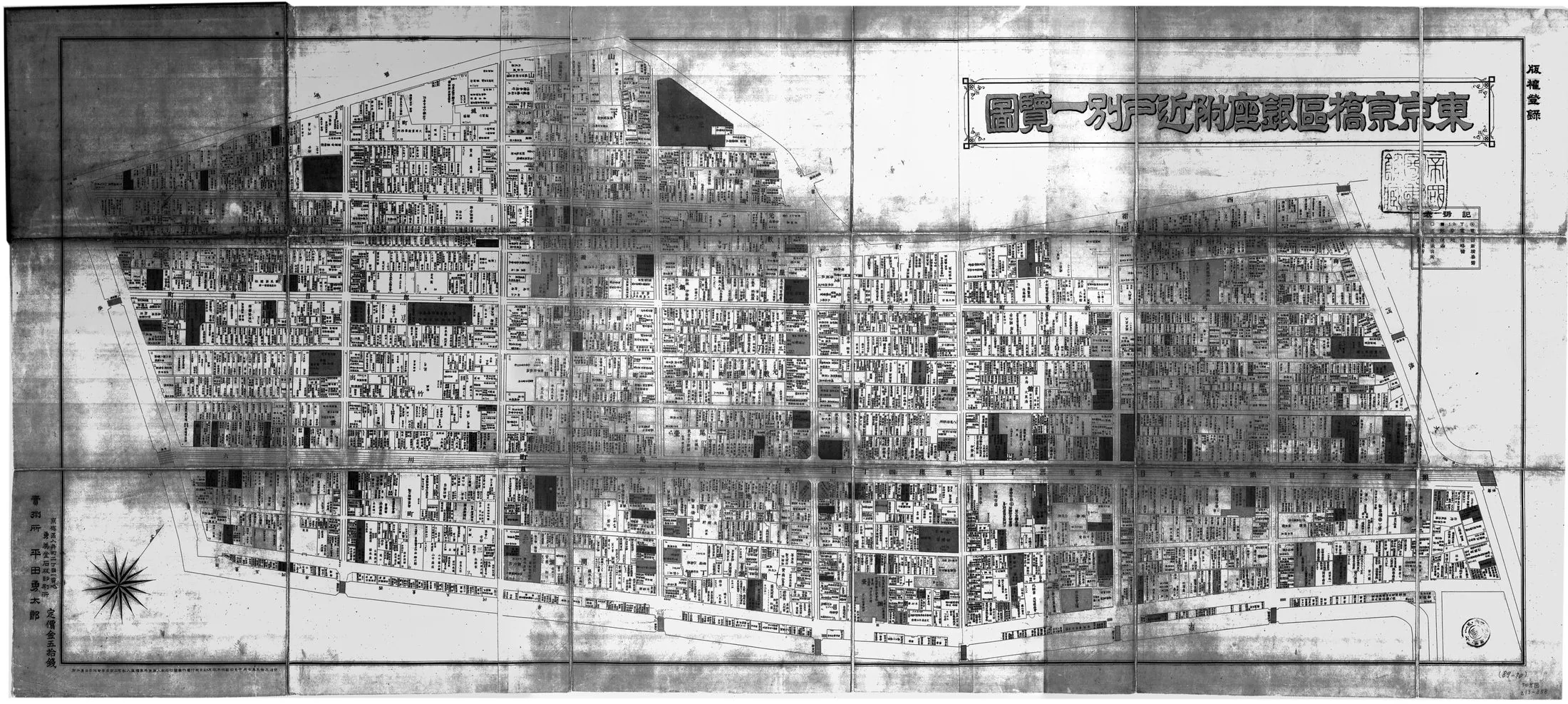
Core idea
Post-fire fireproof brick district that broadcast Meiji Westernisation in central Tokyo.
Why it matters
Introduced modern street sections, sidewalks and fireproof construction to Japan.
Description
After a fire destroyed the Ginza quarter in 1872, the Meiji Ministry of Finance commissioned the Irish-born architect Thomas James Waters to rebuild it as a fireproof district of Western-style brick buildings. The main street was widened to roughly 27 metres and divided into a macadamised carriageway and brick-paved footways, the first sidewalks in Tokyo, planted with roadside trees and lit by gas lamps. The district linked Shimbashi railway station to the Tsukiji foreign settlement. Costly and unpopular, construction largely stalled by 1873, and many buildings retained Japanese tiled roofs, so the result was only partly the European street its sponsors imagined.
Significance
Ginza Bricktown became the flagship emblem of bunmei kaika, the Meiji ideal of civilisation and enlightenment, demonstrating Western brick construction, street lighting and the separated carriageway-and-sidewalk section to a modernising Japan. Although the scheme was incomplete and contested, it established Ginza's enduring identity as a fashionable commercial quarter and seeded planning ideas that informed later Japanese urban improvement. It remains a touchstone in narratives of nineteenth-century Asian urban Westernisation.
What became of it
The Westernised brick town was substantially completed in the 1870s but was widely seen as costly and poorly maintained, with many shops standing empty. It was almost entirely destroyed by fires following the 1923 Great Kanto Earthquake and subsequently rebuilt in other forms.
Critique
The fireproof brick terraces proved expensive and ill-suited to Japan's humid climate, leaving many premises unoccupied for years.
What shaped it
- Photography and film (photography 1839; cinema 1895)
- Gas street lighting (1807)
- Industrial Revolution accelerates (c. 1769)