Gondar (Fasil Ghebbi)
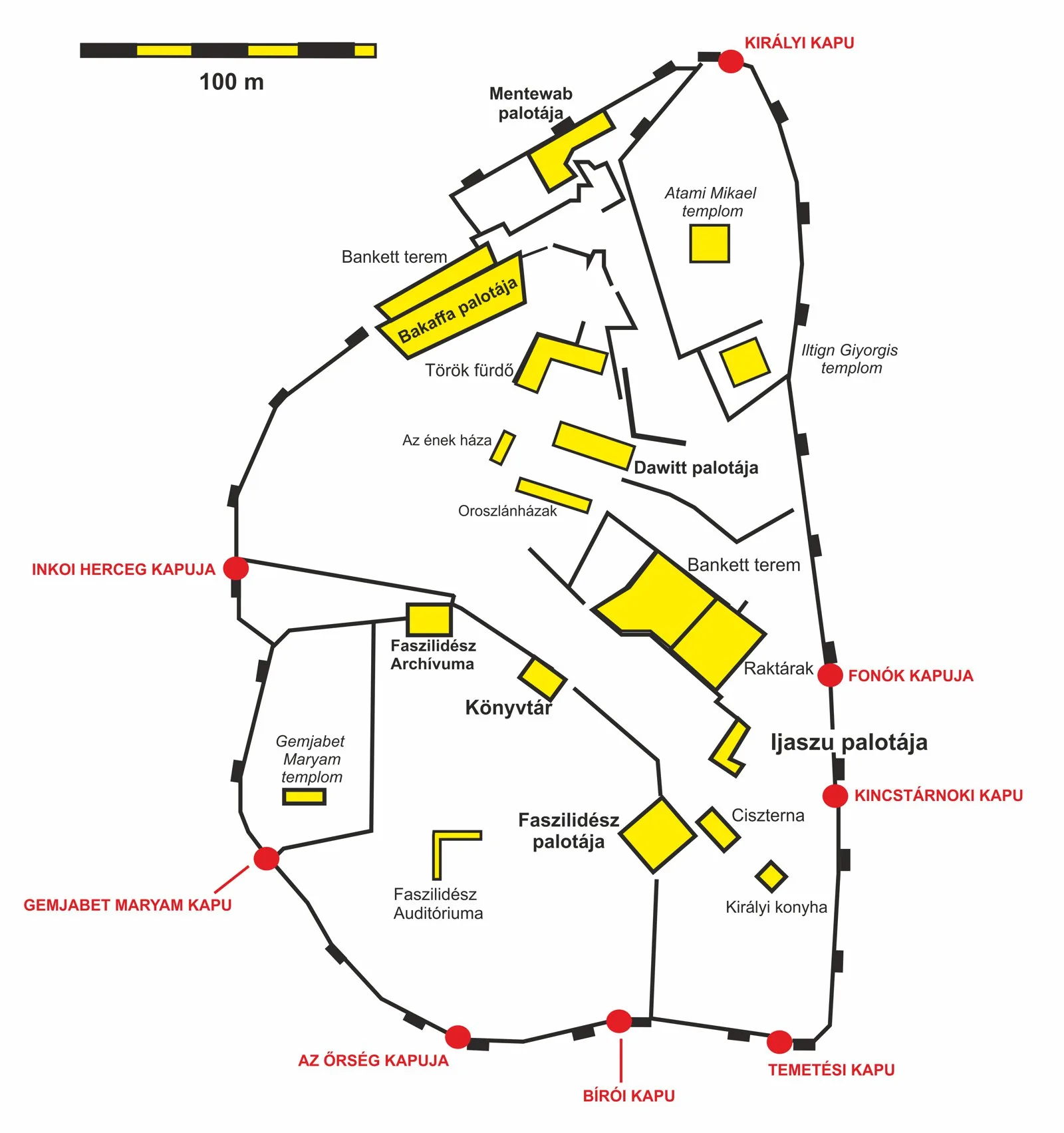
Core idea
Ethiopian royal capital organized around a walled compound of stone castles, churches, and baths set in a landscape of churches
Why it matters
Rare African example of a fixed royal-capital tradition with monumental masonry; "Camelot of Africa" ending centuries of mobile courts
Description
Gondar was established in 1636 by Emperor Fasilides as the fixed royal capital of Ethiopia, ending a long tradition of mobile tented courts. The city grew around the Fasil Ghebbi, a walled royal compound of stone castles, banqueting halls, libraries and baths built in a distinctive style blending Ethiopian, Portuguese-influenced and Indian elements, set within a wider landscape of churches such as Debre Berhan Selassie. Markets and quarters developed around this monumental core.
Significance
Gondar is a rare African example of a fixed royal-capital tradition expressed in monumental masonry, sometimes called the Camelot of Africa. Now a UNESCO World Heritage Site, it is significant in planning history for showing an indigenous African court urbanism that consolidated power in permanent architectural form.
What shaped it
- Ethiopian rock-hewn church complexes (Lalibela) (c. 12th–13th c. CE)
- Christianity & Islam (1st c. CE / 622 CE)