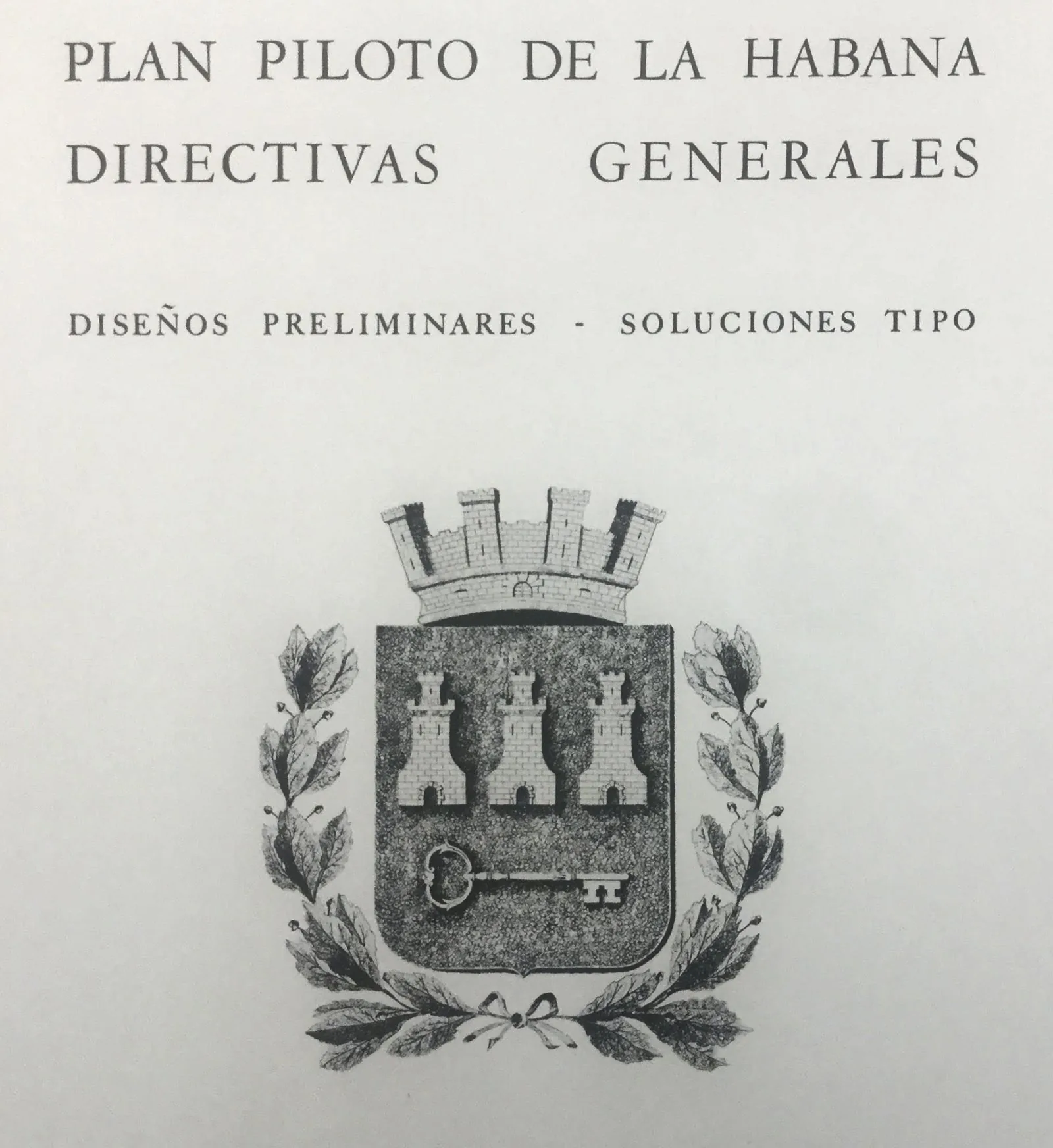
Havana Plan Piloto
Core idea
Modernist capital plan
Why it matters
Latin modernism in the Caribbean
Description
A master plan for Havana prepared in 1955–58 by Town Planning Associates, the firm of Josep Lluís Sert and Paul Lester Wiener, for the Batista government's national planning board. Following CIAM principles, it proposed reorganising the metropolis with new expressways, functional zoning and neighbourhood units, a redeveloped civic and government centre, and a controversial remodelling of Habana Vieja that included thinning the colonial fabric and an artificial island of casinos and hotels off the Malecón. The revolution of 1959 ended the plan before implementation.
Significance
The plan is the culminating Latin American work of Sert and Wiener and a revealing document of late CIAM urbanism entangled with speculative and political interests in the pre-revolutionary Caribbean. Its proposed treatment of Old Havana has been widely criticised in retrospect, and its abandonment, followed by decades of limited redevelopment, is often credited with sparing the historic centre now recognised as a World Heritage Site.
What shaped it
- The Athens Charter (1933 / 1943)
- Ville Contemporaine / Plan Voisin / Ville Radieuse (1922–1933)
- CIAM founded (1928)
- The master plan (early 20th c.)
Sources
- https://en.wikipedia.org/wiki/Havana_Plan_Piloto
- https://www.academyofurbanism.org.uk/journal-josep-lluis-sert-and-the-havana-plan/