Helsinki Kalasatama & Pasila
Core idea
Transit-led urban cores infill
Why it matters
High-density Nordic TOD
Description
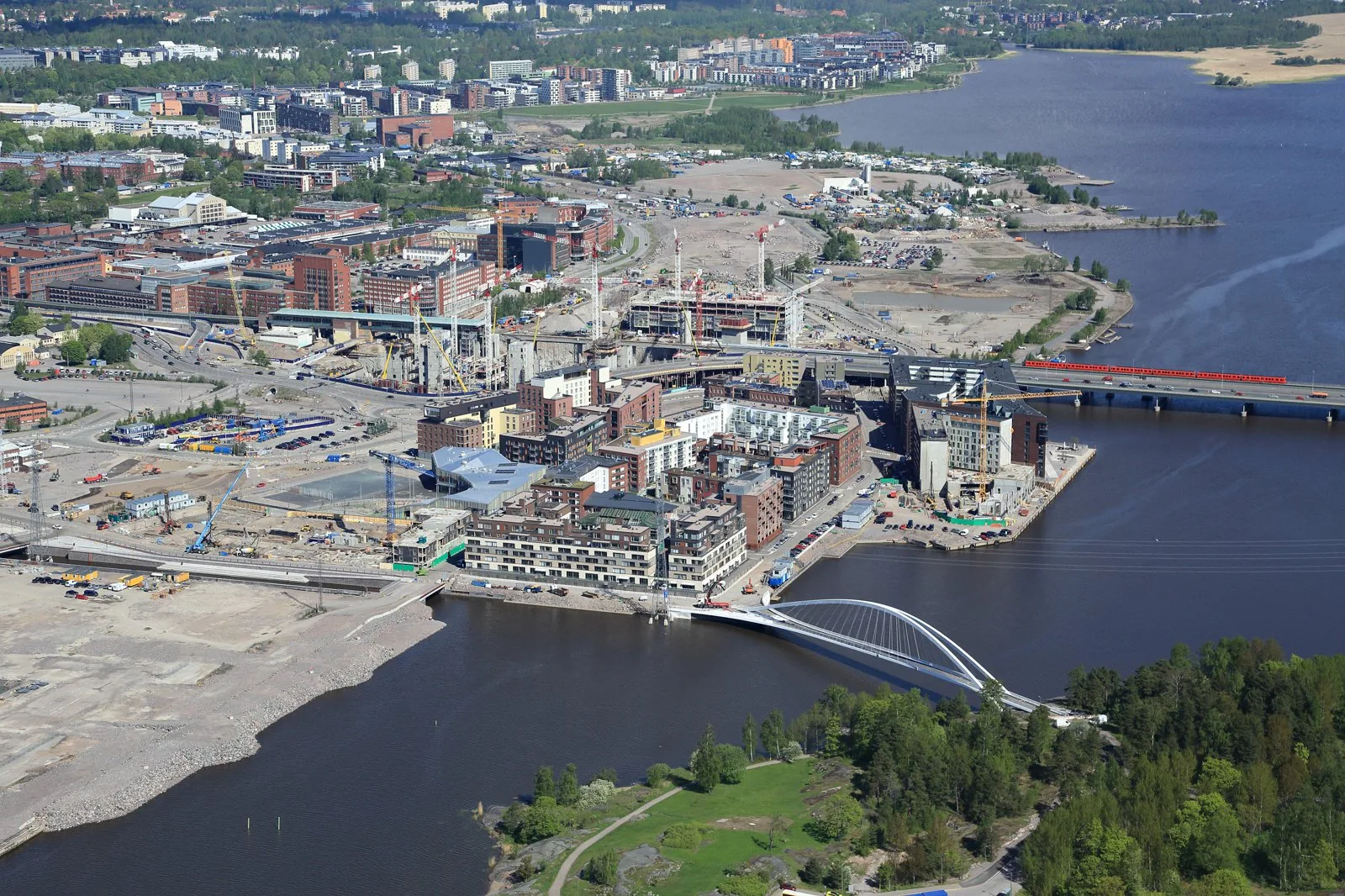
Two large infill programmes led by the City of Helsinki from the 2000s onwards: Kalasatama, a dense mixed district on former harbour land organised around a metro station and developed as a smart-city pilot, and Pasila, an intensification of rail yards around one of Finland's busiest stations, anchored by the Tripla station-mall-housing complex. Both channel the city's growth into high-density cores on brownfield land served directly by rail and metro.
Significance
Kalasatama and Pasila show how a Nordic capital can pursue transit-oriented development at genuinely high densities while retaining public land ownership and strong municipal design control. They are frequently referenced in European debates on compact growth, smart-city experimentation and the reuse of infrastructural land, offering a counterpoint to lower-density Nordic traditions of suburban expansion.
What shaped it
- Transit-oriented development (TOD) (1993)
- The compact city (1973-1990s)
- The Transit Metropolis (Cervero) (1998)
- Sustainable development (Brundtland) (1987)
Sources
- https://www.hel.fi/en/urban-environment-and-traffic/urban-planning-and-construction/urban-develo
- https://www.hel.fi/en/urban-environment-and-traffic/urban-planning-and-construction/urban-develo