Hue Imperial Citadel
Core idea
Nguyen capital fusing a Vauban-style citadel with geomancy and a Beijing-modelled inner palace.
Why it matters
A hybrid of European bastion fortification and East Asian cosmological capital planning.
Description
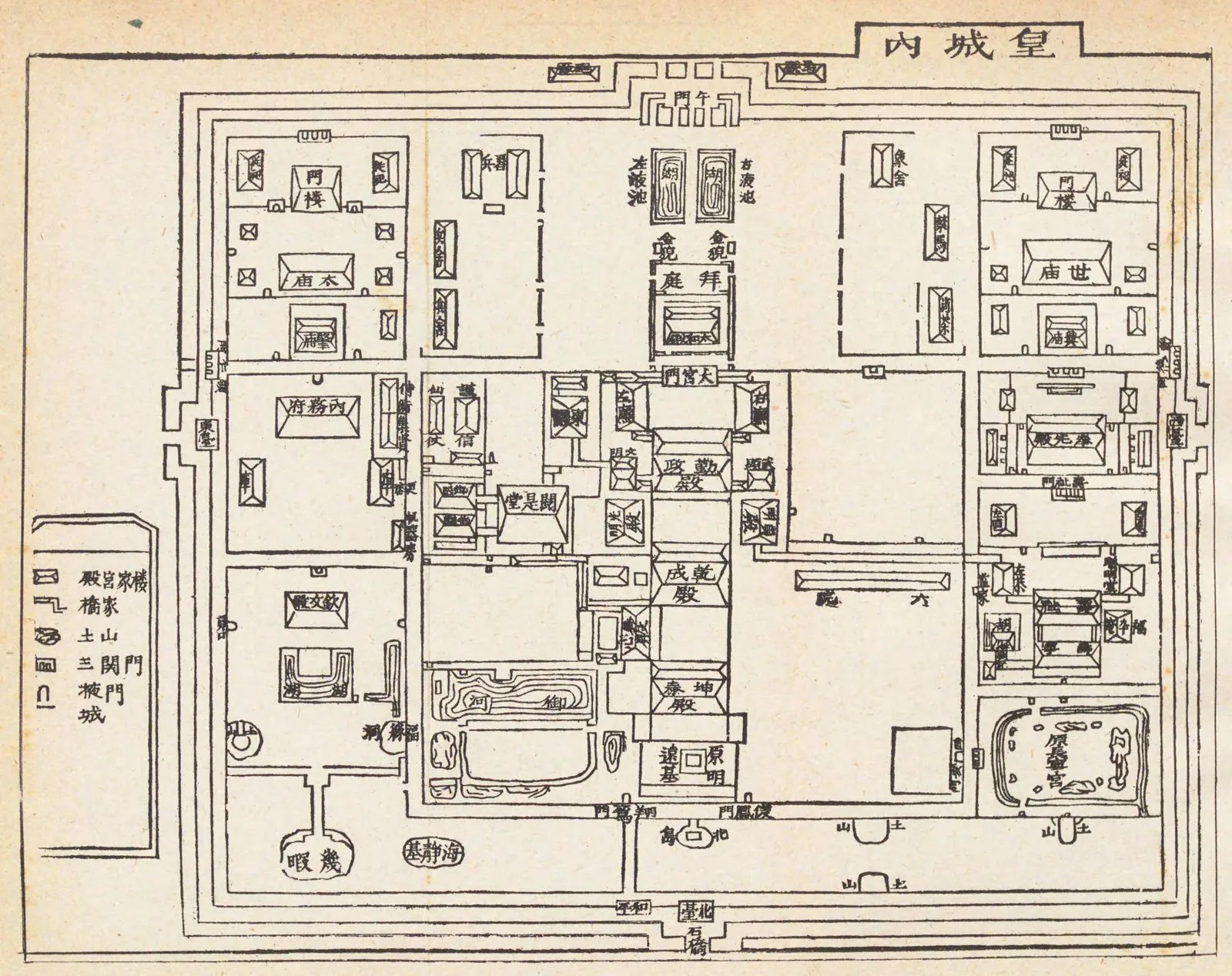
The Imperial Citadel of Hue was begun in 1804 by Gia Long, founder of the Nguyen dynasty, who two years earlier had made Hue the capital of a reunified Vietnam. Its outer enceinte follows the European Vauban system, with thick ramparts, bastions and a moat, yet the whole is sited and oriented according to feng-shui geomancy harmonising the citadel with river, hills and a screen mountain. Within the fortress lie successive enclosures: the Imperial City and, at its heart, the Forbidden Purple City reserved for the emperor, modelled on Beijing's Forbidden City. Construction continued for decades, into the reign of Minh Mang, producing a layered capital that knit Western military engineering to East Asian imperial cosmology.
Significance
Hue is a striking synthesis of two planning traditions: the bastioned Vauban fortress of early-modern Europe and the concentric, geomantically ordered imperial capital of East Asia, complete with a Forbidden City modelled on Beijing. As the last seat of Vietnamese monarchy it embodies a distinctly hybrid moment in Asian city-building. Now a UNESCO World Heritage Site, it remains an important case of cross-cultural exchange in fortification and capital design.
What became of it
Seat of the Nguyen dynasty until 1945, the citadel and its Imperial and Forbidden Purple Cities were heavily damaged in 1947 and the 1968 Tet Offensive; the surviving complex is a UNESCO World Heritage Site under restoration.
Critique
Scholars note the hybrid grafting of French Vauban geometry onto Sino-Vietnamese geomantic planning created a fortress whose European-style defences proved largely symbolic against modern artillery.
What shaped it
- The imperial capital and the central axis (fullest form Ming Beijing, from 1420)
- Fengshui landscape cosmology (Han onward, codified by Song)
- Ottoman, Mughal and Qing imperial states (16th–18th c.)
- Confucianism & Daoism (c. 5th c. BCE)
Sources
- https://en.wikipedia.org/wiki/Imperial_City_of_Hu%E1%BA%BF
- https://www.vietnamairlines.com/us/en/plan-book/travel/travel-guide/hue-historic-citadel