Igbo-Ukwu
Core idea
A forest settlement with an elite ritual and burial complex and sophisticated lost-wax bronze casting.
Why it matters
Evidences organised, hierarchical urbanism and craft specialisation in West Africa outside any centralised state.
Description
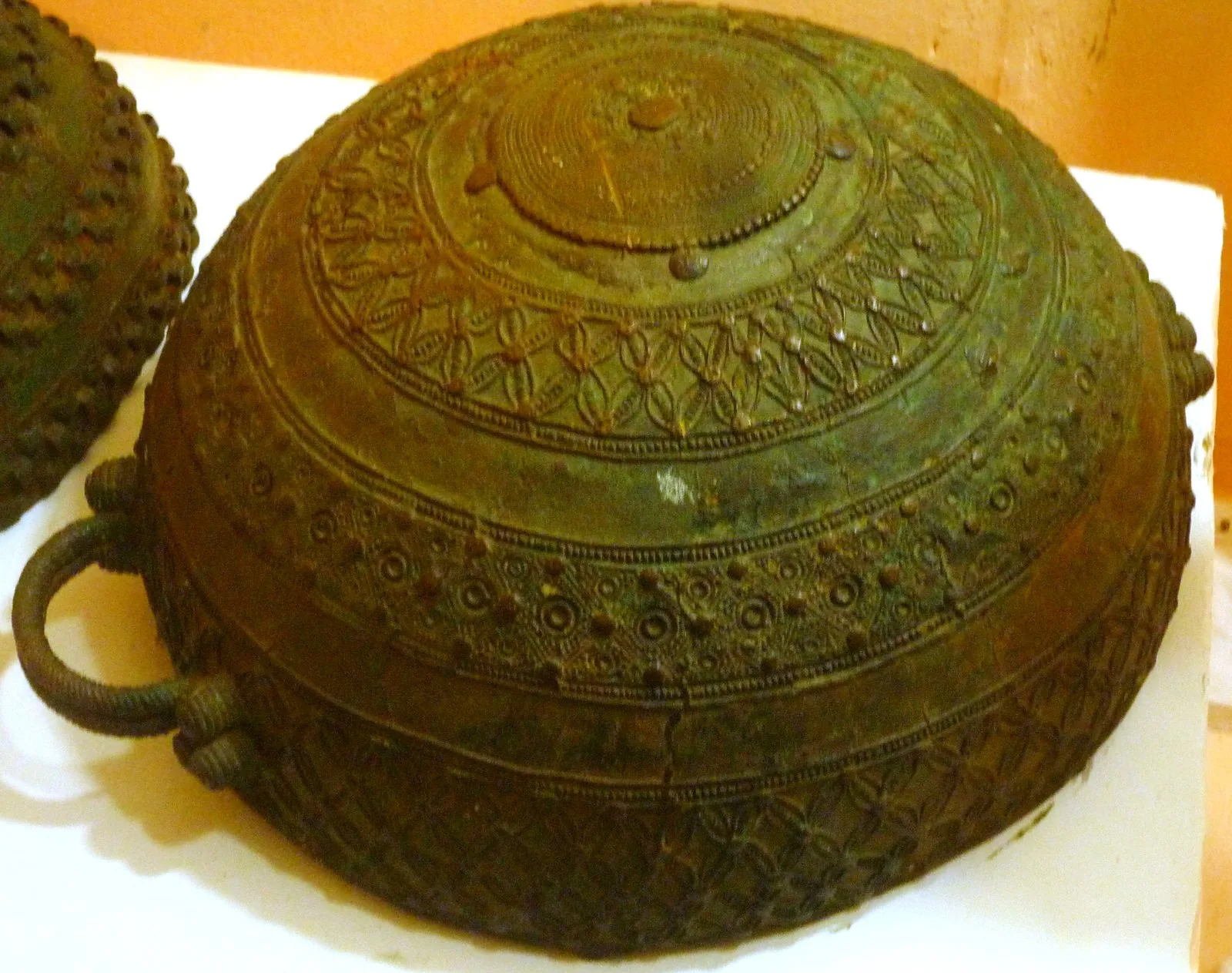
Igbo-Ukwu is an archaeological complex in present-day Anambra State, south-eastern Nigeria, excavated by Thurstan Shaw across three interconnected sites: Igbo-Isaiah, a ritual repository; Igbo-Richard, a high-status burial chamber; and Igbo-Jonah, a settlement area. Radiocarbon dates place the material to around the ninth and tenth centuries CE. Together the sites yielded over seven hundred objects, including intricately decorated bronze vessels, staff heads, pendants and carved ivory, produced by one of Africa's earliest known centres of lost-wax casting using copper and lead drawn from regional sources. The finds indicate a stratified society with ceremonial leadership, specialised craft production and participation in long-distance exchange networks.
Significance
Igbo-Ukwu reframes early West African urbanism by demonstrating sophisticated ritual, political and craft organisation in a forest society without monumental city walls or a centralised state. Its precocious bronze-casting tradition predates better-known West African metalwork, while its elite burials reveal social hierarchy and ceremonial authority. The site is a cornerstone for understanding non-state, hierarchical settlement and early technological achievement in sub-Saharan Africa.
What shaped it
- Nok culture and early West African ironworking (c. 1500 BCE – 500 CE)