London Mini-Holland (Waltham Forest etc.)
Core idea
LTNs + cycle tracks
Why it matters
Scaled active-travel retrofit
Description
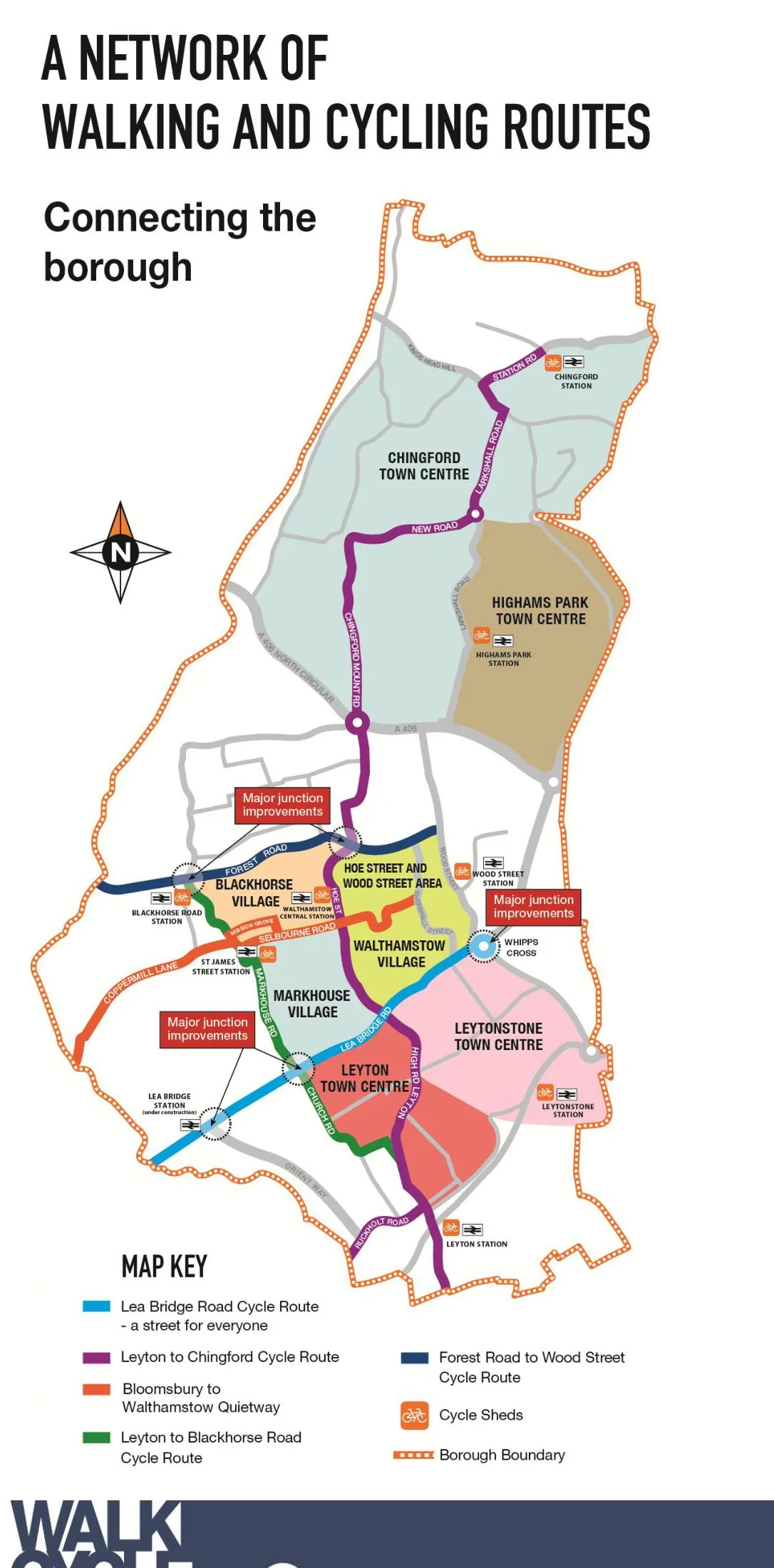
The Mini-Holland programme, launched in 2014 by Transport for London with outer London boroughs, funded Dutch-inspired cycling and street transformations, with Waltham Forest, Enfield and Kingston each receiving major grants. Waltham Forest's scheme became the best known, combining protected cycle tracks on main roads with low-traffic neighbourhoods created by filtering residential streets, alongside redesigned town-centre streets and junctions. It was a borough-scale retrofit of ordinary suburban street networks rather than a single flagship project.
Significance
Mini-Holland is one of the most closely studied active-travel retrofits in the English-speaking world, with evaluations reporting increased walking and cycling and reduced car use in treated areas. It supplied the template and evidence base for the mass rollout of low-traffic neighbourhoods across the UK around 2020, and stands at the centre of contemporary disputes over traffic filtering, consultation and street space reallocation.
What shaped it
- The bicycle (safety bicycle 1885)
- Tactical urbanism (2010s)
- The pedestrian zone (1953)
Sources
- https://www.london.gov.uk/programmes-strategies/transport/cycling-and-walking/transforming-cycli
- https://londonist.com/2014/03/tfl-announce-winning-mini-holland-bids