Luxembourg Tram & Nation Branding urbanism
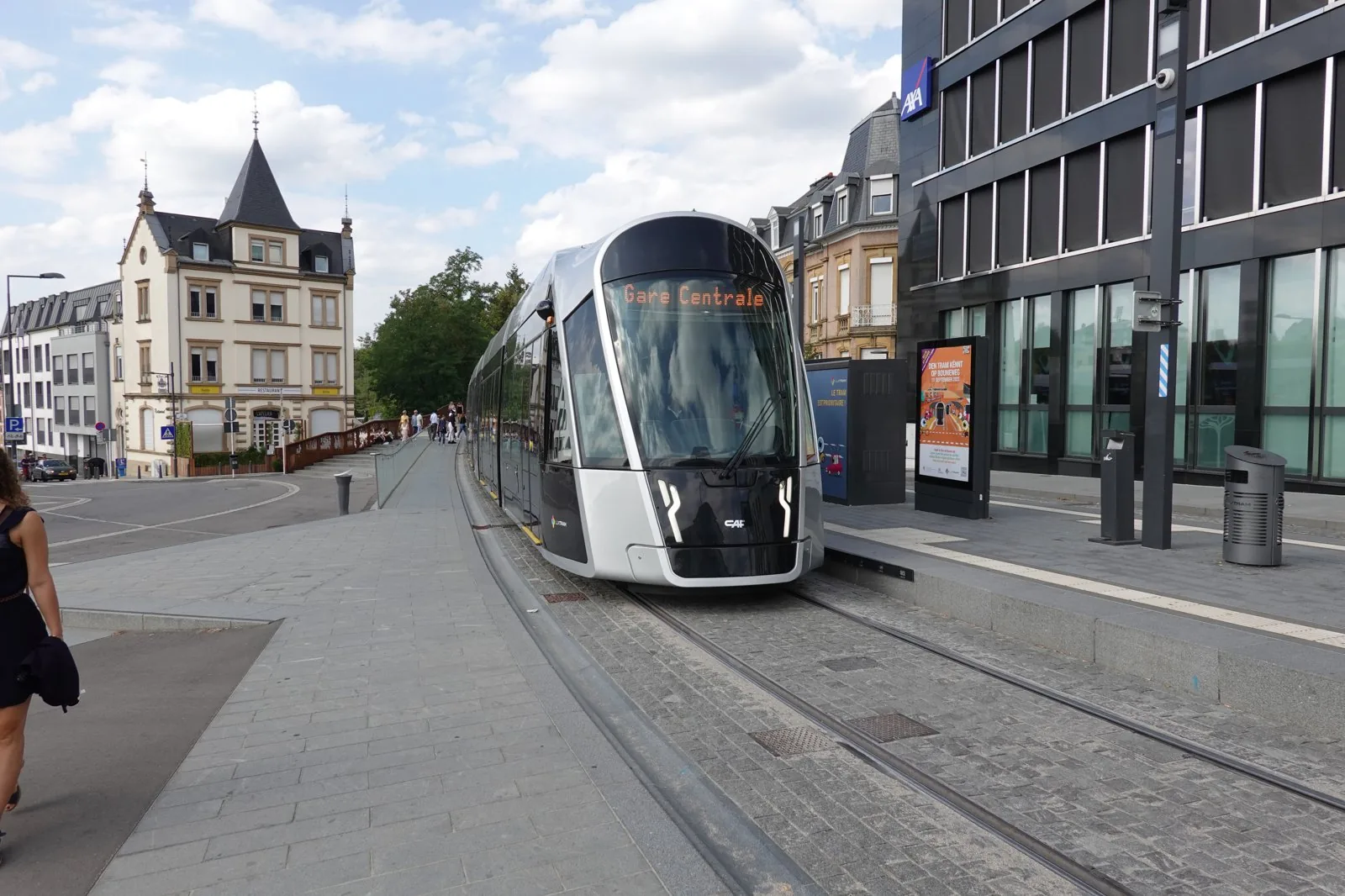
Core idea
Tram spine + Kirchberg densification
Why it matters
Tiny state big mobility shift
Description
Luxembourg's tram project, delivered by the public company Luxtram with national ministries from 2017, established a modern tram spine through Luxembourg City, linking the Kirchberg plateau of European institutions and banks with the central station and expanding towards the airport and southern districts. The line is used as an armature for densification, particularly on Kirchberg, and forms part of a wider national mobility strategy that made public transport free nationwide in 2020. It couples corridor-based land-use intensification with a deliberate recasting of the small state's international image.
Significance
The project shows how even a very small, wealthy state can use transit investment as an instrument of both urban restructuring and nation branding. It is frequently cited in European debates on transit-oriented development, fare-free public transport and the governance of cross-border commuter regions, given Luxembourg's exceptionally large inflow of workers from neighbouring countries.
What shaped it
- The street tram / streetcar (1832 horse / 1881 electric)
- Transit-oriented development (TOD) (1993)
- The Transit Metropolis (Cervero) (1998)