Malaga Plan General (PGOU 2011)
Core idea
Densification + mobility upgrades
Why it matters
Tourism city managing growth
Description
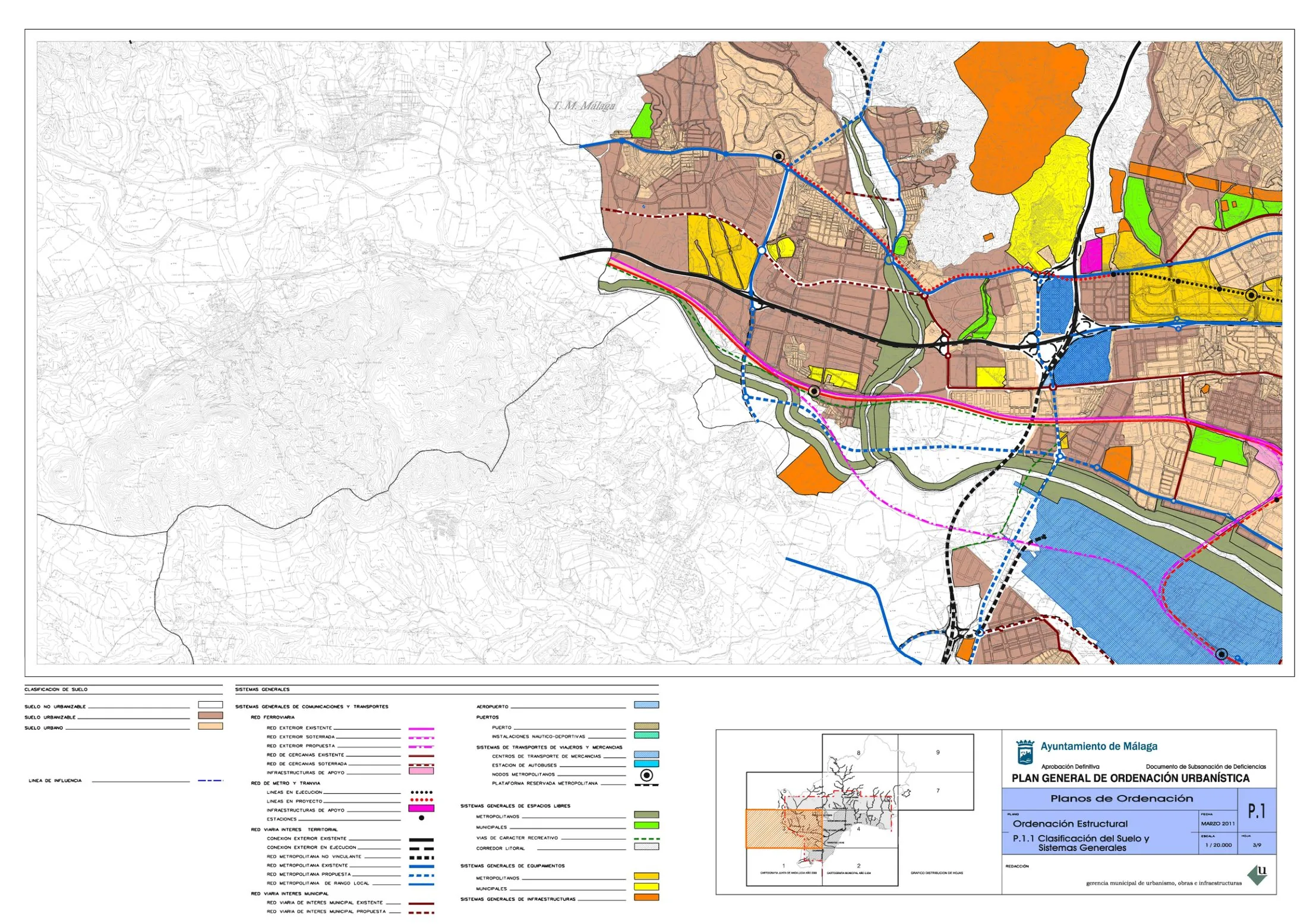
The Plan General de Ordenación Urbanística (PGOU) of Málaga, approved in 2011, is the statutory general plan for the Andalusian port city, prepared by the municipality. It steers a city grown through coastal tourism towards consolidation: densification of existing fabric, regeneration of the historic centre and port edge, and upgrades to mobility including metro and suburban rail integration. The plan allocates land for economic diversification while restraining further dispersed growth along the Costa del Sol.
Significance
The plan reflects the Spanish planning system's general-plan tradition at the moment the 2008 property crash forced a turn from expansion to management of the existing city. Málaga's subsequent repositioning as a culture- and technology-led city built on the framework it set, and the plan is cited in discussions of how tourism-dependent Mediterranean cities balance visitor economies with residents' needs. It is a representative case of post-bubble consolidation planning in southern Europe.
What shaped it
- The French loi SRU (2000)
- The compact city (1973-1990s)
- Transit-oriented development (TOD) (1993)
- Global financial crisis (2007–2009)
- Floor Area Ratio (FAR/FSI) (20th c.)
Sources
- https://www.juntadeandalucia.es/boja/2011/170/17
- https://urbanismo.malaga.eu/normativa-y-planeamiento/pgou-2011/