Medellín BIO 2030
Core idea
Green structure + integrated mobility
Why it matters
Regional ecological structure
Description
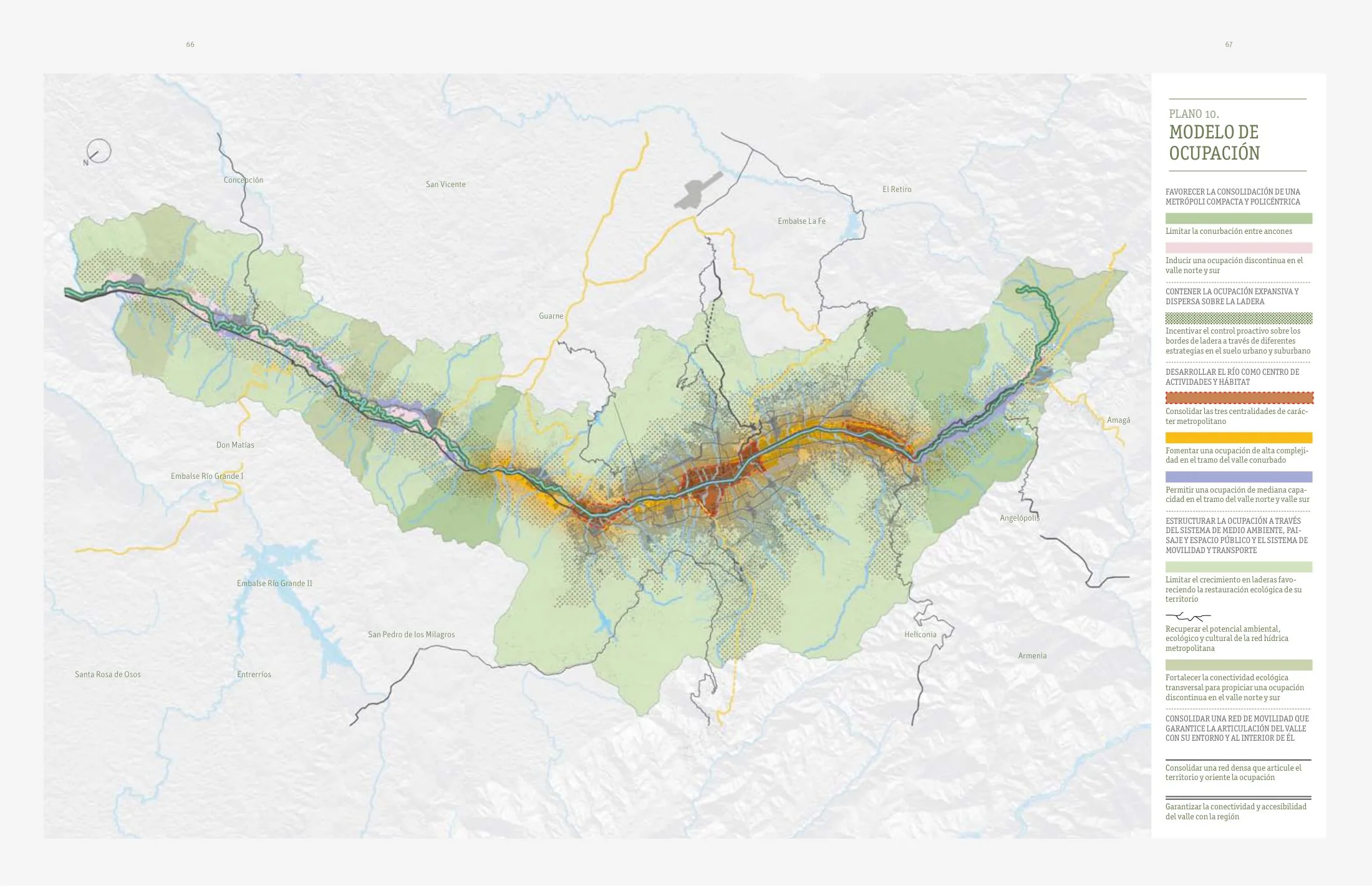
BIO 2030 is a metropolitan master plan agreed in 2011 for Medellín and the Aburrá Valley, prepared under the Área Metropolitana del Valle de Aburrá with academic partners including Urbam at EAFIT University. The plan proposes a shared regional framework organised around the river corridor, the valley's slopes and hillsides, and an integrated mobility system, seeking to direct growth and public investment across ten municipalities through a green structural skeleton.
Significance
BIO 2030 extended Medellín's celebrated 'social urbanism' from neighbourhood projects to the ecological and metropolitan scale, informing later projects such as Parques del Río and the city's greenbelt initiatives. It is cited in Latin American planning debates as an attempt to institutionalise regional coordination and landscape-based planning in a fragmented, rapidly urbanising valley.
What shaped it
- Aerial cable transit (2004)
- Bus Rapid Transit (BRT) (1974)
- The Just City (Fainstein) (2010)
- Landscape urbanism (Waldheim) (1997-2006)
Sources
- https://www.metropol.gov.co/planeacion/Documents/plan-director-bio-2030.pdf
- https://www.eafit.edu.co/centros/urbam/articulos-publicaciones/SiteAssets/Paginas/bio-2030-publi