Melbourne Fishermans Bend Framework
Core idea
Largest urban renewal precinct in Australia
Why it matters
Industrial-to-urban with transit plans
Description
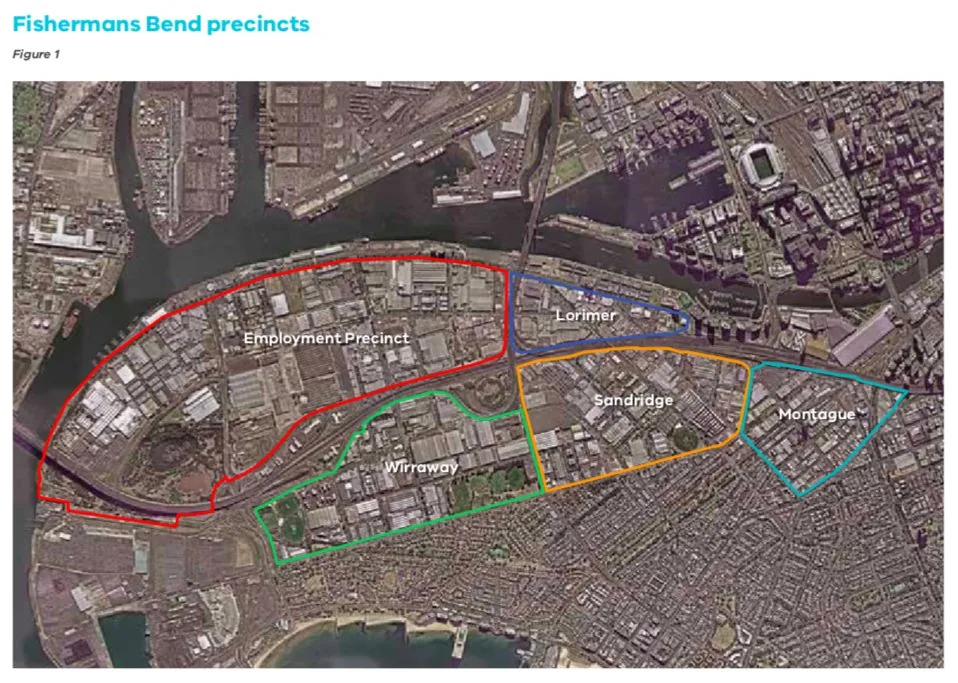
The Fishermans Bend Framework, released in 2018 by the Victorian Government, guides the redevelopment of Australia's largest urban renewal precinct: roughly 480 hectares of former industrial land close to central Melbourne. It divides the area into five precincts, including an employment and innovation precinct, and sets targets for a dense mixed-use district of tens of thousands of residents and jobs by mid-century, dependent on planned tram and metro connections. The framework followed an earlier, widely criticised rezoning that lacked infrastructure planning and value-capture mechanisms.
Significance
Fishermans Bend is a key Australian case of industrial-to-urban transformation at metropolitan scale, and a cautionary tale about rezoning ahead of infrastructure: the 2012 rezoning triggered land speculation that the 2018 framework sought to retrofit with order. It figures prominently in debates on transit-led renewal, developer contributions and the governance of very large regeneration precincts.
What shaped it
- Transit-oriented development (TOD) (1993)
- The master plan (early 20th c.)
- The compact city (1973-1990s)
- New Urban Agenda (2016)
Sources
- https://www.portphillip.vic.gov.au/media/kwtjbwoe/fishermans-bend-framework-october-2018.pdf
- https://www.vic.gov.au/fishermans-bend