Naples Risanamento
Core idea
Sanitation and boulevards via massive clearance
Why it matters
Hygienist urban reconstruction
Description
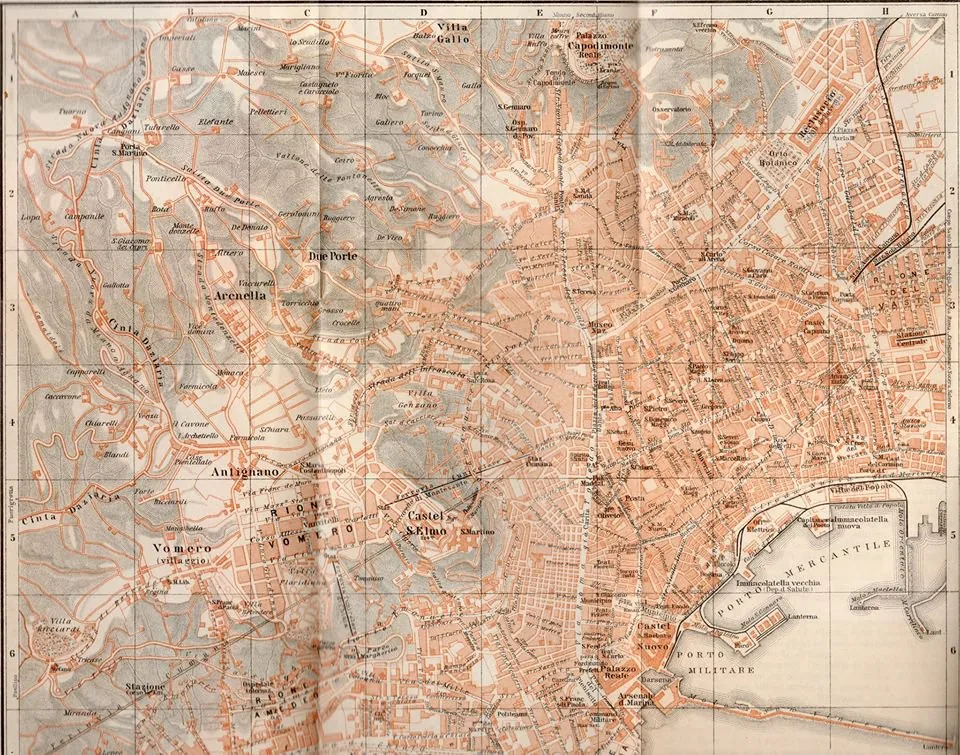
A municipal reconstruction programme launched after the 1884 cholera epidemic, carried out by the Municipality of Naples under a special national law of 1885. It demolished large swathes of the dense, low-lying quarters of the old city and drove a new arterial boulevard, the Rettifilo (Corso Umberto I), through the cleared fabric, accompanied by new sewerage, water supply and raised street levels. The works continued in phases into the early twentieth century, remaking much of the historic centre between the railway station and the port.
Significance
The Risanamento is the principal Italian example of hygienist urban surgery in the Haussmann tradition, showing how sanitary crisis could legitimise clearance on a metropolitan scale. It has long been debated for displacing poor residents while leaving much of the underlying housing problem unresolved, and it remains a reference point in discussions of demolition-led renewal in southern Europe.
What shaped it
- UK Public Health Act (1848)
- Broad Street pump & cholera (1854)
- The boulevard (17th–19th c.)
- Haussmann's expropriation decrees (1853)
Sources
- https://en.wikipedia.org/wiki/Naples
- https://www.tandfonline.com/doi/full/10.1080/03071022.2025.2431388