National Land Use Guidelines (Valtakunnalliset alueidenkäyttötavoitteet)
Core idea
Government decisions binding nationally significant interests into regional and local plans.
Why it matters
A model of Nordic framework-steering of land use from the centre.
Description
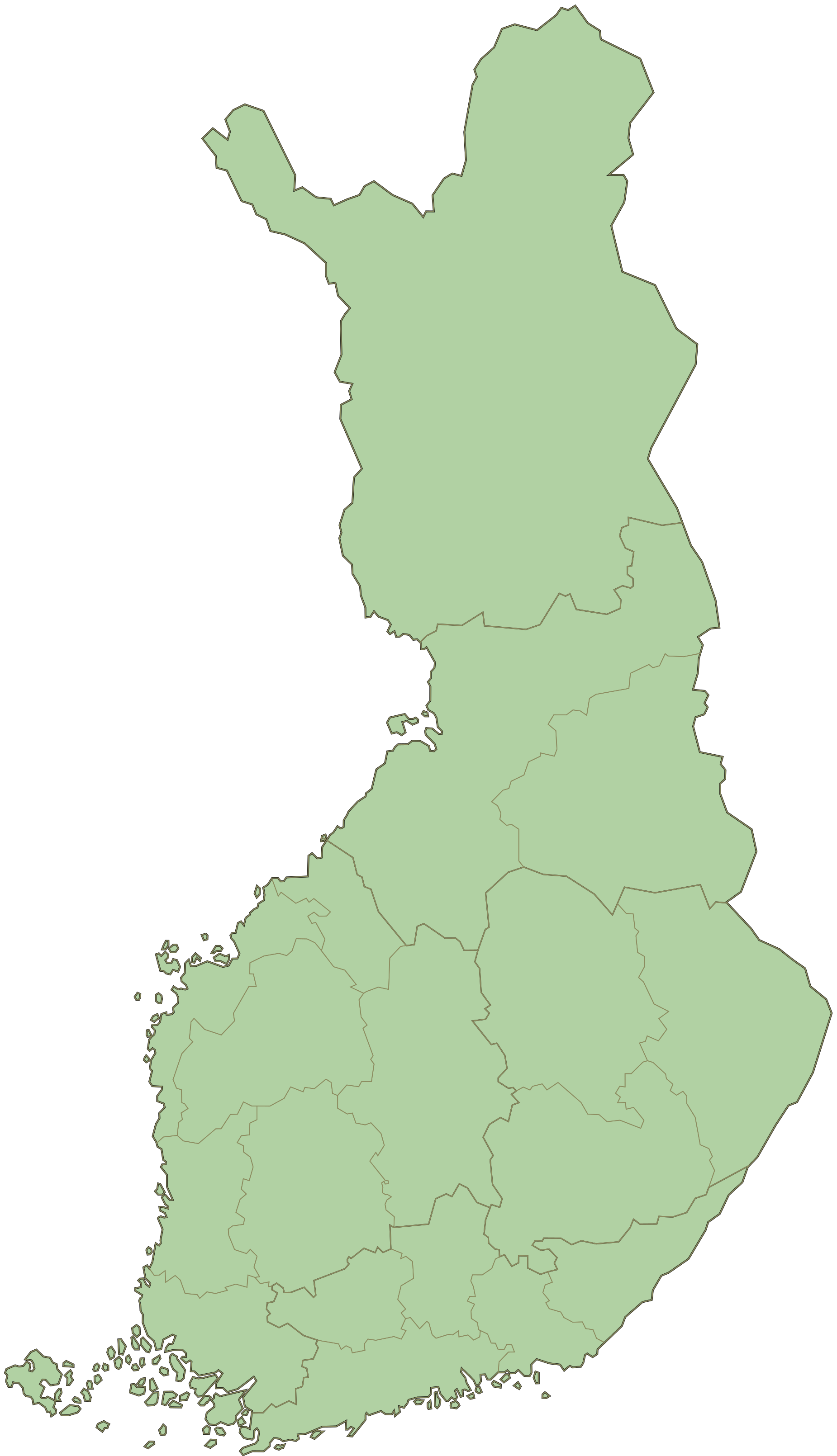
Finland's National Land Use Guidelines are a set of objectives adopted by Government decision under the Land Use and Building Act, first issued in 2000 and revised in 2008 and 2017. They identify matters of national significance, such as functioning settlement structures, transport and energy networks, cultural and natural heritage and security of supply, that regional and local authorities must take into account when preparing their plans. The guidelines also transpose international commitments into the domestic planning system. The 2017 revision streamlined the instrument, cutting the objectives from around seventy to seventeen, removing overlaps with sectoral law and applying every objective uniformly to the whole country.
Significance
The guidelines exemplify the Nordic model of steering land use through framework objectives rather than detailed central control, leaving substantive planning to regions and municipalities while still securing matters of national interest. Their successive revisions track shifting priorities, most recently a turn towards a low-carbon society, and they offer a widely cited template for indicative, hierarchy-respecting national spatial policy in a decentralised state.
What shaped it
- Local Agenda 21 and the Aalborg Charter (1992 / 1994)
- The master plan (early 20th c.)
- Sustainable development (Brundtland) (1987)
- Survey-before-plan (1915)
Sources
- https://ym.fi/en/-/revised-national-land-use-guidelines-towards-a-low-carbon-society
- https://ym.fi/en/land-use-planning
- https://www.arl-international.com/knowledge/country-profiles/finland/rev/3736