Nova Cidade de Kilamba (Luanda)
Core idea
Large-scale mass housing new city
Why it matters
Rapid delivery model (controversial occupancy)
Description
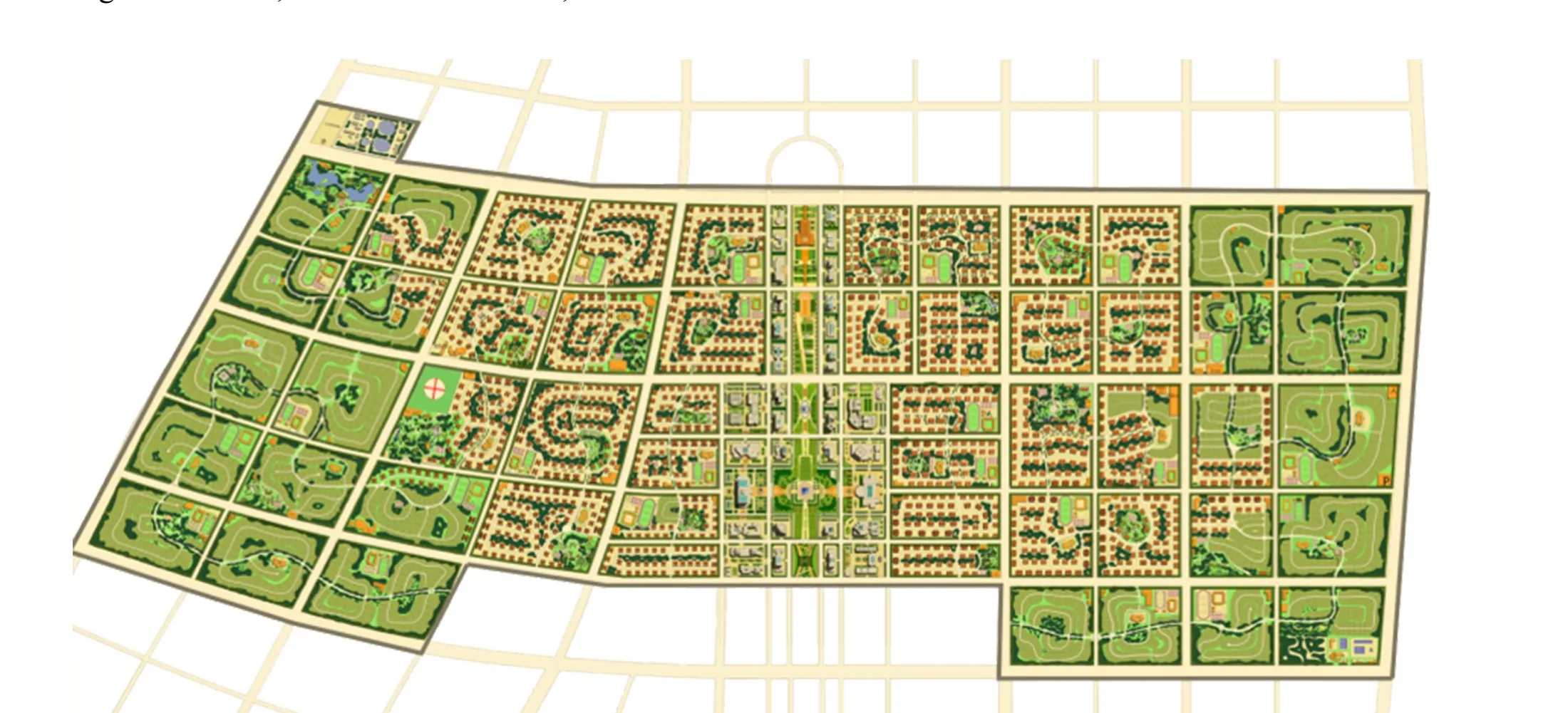
Nova Cidade de Kilamba is a very large new town built from 2011 on open land roughly thirty kilometres south of central Luanda, Angola. Constructed by Chinese contractors under state-to-state financing arrangements and promoted by the Angolan government, it consists of extensive rows of mid- and high-rise apartment blocks with schools and commercial units, delivered at exceptional speed as part of a national post-war housing programme. It is among the largest single housing projects undertaken in sub-Saharan Africa.
Significance
Kilamba became emblematic of Chinese-built turnkey urbanism in Africa and of oil-backed, state-delivered mass housing. Early reports of empty blocks made it a byword for the 'ghost city', though occupancy rose substantially once subsidised purchase schemes were introduced, shifting the debate towards affordability, location and the social life of such estates. It is now a standard reference in scholarship on South–South urbanism, satellite cities and the revival of mass-housing models outside the welfare-state context that originally produced them.
What shaped it
- Prefabrication and panel housing (Plattenbau) (large-panel systems from the 1950s)
- China's Belt and Road Initiative (2013)
Sources
- https://en.wikipedia.org/wiki/Quilamba
- https://www.theafricareport.com/301554/mixed-reviews-for-kilamba-kiaxi-angolas-giant-city-of-the