Palenque (Lakamha)
Core idea
A Classic Maya royal city integrating palace and temple complexes with aqueduct engineering and aligned monuments.
Why it matters
A high point of Classic Maya planning where architecture, hydraulics and inscription fused dynastic and cosmic order.
Description
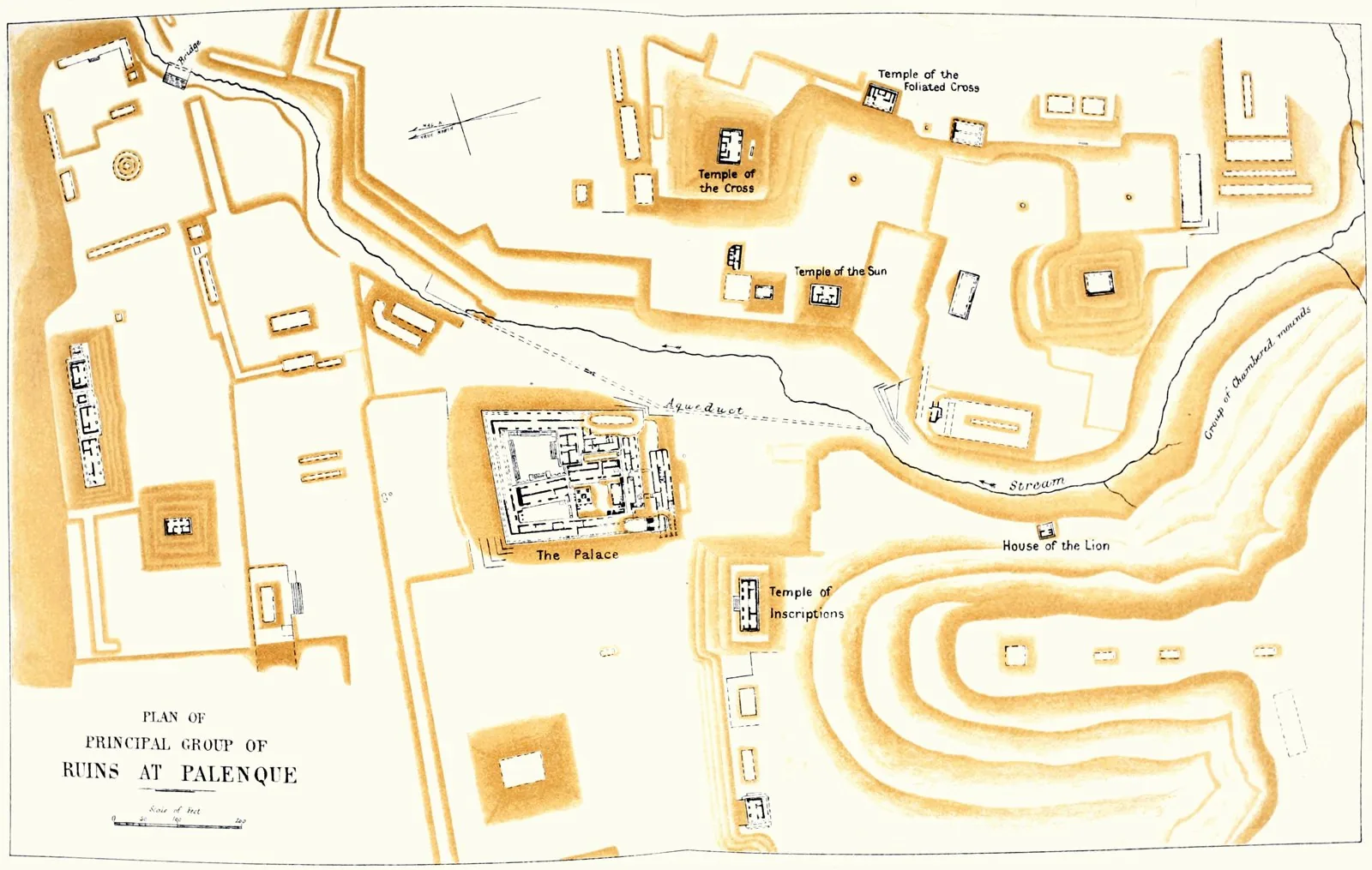
Palenque, known anciently as Lakamha ('big water'), occupies a forested terrace above the Usumacinta lowlands in Chiapas, Mexico, and flourished in the Classic period, especially under K'inich Janaab' Pakal, who ruled from 615 to 683 CE. Its compact core integrates the great multi-level Palace, with its distinctive tower, and a series of temple-pyramids including the Temple of the Inscriptions, which housed Pakal's celebrated tomb. The builders harnessed the site's many streams: the Otulum river was channelled beneath the main plaza through a vaulted stone aqueduct, while terracing and water management shaped the terrain. Carved tablets and astronomically referenced monuments tie architecture to dynastic history and cosmology.
Significance
Palenque represents a refined synthesis of Classic Maya palace-temple planning, hydraulic engineering and inscribed dynastic ideology. Its aqueduct, integrated palace complex and richly textual monuments make it a benchmark for understanding how Maya rulers fused governance, ritual and cosmology in built form. The discovery of Pakal's tomb transformed scholarship on Maya kingship and remains central to the study of Classic Maya urbanism.
What shaped it
- The Maya Long Count calendar and cosmology (1st c. BCE onward)
- The Mesoamerican ceremonial centre and ballcourt (c. 500 BCE onward)
- The aqueduct (c. 700 BCE)