Raumkonzept Schweiz (2026 update)
Core idea
A jointly held, all-levels spatial strategy steering Switzerland's development toward 2050 around polycentric regions, landscape/built quality, and climate-fair mobility and energy.
Why it matters
To update the 2012 framework for new pressures — climate change, energy supply, population growth, biodiversity and Baukultur — with a shared 2050 vision.
Description
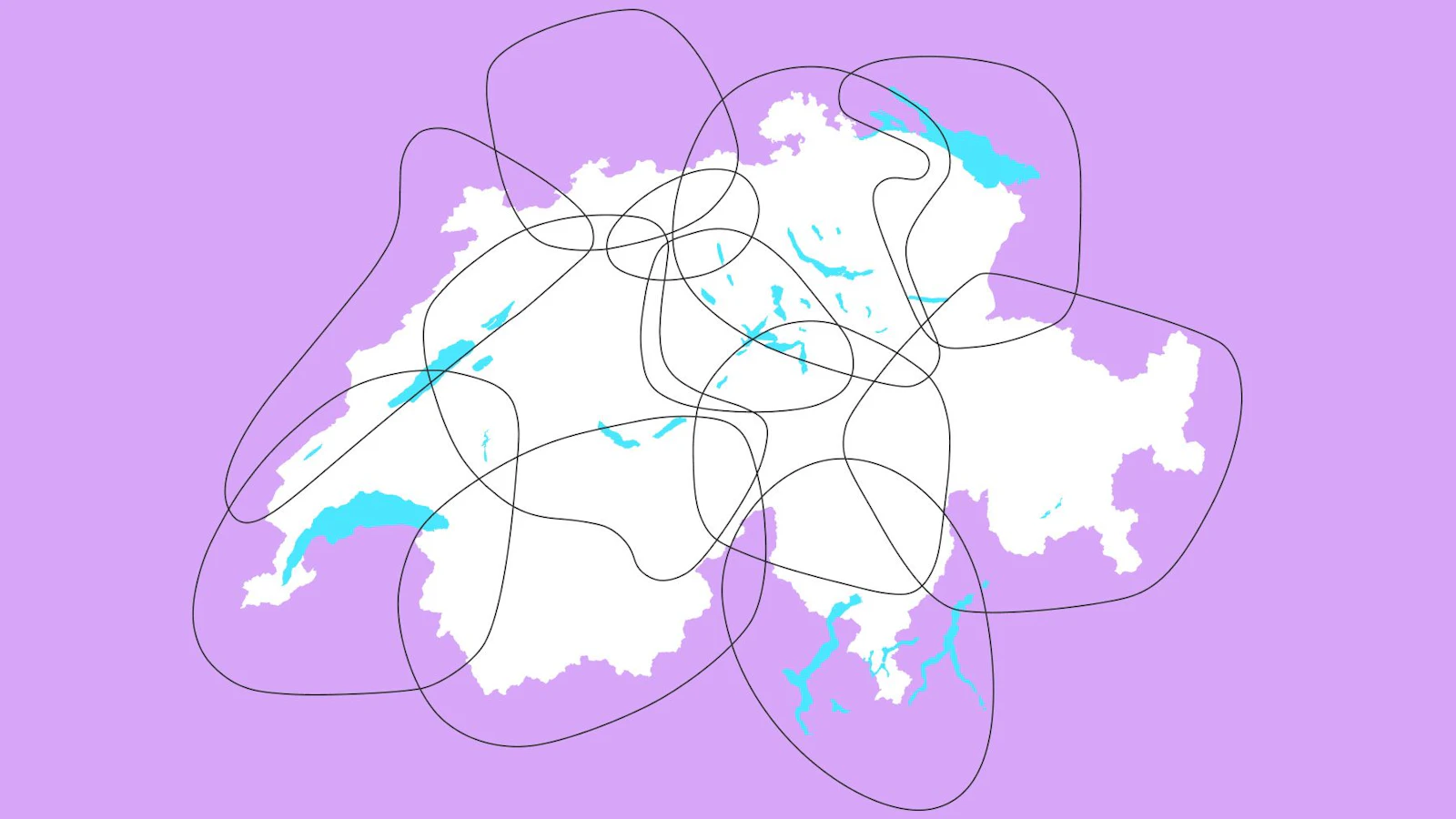
The Raumkonzept Schweiz is the country's joint, non-binding spatial-development strategy first adopted in 2012 by the Confederation, cantons, cities and communes. After a three-year revision and a spring 2025 consultation, the Federal Council adopted an updated version on 20 March 2026, structured around three core strategies: strengthening regional strengths and cross-level/cross-border cooperation; safeguarding natural resources and high landscape and built quality; and providing room for population and economic development with environment- and climate-fair mobility and energy. Compared with 2012 it gives markedly more weight to climate adaptation, energy production/supply, biodiversity and Baukultur, and is released in digital form.
Significance
It is the first Swiss strategic spatial document jointly produced and carried by all governmental levels, serving as a shared reference framework rather than a binding plan. The 2026 update keeps Switzerland's polycentric, decentralised-concentration model central while integrating the climate and energy agenda now prominent across European spatial planning.
What became of it
Adopted by the Federal Council on 20 March 2026 and in force as the current orientation framework, published digitally at raumkonzept-schweiz.ch.
Sources
- https://www.admin.ch/de/newnsb/IvmNLJGMAtuV8-mWOnE94
- https://www.are.admin.ch/are/de/home/raumentwicklung-und-raumplanung/strategie-und-planung/raumk
- https://www.espacesuisse.ch/de/news/raumkonzept-schweiz-neues-ergaenzt-strategisch-zurueckhalten
- https://staedteverband.ch/1539/de/raumkonzept-schweiz-2026-wie-sieht-die-schweiz-von-morgen-aus