Rome PRG (2008)
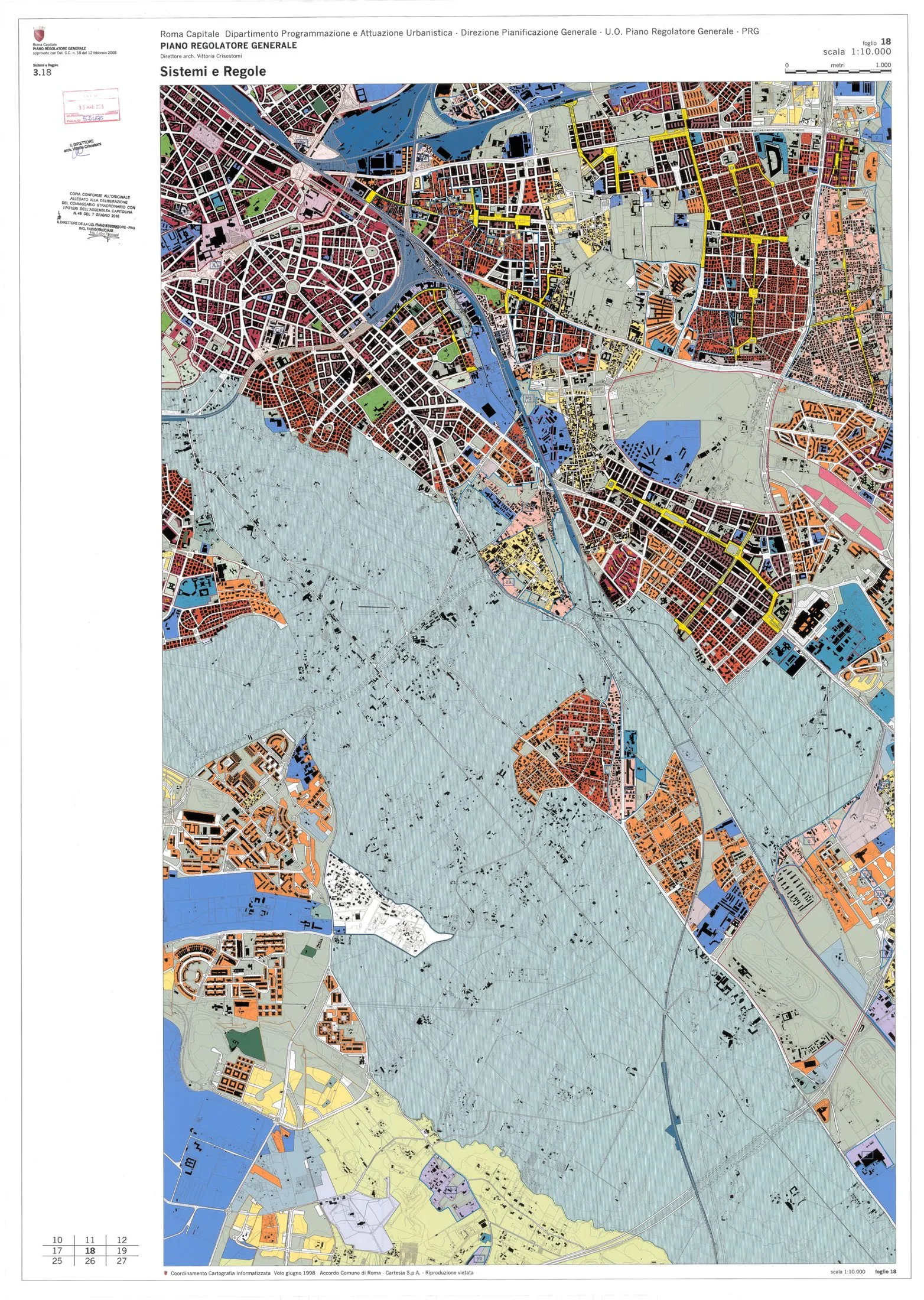
Core idea
Structural axes and green system
Why it matters
Modern statutory framework for Rome
Description
Rome's Piano Regolatore Generale, approved in 2008 after more than a decade of preparation under the Comune di Roma, replaced the city's 1965 master plan. It organises the metropolis through structural axes of rail-based mobility—the so-called 'cura del ferro'—a network of new peripheral centralities intended to decentralise functions from the historic core, and an extensive ecological and green system protecting the Roman campagna. It is a statutory plan covering the whole vast municipal territory.
Significance
The 2008 PRG marked the renewal of Italian statutory planning for the capital, shifting from expansion-oriented zoning towards polycentrism, rail-oriented development and environmental structure. It has been widely discussed in Italian planning culture, both as a sophisticated attempt to reform the master-plan instrument and for the criticism that its negotiated 'centralities' and compensation mechanisms accommodated real-estate interests more than they restructured the city.
What shaped it
- The master plan (early 20th c.)
- The green belt (1898 concept / 1938 law)
- World becomes majority urban (2007)
- Sustainable development (Brundtland) (1987)
- Zoning (1884 Germany / 1916 NYC)
Sources
- http://www.urbanistica.comune.roma.it/prg-2008-vigente.html
- https://www.carteinregola.it/materiali/leggi-norme-e-regolamenti/leggi-e-norme-per-lurbanistica/
- https://www.agenzianova.com/en/news/si-aggiorna-il-piano-regolatore-generale-di-roma-norme-sempl