Ruins of Loropéni
Core idea
The best-preserved of the Lobi stone-walled enclosures that controlled West African gold extraction and trade.
Why it matters
Embodies a fortified settlement type built on the wealth and defence of the trans-Saharan gold trade.
Description
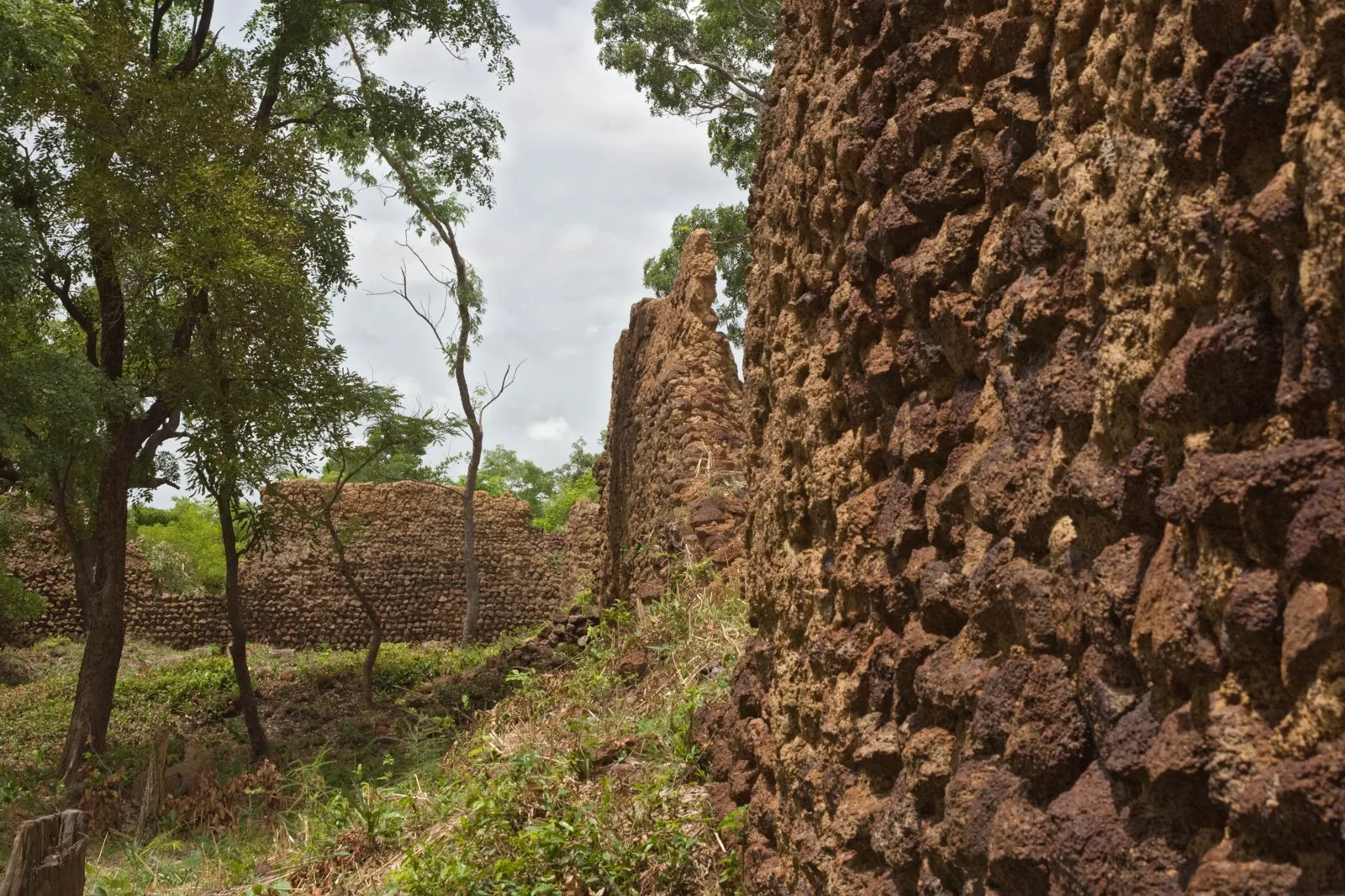
The Ruins of Loropéni lie in southern Burkina Faso near the borders with Côte d'Ivoire and Ghana. The property comprises imposing dry-stone laterite walls rising to nearly six metres and enclosing an abandoned settlement of roughly 11,000 square metres. It is the best preserved of around ten fortresses in the Lobi area and part of a wider group of about a hundred stone enclosures across the region. Occupied by the Lohron or Koulango peoples, who controlled the extraction and transformation of gold, the site reached its apogee between the fourteenth and seventeenth centuries. The enclosures testify to the power of a trade linked northwards to Djenné, Mopti and Timbuktu.
Significance
Loropéni inscribes a distinctive sub-Saharan fortified-settlement type into the urban record, where defensive stone enclosures expressed control over a lucrative gold economy. As Burkina Faso's first World Heritage Site, it preserves rare physical evidence of the trans-Saharan gold trade's southern terminals. Its longevity and preservation make it a key reference for fortified, trade-based settlement forms in West Africa.
What shaped it
- The trans-Saharan gold-and-salt economy (c. 8th–16th c. CE)