San Jose Envision 2040
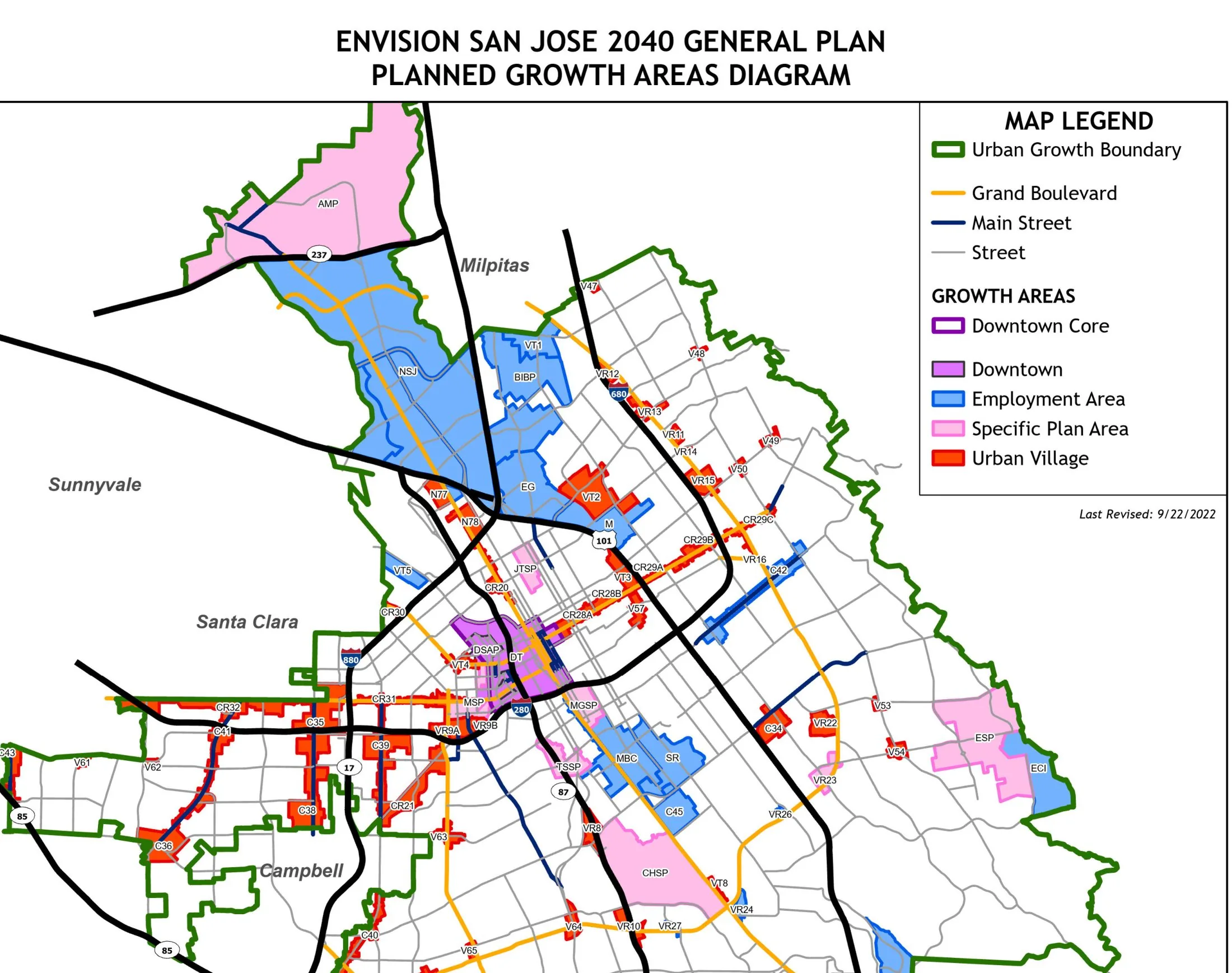
Core idea
Urban villages strategy
Why it matters
Tech city pivots to mixed-use growth
Description
Envision San José 2040, adopted in 2011, is the general plan of San José, California, prepared by the city with a large community task force. Its central device is the 'urban village': a network of designated mixed-use, walkable districts along transit corridors and around stations where most new housing and job growth is to be concentrated, while established single-family neighbourhoods are largely preserved. The plan deliberately prioritises employment land, seeking to correct the city's historic role as a bedroom community within Silicon Valley.
Significance
The plan marked a decisive pivot for a car-oriented post-war city towards intensification and mixed use, and its urban-village strategy has been influential in Californian debates on where growth should go. Its jobs-first stance and the slow delivery of urban villages have drawn criticism amid the Bay Area housing crisis, making it a touchstone in arguments over general plans, zoning reform and regional housing obligations. It exemplifies how technology-economy cities attempted to retrofit urbanity onto suburban fabric.
What shaped it
- The compact city (1973-1990s)
- Transit-oriented development (TOD) (1993)
Sources
- https://www.sanjoseca.gov/your-government/departments-offices/planning-building-code-enforcement
- https://www.spur.org/news/2011-11-18/new-blueprint-city-san-joses-2040-general-plan