Sao Paulo PDE 2014 / 2024
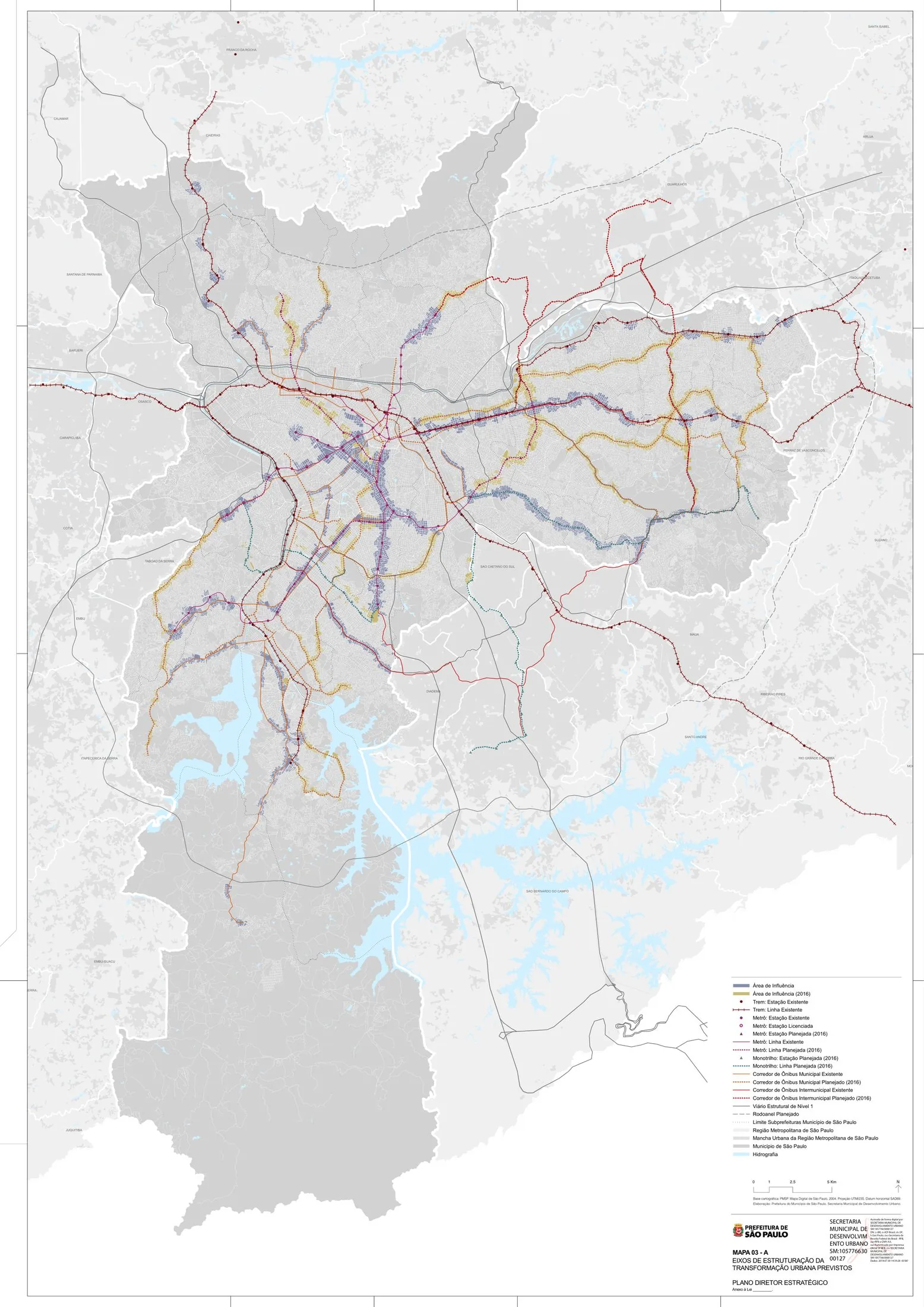
Core idea
Corridor upzoning + TOD
Why it matters
Largest South American statutory zoning reform
Description
São Paulo's Plano Diretor Estratégico of 2014, prepared under the municipality and revised in 2024, is the statutory master plan for South America's largest city. Its central move was to concentrate development capacity along structural transport corridors, raising density and abolishing minimum parking requirements near transit while restraining building rights elsewhere, and channelling value-capture proceeds into social housing and urban improvements. Instruments included corridor upzoning, solidarity quotas and strengthened ZEIS social-interest zones.
Significance
The PDE is widely regarded as the most consequential statutory zoning reform in Latin America, demonstrating that transit-oriented, socially redistributive land regulation could be enacted at megacity scale. It has become an international reference in debates on linking density to transit and on value capture, while its 2024 revision reignited controversy over developer influence and the dilution of corridor rules.
What shaped it
- Transit-oriented development (TOD) (1993)
- Brazil's City Statute (Estatuto da Cidade) (2001)
- Land-value capture and betterment (developed from the early 20th century)
Sources
- https://gestaourbana.prefeitura.sp.gov.br/marco-regulatorio/plano-diretor/
- https://prefeitura.sp.gov.br/web/licenciamento/w/legislacao/288078