Stockholm Slussen Redevelopment
Core idea
Flood-safe interchange with major public realm
Why it matters
Complex retrofit at city’s water gates
Description
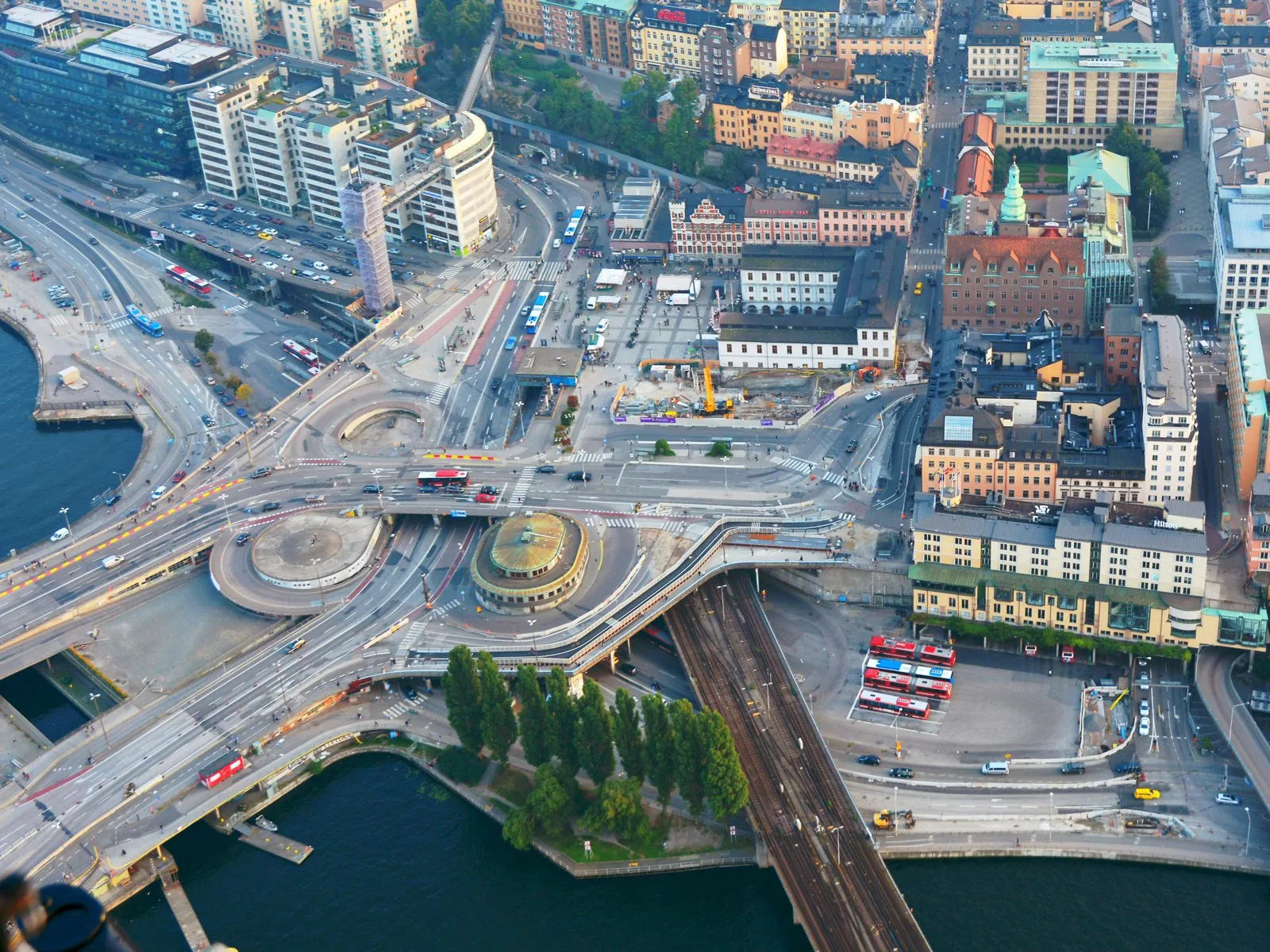
The reconstruction of Slussen, the historic lock and traffic interchange between Gamla Stan and Södermalm in central Stockholm, undertaken by the City of Stockholm from 2015. The project replaced the deteriorated 1930s cloverleaf with a rebuilt interchange, a new bus terminal, generous quaysides and public spaces, and, crucially, enlarged discharge channels enabling regulation of Lake Mälaren against flooding and future sea-level rise.
Significance
Slussen is a leading European example of resilience-driven infrastructure retrofit in a sensitive historic core, where flood protection, transport and public realm had to be resolved simultaneously. The decades of controversy over demolishing the modernist interchange also made it a celebrated case in debates on heritage value of twentieth-century infrastructure and the politics of large urban projects.
What shaped it
- Urban resilience (2013)
- Life Between Buildings (1971)
- The pedestrian zone (1953)
Sources
- https://www.fosterandpartners.com/projects/new-slussen-masterplan/
- https://en.wikipedia.org/wiki/Slussen