Suzhou (Canal-Garden City)
Core idea
Gridded canal city of waterways, bridges, and walled scholar-gardens that compress idealized landscapes into urban courtyards
Why it matters
The classical Chinese garden city; its canal network and private gardens are the built expression of literati landscape philosophy
Description
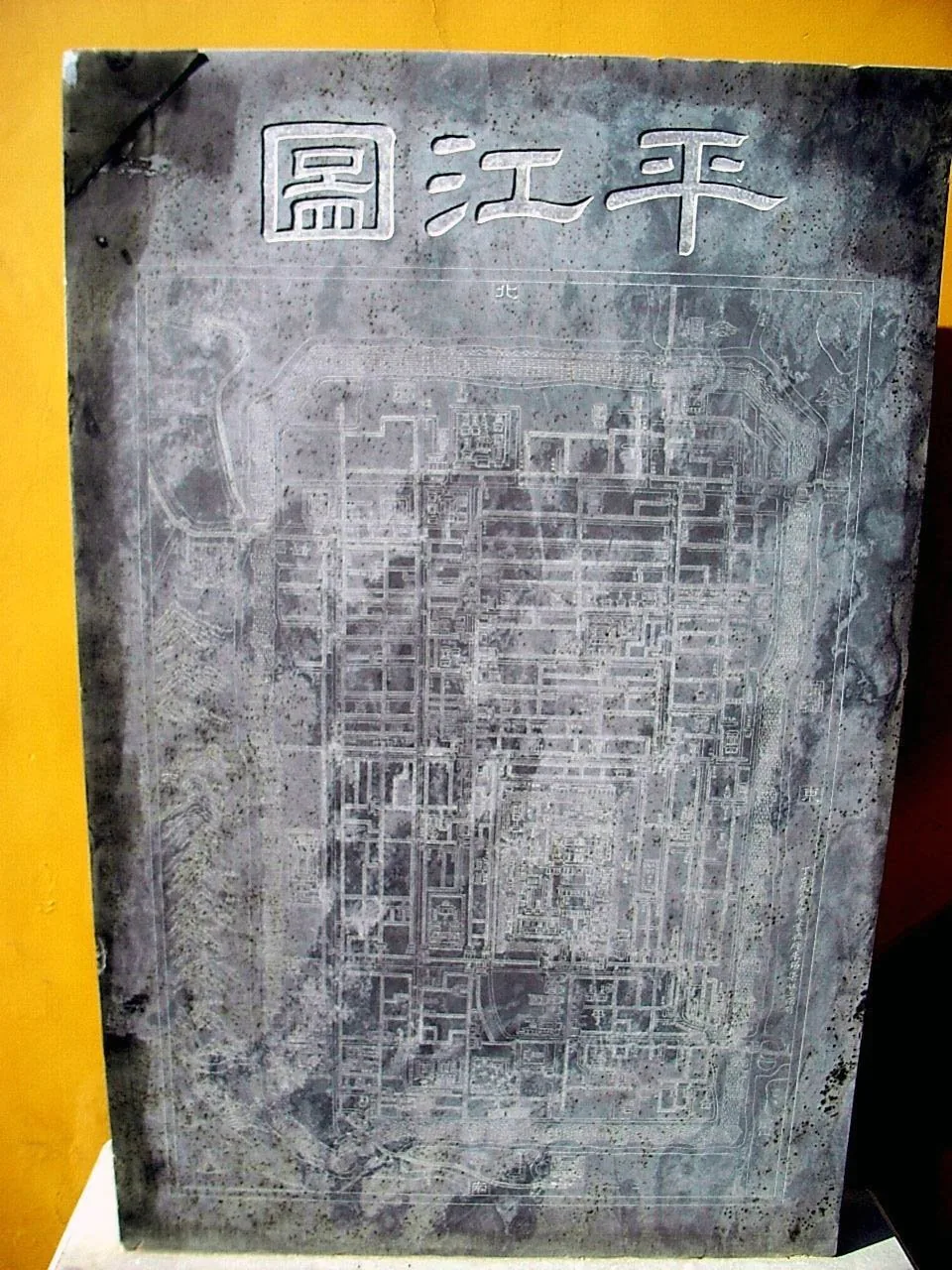
Suzhou in the Song era matured as a gridded canal city in the Yangtze delta, its streets doubled by a parallel network of waterways crossed by stone bridges, an arrangement recorded on the celebrated Pingjiang map stele of 1229. Within the walled city, scholar-officials laid out private walled gardens that compressed idealised landscapes of rock, water and planting into urban courtyards. The city grew under successive dynasties as a centre of silk production, commerce and literati culture.
Significance
Suzhou is the classical Chinese garden city, and its combination of canal grid and scholar-garden gives built form to literati landscape philosophy. Its gardens, now inscribed by UNESCO, have shaped garden and city design across East Asia and continue to inform discussions of water-based urbanism and the integration of landscape into dense urban fabric.
What shaped it
- The Grand Canal and the canal city (Sui unification 605–609; extended to 1293)
- The Chinese scholar-garden (matured Song–Ming, 11th–17th c.)
- Fengshui landscape cosmology (Han onward, codified by Song)
Sources
- https://www.britannica.com/place/Suzhou
- https://www.travelchinaguide.com/cityguides/suzhou-old-town.htm