Tashkent Reconstruction Master Plan (post-1966 earthquake)
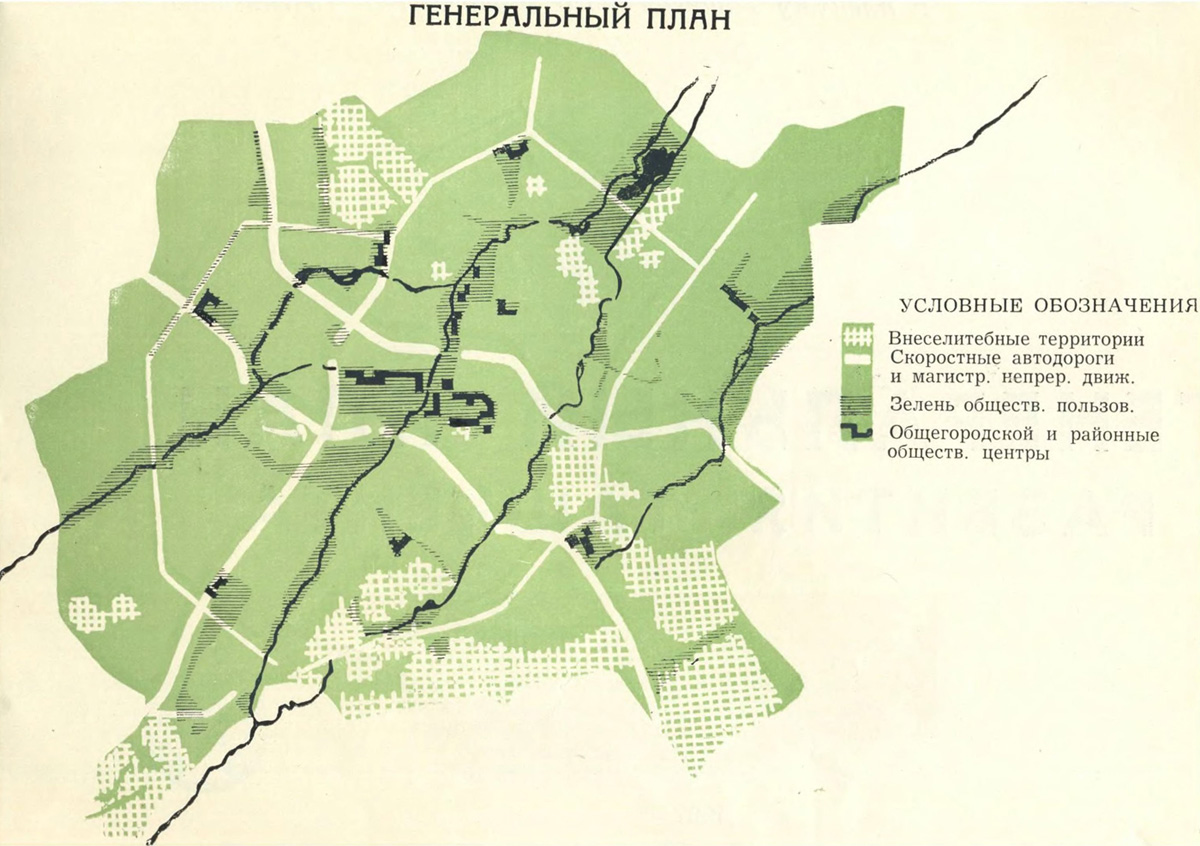
Core idea
A rapid all-Union Soviet rebuild of earthquake-struck Tashkent using prefabricated microdistrict housing.
Why it matters
Created the defining seismic-modernist capital of Central Asia, fusing mass housing with regional motifs.
Description
After the April 1966 earthquake destroyed much of central Tashkent and left hundreds of thousands homeless, the Soviet authorities mounted a coordinated reconstruction drawing on design institutes and construction brigades from across the union republics. Building on a pre-existing redevelopment plan, the scheme prioritised prefabricated panel housing arranged in microrayons (microdistricts), wide boulevards, a metro and large administrative and cultural complexes. Permanent construction began in November 1966, and within roughly three and a half years about a million square metres of housing and civic facilities had been built. Architects increasingly grafted Central Asian decorative motifs onto standardised modernist forms.
Significance
The rebuild made Tashkent a showcase of Soviet modernist planning and seismic engineering and a demonstration of all-Union solidarity. Its fusion of industrialised microrayon housing with regional ornament produced a distinctive Central Asian modernism now recognised as heritage. The project shaped the capital's enduring form and informed later seismic urban design across the Soviet sphere.
What shaped it
- Wartime destruction of cities (1940–1945)
- The superblock (1920s–30s / 2016 revival)
Sources
- https://en.wikipedia.org/wiki/1966_Tashkent_earthquake
- https://whc.unesco.org/en/tentativelists/6708/