Timbuktu
Core idea
Scholarly-mercantile city at the Saharan crossroads — mosques (Djinguereber, Sankore), madrasas, and caravansary quarter
Why it matters
Center of Islamic learning with 25,000 students at its peak; demonstrates African urbanism driven by knowledge and trade, not just power
Description
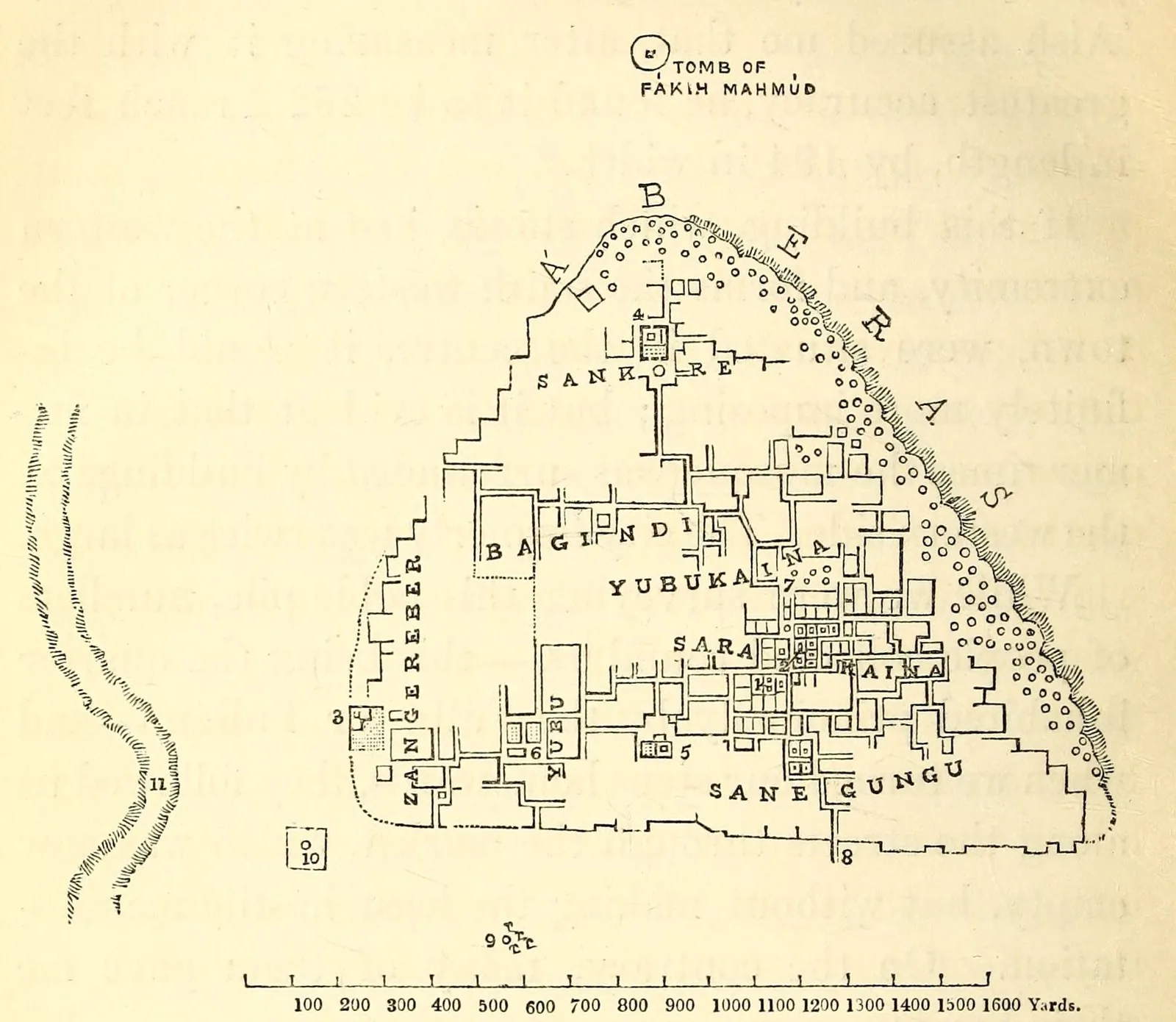
Rising on the southern edge of the Sahara from the 12th century, Timbuktu became a fabled hub where caravans of salt and gold met, and where the Sankoré, Djinguereber, and Sidi Yahya mosque-universities drew tens of thousands of students at the city's height. Built in distinctive earthen architecture, it accumulated vast libraries of manuscripts on science, law, and theology.
Significance
Timbuktu embodies an African urbanism powered by knowledge and trade rather than conquest. Its scholarly manuscript tradition refutes the notion that pre-colonial Africa was without written learning, and its name endures globally as shorthand for the remote and the legendary.
What became of it
A scholarly-mercantile hub of the Mali and Songhai empires; its golden age ended with the Moroccan (Saadi) conquest of 1591, after which scholars were exiled or executed (1593) and trans-Saharan trade declined as Atlantic sea routes rose, leaving the city impoverished though its mosques survive.
Critique
Historians caution that the celebrated '100,000 inhabitants / 25,000 scholars' figures are romanticised round numbers extrapolated from sparse sources rather than documented counts.
What shaped it
- The trans-Saharan gold-and-salt economy (c. 8th–16th c. CE)
- The House of Wisdom and the translation movement (peak under al-Ma'mun, c. 830)
- The madrasa (Nizamiyya founded c. 1065)