Toyama Compact City Strategy
Core idea
Tram-led compact growth with seniors focus
Why it matters
Global compact-city exemplar
Description
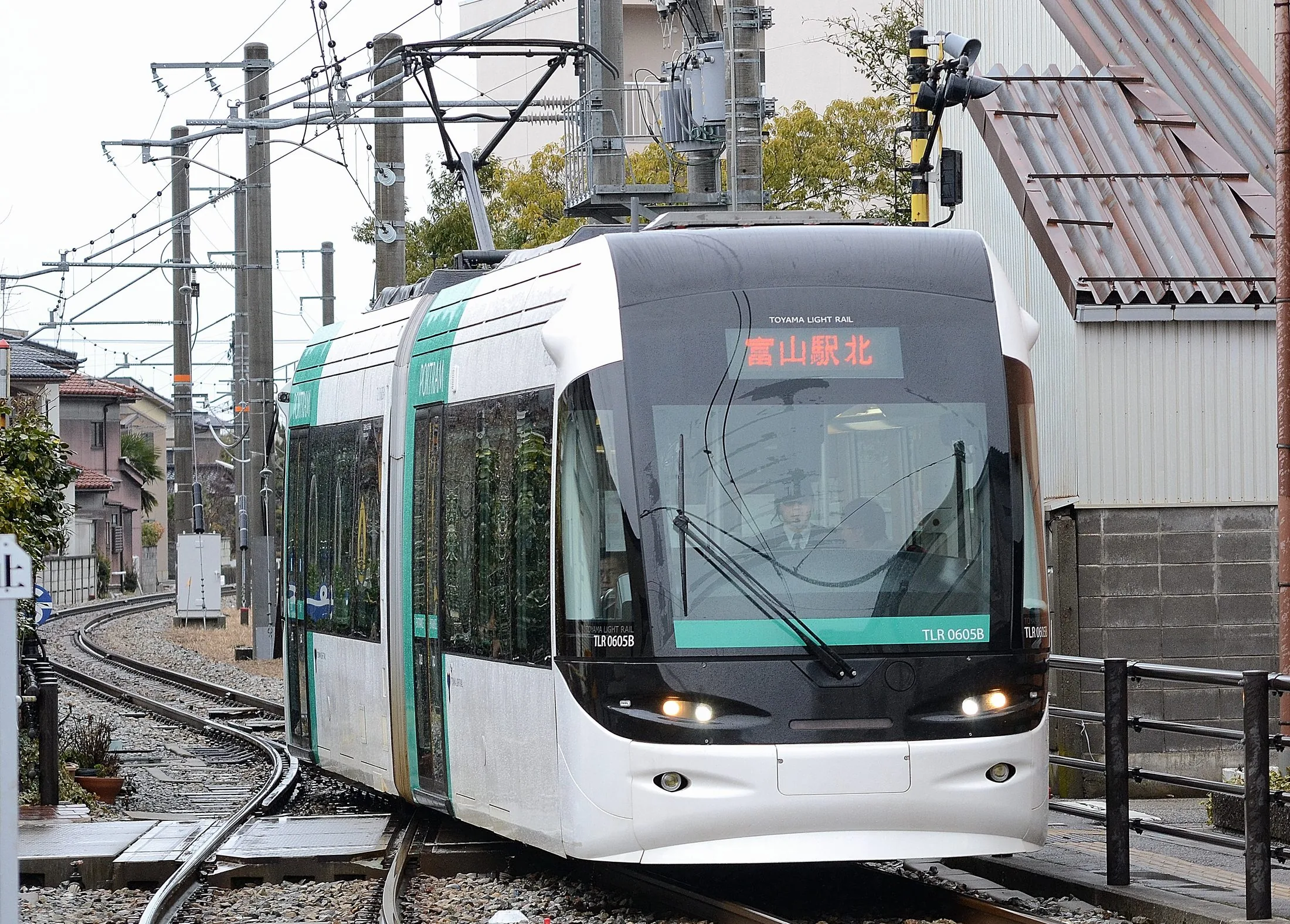
A municipal strategy adopted by the City of Toyama from 2005 to counter population decline and ageing by concentrating growth along public transport corridors. Its signature move was the conversion of an underused railway line into the Toyama Light Rail (Portram) and the promotion of housing, services and subsidies within walking distance of tram and rail stops, described by the city as a 'compact city on public transport axes'. Particular attention was given to the mobility and daily life of elderly residents.
Significance
Toyama became one of the world's most cited exemplars of compact-city policy in a shrinking-population context, promoted by the OECD and the Japanese government as a model for regional cities. It demonstrated that transit-led consolidation could be pursued incrementally in a car-oriented provincial city, and it strongly influenced subsequent Japanese location-optimisation planning frameworks.
What shaped it
- The compact city (1973-1990s)
- Transit-oriented development (TOD) (1993)
- The street tram / streetcar (1832 horse / 1881 electric)
- Shrinking cities (2002-2004 onward)
Sources
- https://www.tandfonline.com/doi/full/10.1080/21681376.2022.2148556
- https://www.clair.or.jp/e/2016-4-1Toyama%20City.pdf