Vientiane (Lan Xang Capital)
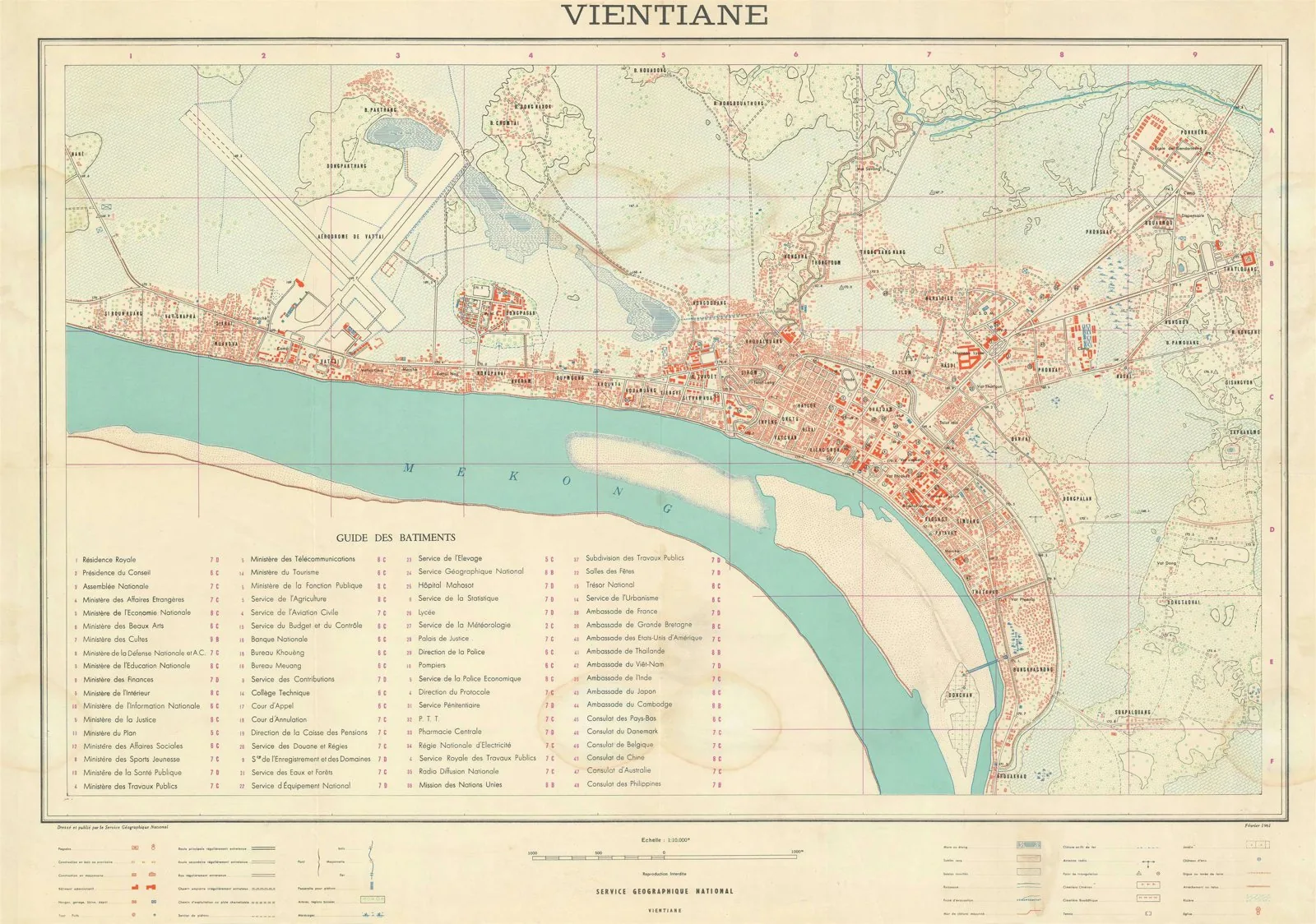
Core idea
Mekong royal capital centred on the That Luang stupa.
Why it matters
Lan Xang capital reorganised as a Buddhist cosmological centre.
Description
Vientiane, the Lao Viangchan, became the royal capital of the Lan Xang kingdom in 1563 when King Setthathirath I moved his court from Luang Prabang to the Mekong to escape Burmese pressure. He reorganised the city as a Buddhist cosmological and political centre, commissioning in 1566 the great gilded Pha That Luang stupa, believed to enshrine a relic of the Buddha and now the national symbol of Laos. The walled city on the Mekong's banks combined royal, monastic and defensive functions, and despite later destruction and rebuilding it has remained the political heart of the country and is today the capital of modern Laos.
Significance
Vientiane is significant as a Lan Xang royal capital deliberately recomposed around a great stupa as the axis of religious and political authority, exemplifying how Theravada Buddhist cosmology shaped Southeast Asian capital-building. The siting on the Mekong, the monastic quarters and the monumental That Luang express the fusion of kingship and faith, and the city's survival as the modern Lao capital underlines its enduring role as a national centre.
What shaped it
- Buddhism (c. 5th c. BCE)
- The chakravartin universal-king ideal (c. 4th c. BCE onward)