Wuhan Optics Valley
Core idea
Science/tech corridor
Why it matters
Innovation-led urban expansion
Description
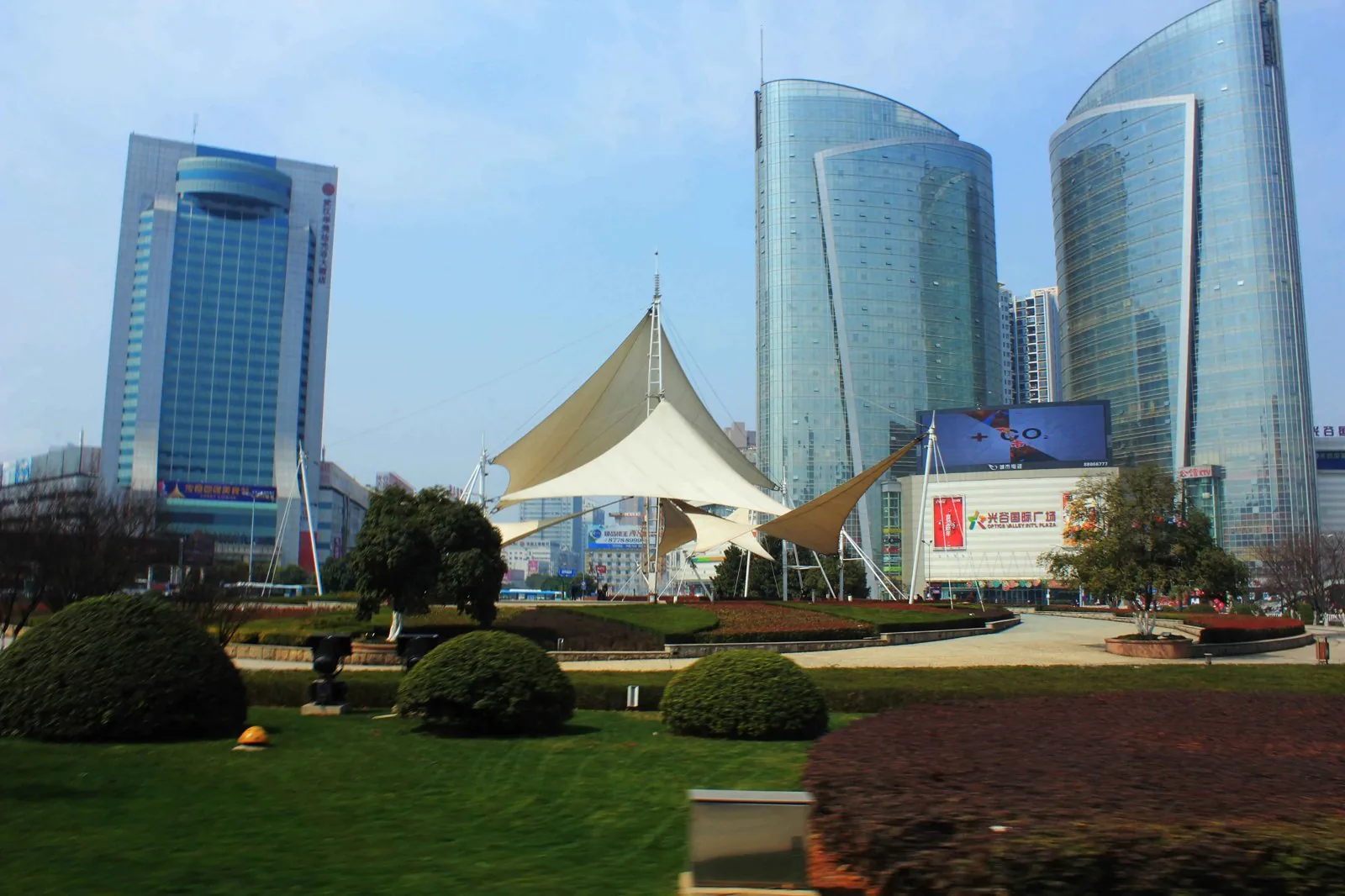
Wuhan's Optics Valley, formally the East Lake High-Tech Development Zone, has grown since the 1990s into a vast science and technology corridor on the south-eastern edge of the city, anchored by the optoelectronics industry, universities and research institutes. Planning by the zone authority organised successive expansion phases along a central axis, combining industrial campuses, innovation districts, new residential quarters and metro lines into a corridor stretching far into the metropolitan hinterland.
Significance
Optics Valley exemplifies the Chinese development-zone model in which industrial policy, land development and city building are fused under a single authority, producing urban expansion led by innovation clusters rather than by conventional comprehensive plans. It is frequently studied as a case of the zone becoming a city, raising questions about the integration of such corridors with their host municipalities and the liveability of technology-led urbanism.
What shaped it
- China's reform & opening (1978)
- The information / digital age (1948–)
Plans it influenced
Sources
- https://en.wikipedia.org/wiki/Donghu_New_Technology_Development_Zone
- http://en.hubei.gov.cn/business/zones/201305/t20130521_450067.shtml