Yogyakarta Kraton (Cosmological Axis)
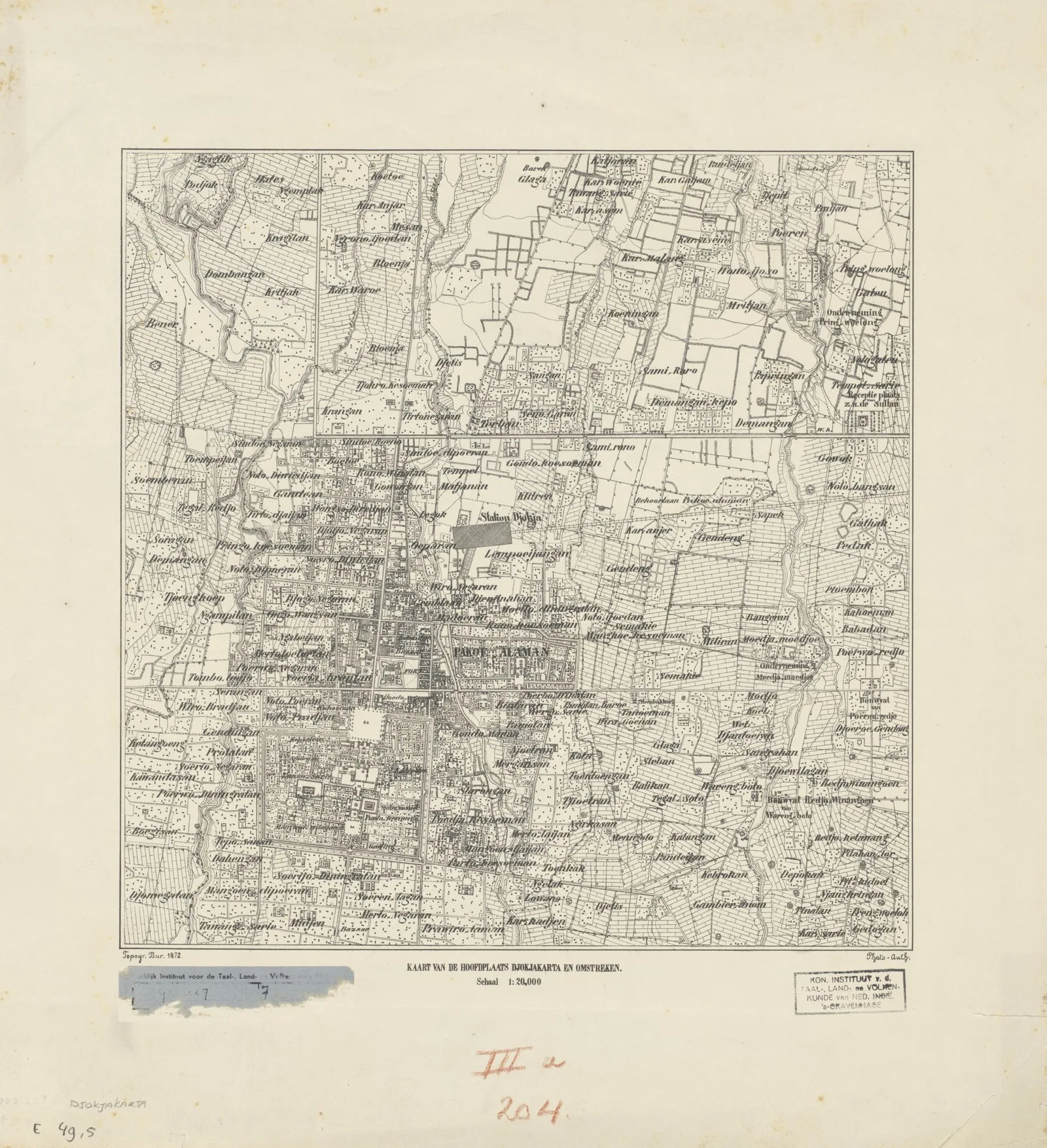
Core idea
Javanese city on a north-south axis linking Mount Merapi, the palace and the southern sea.
Why it matters
A cosmological capital whose imaginary axis encodes Javanese ideas of life and harmony.
Description
Yogyakarta was founded in 1755 by Sultan Hamengkubuwono I, with the Kraton palace built in 1755–1756 at the centre of an approximately six-kilometre north-south axis. This 'cosmological axis' symbolically links the sacred volcano Mount Merapi to the north with the Indian Ocean and its mythical Queen of the Southern Seas to the south, the palace standing between them. The orientation of the axis and the placement of landmarks along it, including Malioboro Street and ceremonial squares, were conceived to express Javanese philosophy on the cycle of life, harmonious living and the union of human and divine. The palace itself, with its tiered-roof pavilions, was treated as a microcosm of the universe.
Significance
Yogyakarta is an outstanding example of a city planned as a philosophical diagram, its built form arranged along an axis that binds volcano, palace and sea into a single cosmological order. The Javanese concepts encoded in the layout make it a rare case where urban design directly expresses metaphysical belief. Inscribed by UNESCO in 2023, the cosmological axis confirms the city's significance as living intangible and built heritage.
What became of it
Realised from 1755 and still living; the Kraton remains the seat of the Yogyakarta sultanate and the north-south axis (including Malioboro Street) was inscribed as a UNESCO World Heritage Site in 2023.
What shaped it
- The imperial capital and the central axis (fullest form Ming Beijing, from 1420)
- Fengshui landscape cosmology (Han onward, codified by Song)
- Ottoman, Mughal and Qing imperial states (16th–18th c.)
- Buddhism (c. 5th c. BCE)