Yokohama MM21 – later phases (North/East Districts)
Core idea
Completion of office/residential waterfront
Why it matters
Sustained realization of portfront CBD
Description
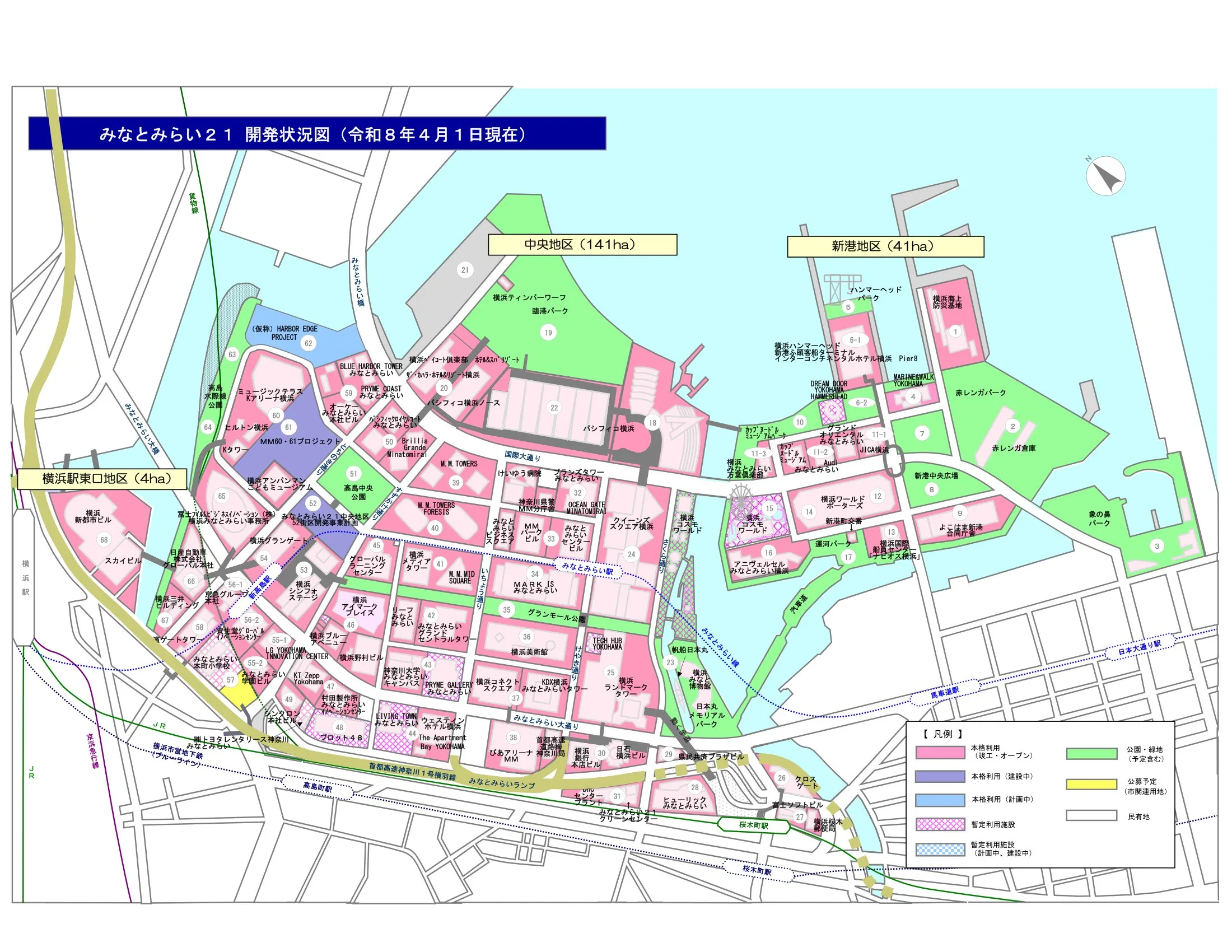
The later development phases of Minato Mirai 21, Yokohama's waterfront central business district begun in the 1980s on former shipyard and railway land. From the 2010s the City of Yokohama guided the build-out of the remaining northern and eastern districts, filling long-vacant blocks with corporate headquarters, research and development campuses, music arenas and residential towers to complete the office and residential waterfront envisaged in the original plan. The city retained design guidance over massing, ground-floor uses and the public waterfront promenade.
Significance
MM21's later phases demonstrate the sustained, decades-long realisation of a port-front central business district, a rarity among large waterfront projects that often stall after initial phases. The district is frequently cited in Japanese planning as a model of patient municipal land management and incremental completion, and its recent shift towards research campuses and entertainment venues reflects the changing economic content of waterfront regeneration.
What shaped it
- Landscape urbanism (Waldheim) (1997-2006)
- World becomes majority urban (2007)
- Global financial crisis (2007–2009)
Sources
- https://en.wikipedia.org/wiki/Minato_Mirai_21
- https://www.city.yokohama.lg.jp/kurashi/machizukuri-kankyo/toshiseibi/mm21/mm21.files/20250404EA