Ashgabat Reconstruction General Plan (post-1948 earthquake)
Core idea
A single master plan rebuilding the flattened Turkmen capital in Stalinist neoclassical form.
Why it matters
Established the Soviet template for Ashgabat later overlaid by the marble capital.
Description
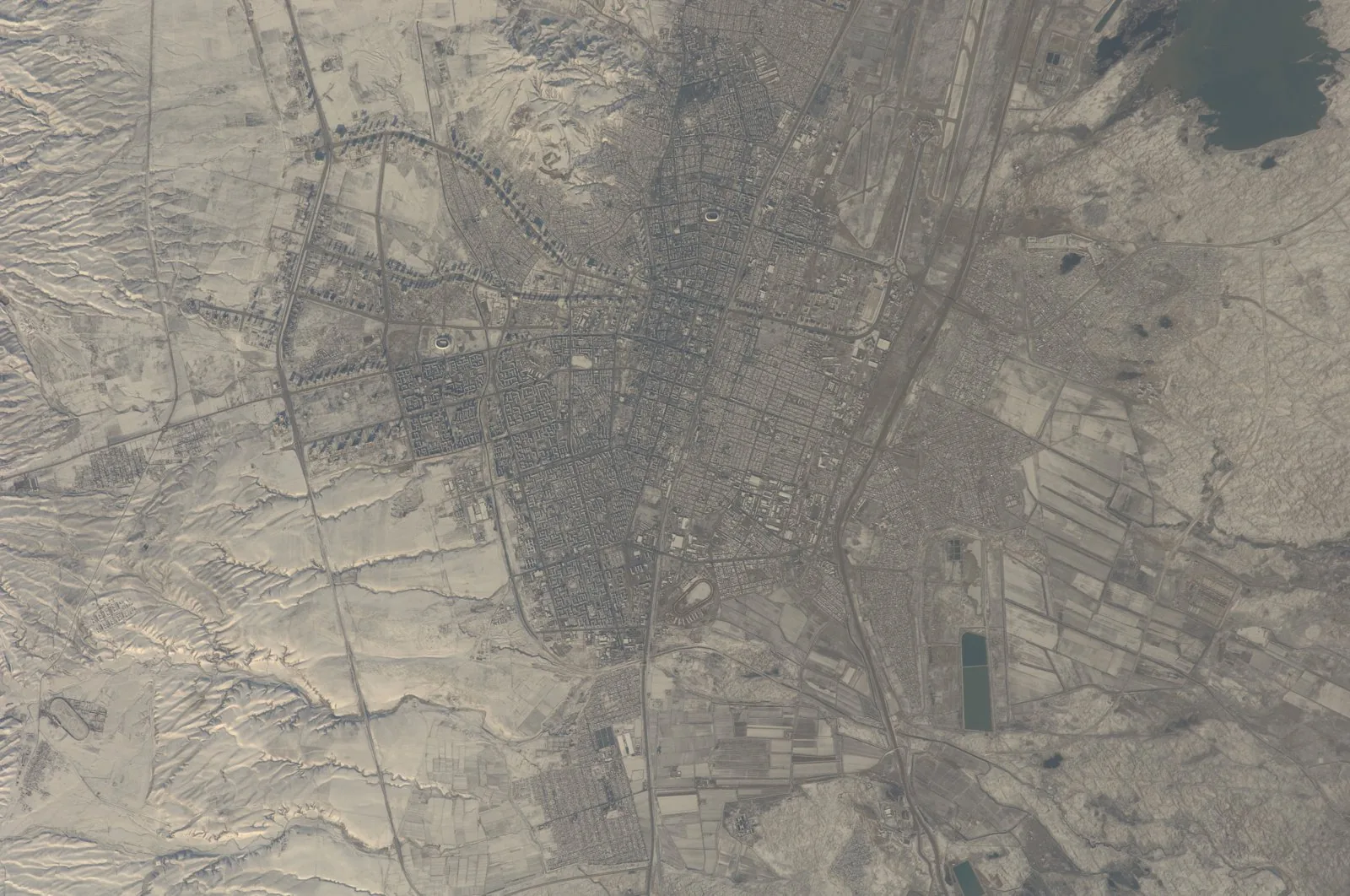
The October 1948 earthquake almost entirely destroyed Ashgabat, the capital of the Turkmen SSR. Reconstruction proceeded according to a single general plan drawn up chiefly by Leningrad architects between roughly 1949 and 1951, with input from Moscow, Rostov and other design organisations. The plan retained the city's existing radial-grid layout while widening avenues, organising the centre into monumental zones and introducing more seismically resistant construction. The dominant idiom was Soviet neoclassicism (the Stalinist Empire style), with symmetrical facades, classical detailing and standardised residential series arranged around broad ceremonial streets and squares.
Significance
The plan reimposed order on a devastated capital and embedded Soviet neoclassical monumentality and early seismic standards into its fabric. It set the urban template that successive regimes, including the later white-marble building campaign, would overlay or replace. As a Central Asian case it illustrates how disaster, ideology and standardised design combined in postwar Soviet city-making.
What shaped it
- The master plan (early 20th c.)
- Communism and the USSR (1917 / 1922)
- Seismic engineering (first seismic codes 1920s-1930s)