Beijing Master Plan (2004–2020)
Core idea
Rings, wedges, sub-centers
Why it matters
Manages mega-city restructuring
Description
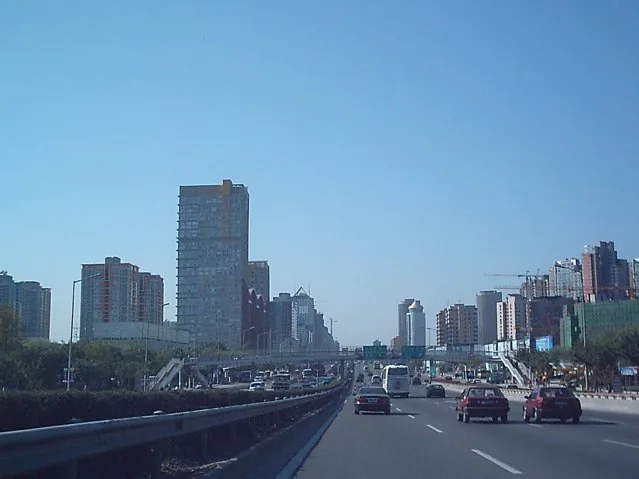
The Beijing Master Plan 2004–2020, prepared by the Beijing municipal planning authorities, was the statutory framework guiding the capital through its most intense period of growth, spanning the Olympic decade. Its spatial concept combined the inherited ring-road structure with green wedges and a deliberate shift towards polycentricity, designating new sub-centres and satellite towns to relieve pressure on the historic core while protecting the old city's heritage fabric.
Significance
The plan marks the point at which Beijing formally attempted to move from monocentric ring-based expansion towards a polycentric metropolitan structure, a strategy deepened by later plans and the Xiong'an initiative. It is central to discussions of mega-city management in China, including the tensions between heritage conservation and redevelopment and the limits of plans in restraining population and sprawl.
What shaped it
- China's reform & opening (1978)
- The master plan (early 20th c.)
- The imperial capital and the central axis (fullest form Ming Beijing, from 1420)
- The compact city (1973-1990s)
Plans it influenced
- Shenzhen Master Plan 2035 (2018)
- Xiongan New Area (2017–)
- Beijing Sub-Center (Tongzhou) Masterplan (2016–)
Sources
- https://www.tandfonline.com/doi/full/10.1080/02665433.2024.2324356
- https://www.researchgate.net/figure/Beijing-Master-Plan-2004-2020-Source-Peoples-Government-of-B