Canberra City to the Lake Plan
Core idea
Civic center to lakefront urban extension
Why it matters
Realigns capital’s core to waterfront
Description
City to the Lake was a 2013 urban design framework by the ACT Government to extend Canberra's civic centre southwards to the shore of Lake Burley Griffin. Its key moves included lowering or bridging the Parkes Way arterial that severed the city from the water, developing the West Basin waterfront with a new boardwalk and mixed-use precinct, and proposing sites for major facilities such as a stadium and convention centre. The plan addressed a district-scale gap at the heart of the national capital.
Significance
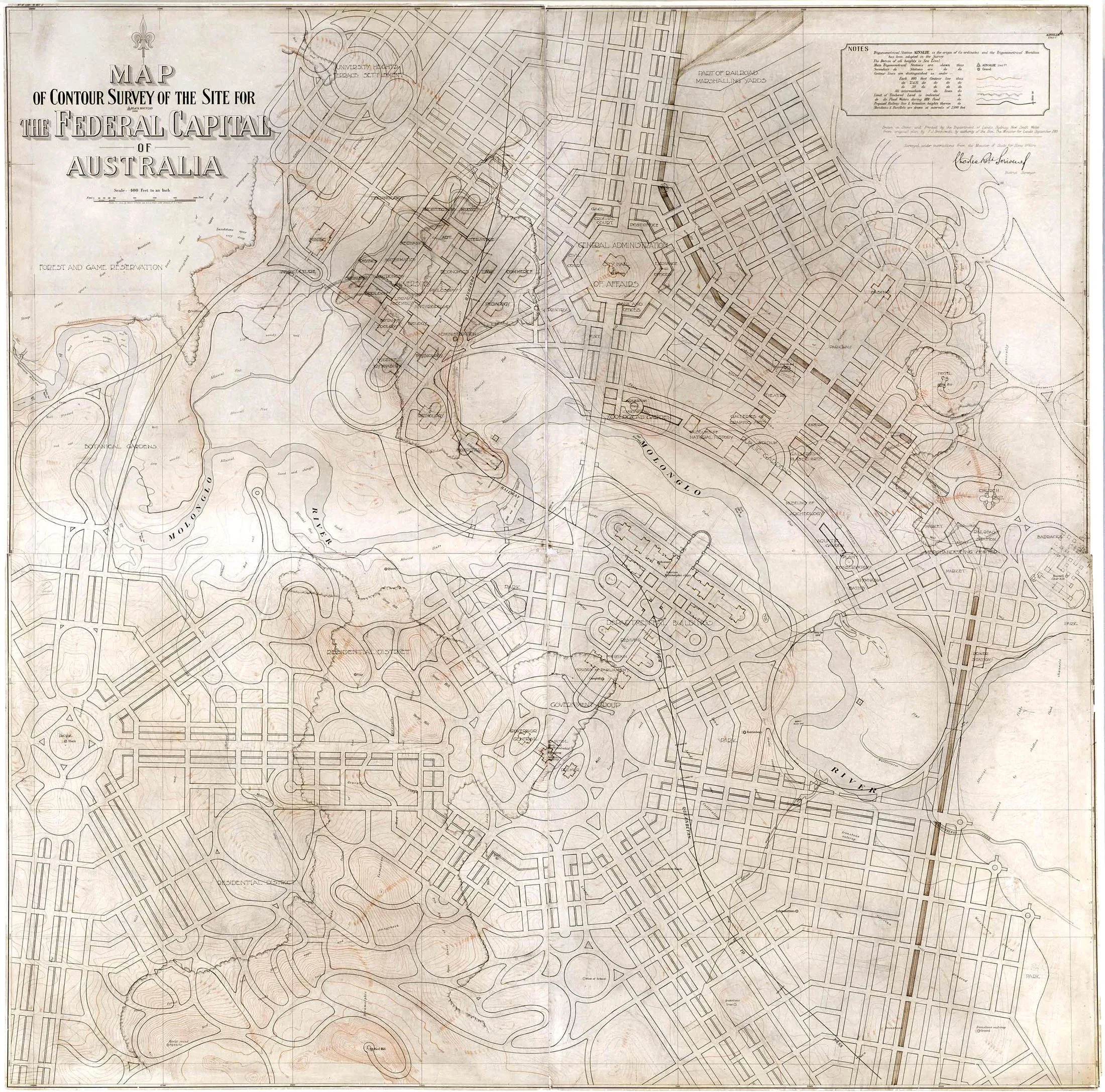
The framework engages directly with the unfinished legacy of the Griffins' 1912 plan, in which the lake was to be the city's ceremonial centrepiece rather than its edge. It exemplifies the wider late-twentieth and twenty-first-century effort to urbanise modernist capital cities designed around the motor car, and has framed ongoing Canberra debates about waterfront development, public land and infill.
What shaped it
- The public park (1843–1858)
- The linear park / greenway (1878 / 2009 revival)
- The master plan (early 20th c.)
Sources
- https://www.cmtedd.act.gov.au/__data/assets/pdf_file/0008/1093652/Documents-1.pdf
- https://www.hillthalis.com.au/projects/linking-canberra-to-the-lake