Technology · Public space
The linear park / greenway
What it is
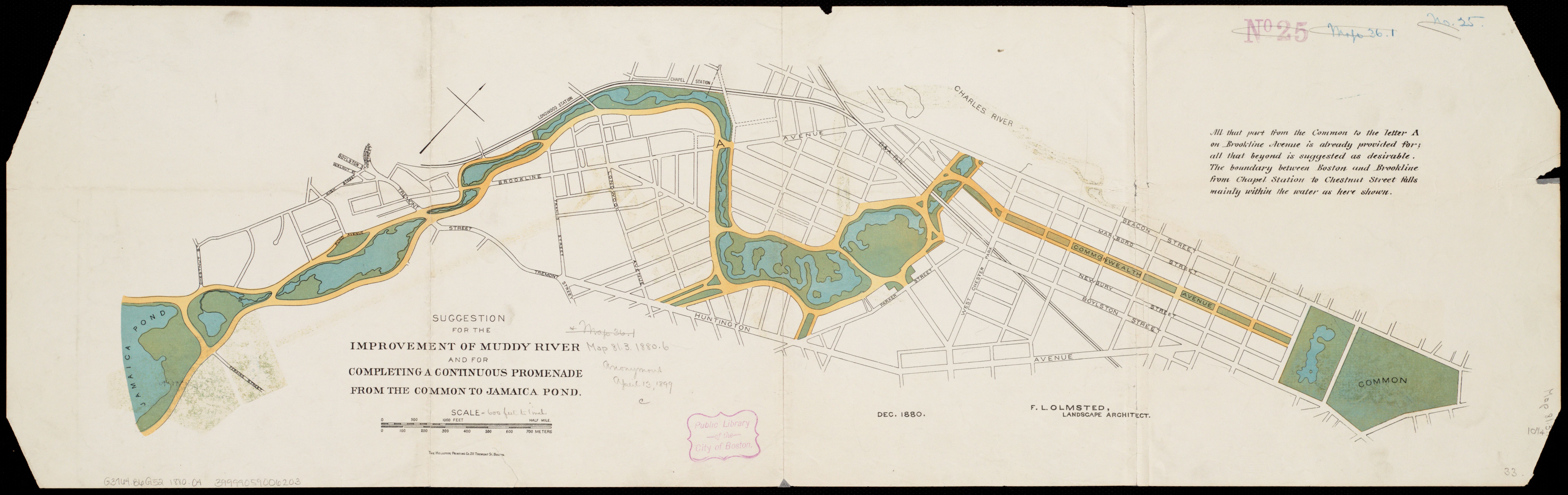
The linear park is a long, narrow green corridor for recreation and movement, often following a watercourse, ridge or former transport route. Frederick Law Olmsted's Emerald Necklace, begun in Boston in 1878, linked parks along the Muddy River into a continuous chain that also managed flooding. The idea was revived for disused infrastructure in New York's High Line, built on an abandoned elevated rail viaduct and opened from 2009.
Why it matters
Greenways stitch parks, neighbourhoods and habitats together while providing walking and cycling routes apart from traffic. The reuse of derelict infrastructure as linear park has become a signature model of contemporary urban regeneration and ecological design.
Plans it shaped
- Zagreb Lenuci’s Horseshoe (1880s–1890s)
- Chicago Plan of 1909 (1909)
- Los Angeles Olmsted–Bartholomew Parks Plan (1930)
- Curitiba Master Plan (1966)
- Abuja Master Plan (1979)
- IBA Emscher Park (Ruhr) (1989–1999)
- Vitoria-Gasteiz Green Belt (1993)
- San Antonio River Walk Redevelopment (1998–2013)
- Île de Nantes (2000–)
- Guayaquil Malecón 2000 & Puerto Santa Ana (2000s–)
- Munster Promenade & Cycling Network Plan (2000s–)
- Essen Krupp Belt (2000s)
hub.toekom.st — History of Urbanism · an interactive timeline of 850 planned cities across 6,000 years.